Thanksgiving is often portrayed as an ancient American tradition, rooted in the 1621 harvest feast between Pilgrims and the Wampanoag people. But the holiday as we know it—a national day of gratitude celebrated on the fourth Thursday of November—is actually less than 150 years old, a product of 19th-century politics, propaganda, and a deliberate rewriting of history.
The first recorded Thanksgiving celebrations in colonial America were irregular and regional, often tied to military victories or successful harvests. For example, Virginia governor William Berkeley declared a day of thanks in 1619 after settlers arrived, and Puritan communities in New England held sporadic harvest festivals. However, these early observances had no fixed date or national significance. It wasn’t until 1863, during the Civil War, that President Abraham Lincoln proclaimed Thanksgiving a national holiday—but even then, the date varied by state.
The modern Thanksgiving tradition was invented by 19th-century reformers who sought to unify a divided nation. Sarah Josepha Hale, a magazine editor, campaigned for decades to establish Thanksgiving as a federal holiday, arguing that it would promote patriotism and moral values. Her efforts paid off when Lincoln issued a proclamation in October 1863, setting the holiday for the last Thursday of November. The date was later standardized by President Franklin D. Roosevelt in 1939 (controversially moving it earlier to boost holiday shopping) before being fixed by Congress in 1941.
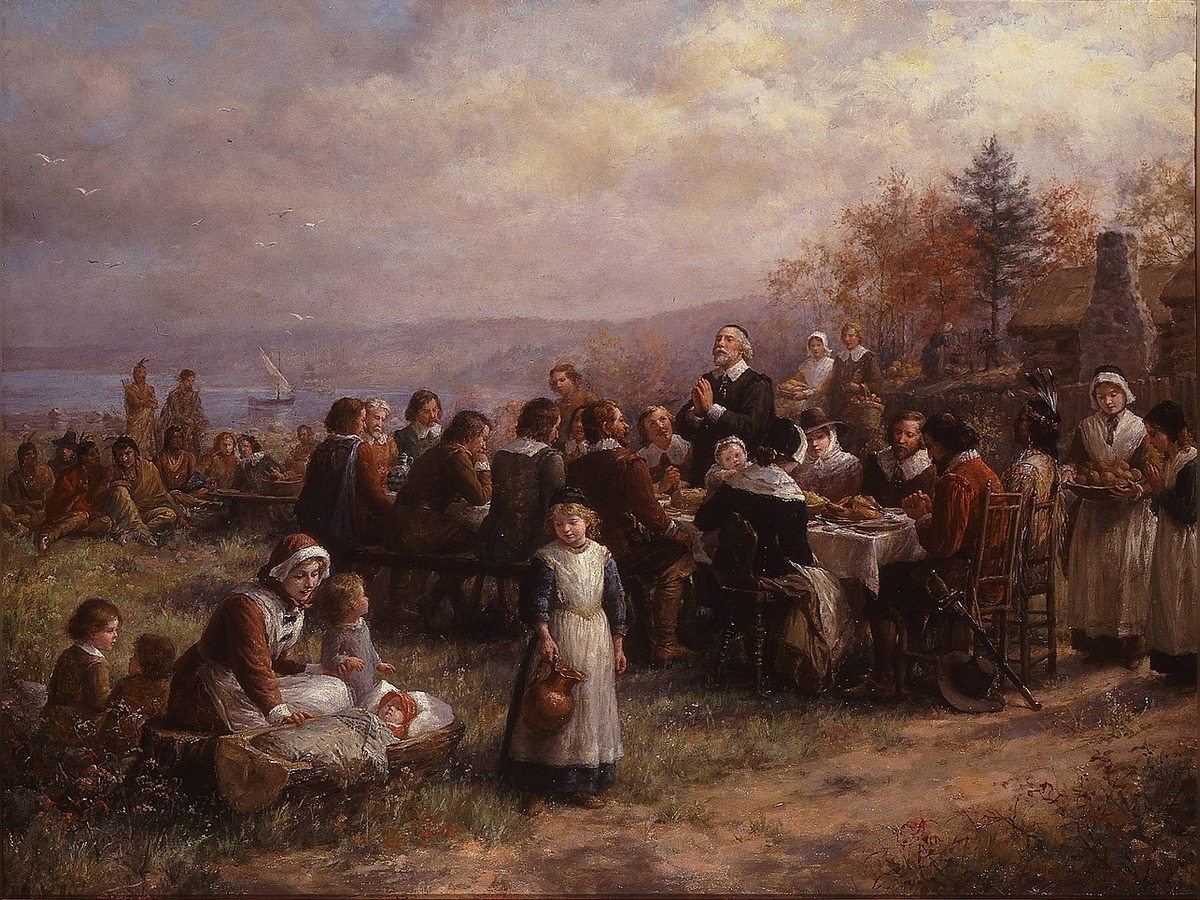
The myth of the 1621 feast was deliberately popularised in the late 1800s to glorify colonial settlement and downplay the violence of European expansion. Early accounts of the harvest meal were scant and contradictory—the only surviving firsthand description was written by colonist Edward Winslow in 1621, who noted a three-day celebration but made no mention of pilgrims and Native Americans sharing a meal in harmony. Later 19th-century paintings and schoolbooks romanticised the event, omitting the decades of conflict that followed, including King Philip’s War (1675–76), which nearly wiped out the Wampanoag.
Today, Thanksgiving is one of America’s most enduring traditions, yet its modern form is barely older than the Civil War. The holiday’s origins as a tool of national unity—and its selective historical narrative—remind us that even the most cherished customs are often shaped by politics and reinvention, not ancient ritual.