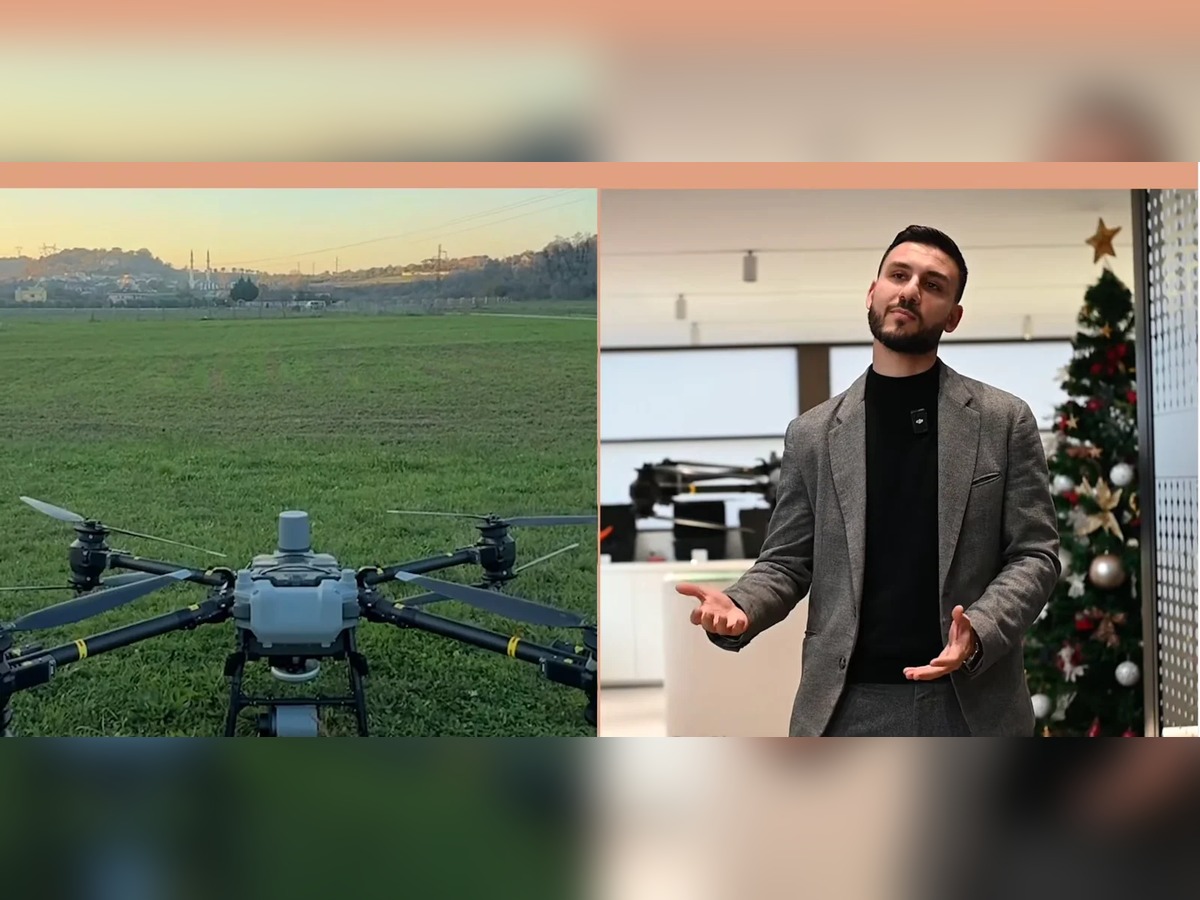
An emerging technology project offers a concrete answer to a question often posed about Albanian inventions: what has someone from Albania actually helped create? A supplied account of Albanian inventions and discoveries identifies an unmanned aerial vehicle developed at the Canadian Institute of Technology through collaboration among researchers, engineers and students. The project was presented in June 2026 at an international conference focused on transforming industries and societies through artificial-intelligence-enabled information systems.
The account describes the aircraft as the first Albanian drone developed at CIT. That wording matters. It identifies the institution’s project as a first within a stated context, rather than establishing that it was the first drone ever invented by an Albanian person or the first unmanned aircraft developed anywhere in Albania. Those are substantially broader claims and are not demonstrated by the available evidence.
Unmanned aerial vehicles, commonly called drones, are aircraft that operate without a pilot aboard. Their development can involve several distinct disciplines, including mechanical design, electronics, control systems and software. A university project can bring these elements together while giving students and researchers experience in engineering and collaborative development. However, the supplied account does not provide the aircraft’s technical specifications, intended operating environment, flight-test results or details of its commercial status.
That absence limits what can responsibly be said about the project’s practical significance. The account does not establish whether the drone was designed for mapping, inspection, agriculture, emergency response or another application. Nor does it provide evidence of a patent, a production contract or deployment by a public agency. Those details would be needed before describing the project as a commercially successful invention or claiming that it has already changed how a particular industry operates.
The June 2026 presentation is nevertheless a useful point of reference. It places the project within an international conference examining the relationship between artificial intelligence, information systems and industrial and social change. The account attributes the development to a collaborative team rather than a single inventor, a distinction that better reflects the evidence supplied. It also demonstrates why technology stories should identify the people and institutions involved instead of relying on broad national labels.
Albanian-linked scientific contributions require the same care. The supplied inventions overview also mentions research by people of Albanian origin working in international institutions, including work on cardiac tissue regeneration and energy harvesting from human motion. But the excerpt does not provide enough independently verified documentation to establish the full history, ownership or practical outcomes of every project it lists. These examples should not be combined into a claim that one country or one individual invented an entire field of technology.
To establish the drone project’s lasting importance, the next steps would be to examine the institute’s own technical announcement, identify the team members and their roles, and look for published engineering documentation or testing results. Any claim of a patent or real-world deployment would also require direct confirmation. Such evidence could explain what the aircraft can do, what problem it was designed to solve and how it compares with existing systems.
For now, the defensible story is specific but modest: a collaborative team at the Canadian Institute of Technology developed an unmanned aerial vehicle that was presented in June 2026. That is a documented lead worth investigating, not proof of a world-first invention. In a field where promotional claims can outpace technical evidence, making that distinction is part of telling the story accurately.