
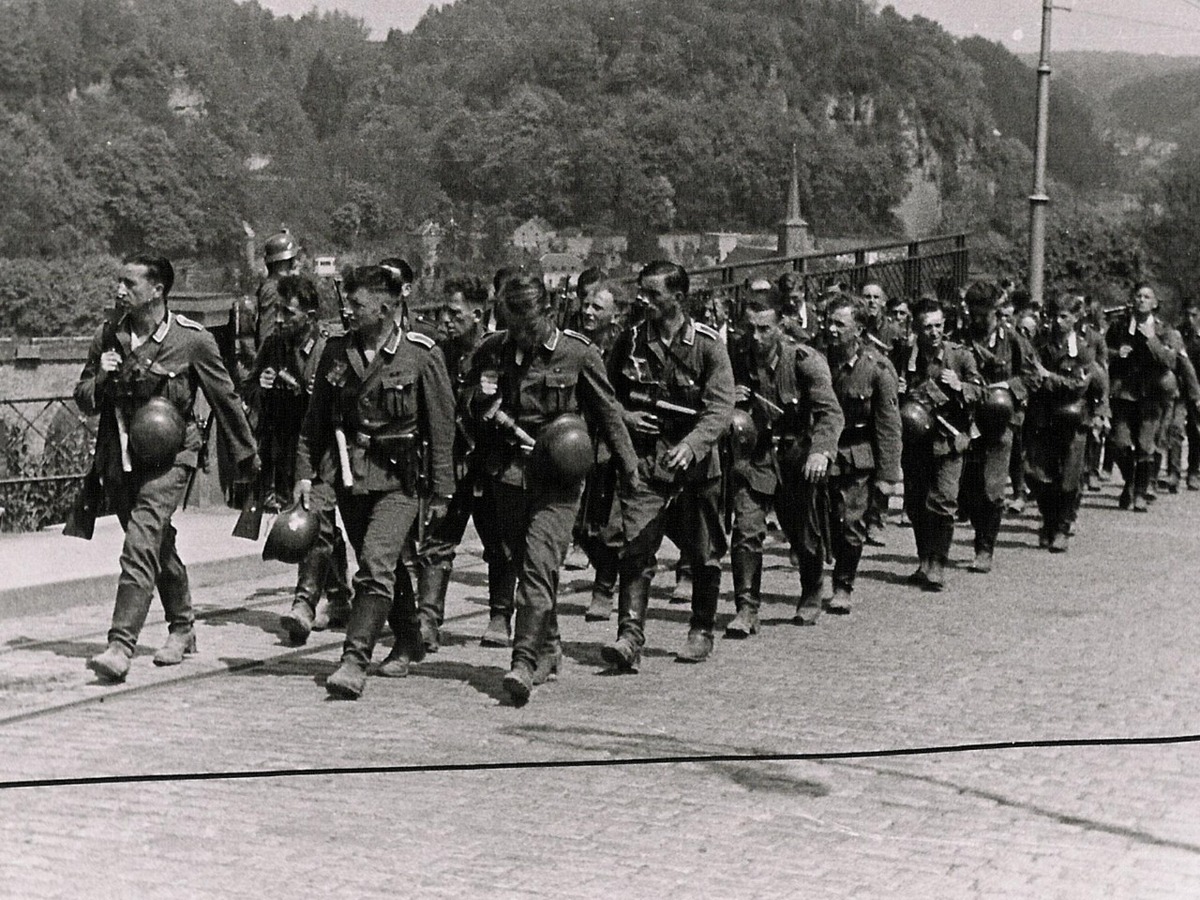
For decades, Luxembourg’s experiences during World War II remained fragmented—scattered in archives, oral histories, and private collections. But thanks to the Luxembourg Centre for Contemporary and Digital History (C²DH) at the University of Luxembourg, those stories are now accessible to the world. Their online exhibition, WW2.lu, presents a multilingual, multimedia account of Luxembourg’s occupation, resistance, and survival under Nazi rule.
Launched in 2021 in partnership with the Ministry of State, WW2.lu breaks from traditional narratives by centring on individual voices. Through 33 video testimonies—including interviews with survivors, historians, and animated cartoons—it explores the complex choices Luxembourgers faced. Some resisted; others collaborated out of necessity. Many simply tried to survive. The exhibition’s title, Luxemb(o)urg, even reflects the linguistic erasure imposed by the Nazis, who renamed the country Luxemburg to erase its identity.
One of the project’s standout features is its use of digital tools to present ‘unknown’ history. For example, the site includes interviews with descendants of those who fled Luxembourg, as well as archival films of bombed-out towns and liberated prisoners. A section on the Mémorial de la Résistance (Resistance Memorial) in Luxembourg City highlights the courage of those who sabotaged Nazi operations.
Beyond WWII, the C²DH has digitised other pivotal Luxembourgish stories. Their exhibition on historian Gilbert Trausch (1931–2018) offers a virtual tour of his home and library, while the SUDenergie project traces the evolution of Luxembourg’s energy sector from 19th-century gasworks to today’s sustainable utilities. Even the National Miners’ Monument in Kayl, honouring 1,500 miners who died between 1860 and 1980, has been documented digitally, complete with employee records from the era.
The C²DH’s work is more than preservation—it’s democratisation. By making these resources freely available in multiple languages, they invite global audiences to engage with Luxembourg’s past. As the centre’s director notes, ‘History is no longer the domain of the elite.’ Projects like Historesch Gesinn (a crowdsourced history platform) further blur the line between researcher and public, ensuring that marginalised voices—women, workers, minorities—are finally heard.