
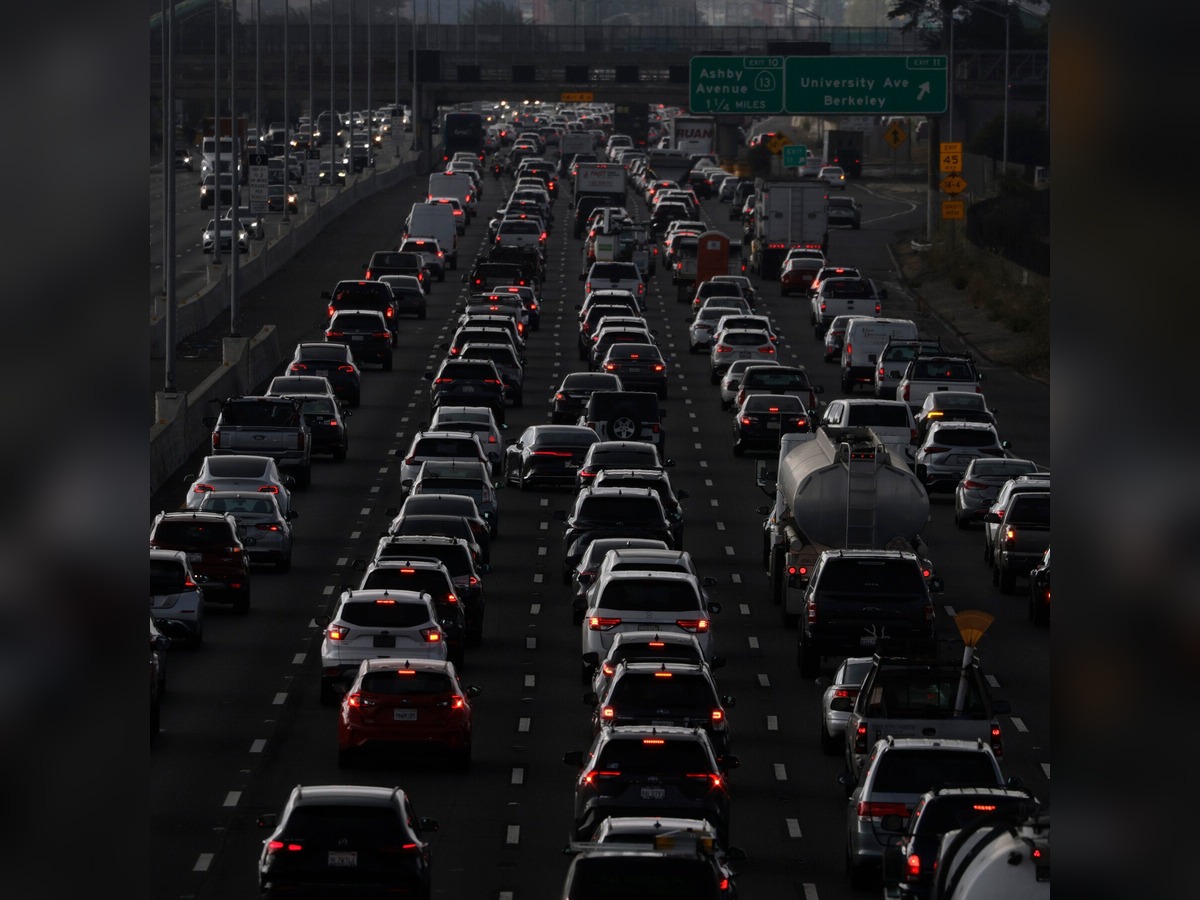
What if Washington, D.C., prohibited private cars every Friday? The idea offers a way to examine how much a city depends on personal vehicles, but the available evidence does not establish whether such a ban would succeed. Its effects would depend on the alternatives available to residents, workers, visitors and businesses, as well as the precise rules governing the restriction.
Transport research provides one useful starting point: not all road traffic serves the same purpose. A 2020 study published in Transportation Research Part D examined electric light commercial vehicles, including their potential role in reducing emissions from commercial transport and last-mile deliveries. The researchers highlighted the prospect of growing delivery demand associated with e-commerce and investigated whether electric commercial vehicles could offer a lower-emission alternative.
The study focused on European Union countries, not Washington, D.C. Its findings therefore cannot establish the emissions effects of a Friday driving prohibition in the American capital. However, it identifies an important distinction for policymakers considering car-free days: restricting private travel is not the same as eliminating the movement of goods. Deliveries, service vehicles and other essential journeys would need to be considered separately when designing any restriction.
The researchers modelled different deployment scenarios for electric light commercial vehicles through 2030. Their analysis found that high adoption of these vehicles could reduce total transport carbon dioxide emissions by more than 3% by that year, with reductions in nitrogen oxides and particulate matter potentially equal to or greater than the carbon dioxide reductions. In several urban areas, the model indicated that particulate-matter concentrations could fall by nearly 2%. These are scenario-based European findings, not estimates of the benefits of banning private cars in Washington.
The U.S. Department of Energy’s Alternative Fuels Data Center also outlines benefits and limitations associated with electric vehicles. Electric vehicles can improve fuel economy and reduce fuel costs and air-quality impacts, but purchase prices can be higher than those of comparable conventional vehicles. Public charging is also less ubiquitous than gasoline stations, even as charging infrastructure expands. Electrification could help reduce the emissions associated with vehicles that remain on the road, but it would not by itself resolve questions about congestion, road access or the availability of alternatives to driving.
For Washington, a credible Friday-ban proposal would need to answer practical questions before any environmental benefit could be established. Which vehicles would count as private cars? Would residents with disabilities, emergency services, deliveries and people travelling to medical appointments receive exemptions? Could public transport accommodate additional passengers, and would workers living far from transit have realistic alternatives? How would officials measure effects on local businesses and access to essential services? The supplied sources do not answer these city-specific questions.
A limited pilot, if designed and authorised by local officials, could provide stronger evidence than speculation. Researchers could compare traffic volumes, public-transport use, travel times, delivery activity and air-quality measurements on restricted Fridays with comparable days. They would also need to examine whether trips were cancelled, shifted to other days or made using different vehicles. Without such measurements, a quieter-looking street would not necessarily demonstrate a net reduction in travel or emissions.
The central issue is not simply whether private cars should be banned one day a week. It is whether a city can provide reliable, accessible alternatives while keeping essential travel and deliveries functioning. Research on electric commercial vehicles shows that transport policy can involve distinct categories of traffic and different routes to emissions reduction. Whether a Friday ban would deliver broader benefits in Washington remains an open question requiring local evidence.