
Long before George Washington became the first president of the United States, a journey to Barbados exposed the 19-year-old Virginian to a world far beyond anything he had previously known and left him with an unexpected protection that would matter decades later.
Washington travelled to Barbados in 1751 with his older half-brother Lawrence Washington, who was suffering from tuberculosis and hoped the Caribbean climate might improve his health. The trip became the only occasion on which George Washington left the North American mainland. After a voyage of more than six weeks, the brothers arrived in Barbados, then one of Britain’s wealthiest sugar colonies and a major centre of the Atlantic plantation economy.
During his stay, Washington kept a diary recording details of the voyage, the island’s landscape and his experiences. He encountered a densely cultivated Barbados dominated by sugar production, with estates, shipping and Bridgetown’s commercial activity offering a dramatic contrast to the Virginia world he knew. He attended social gatherings, visited the theatre and observed the island’s fortifications, agriculture and natural environment.
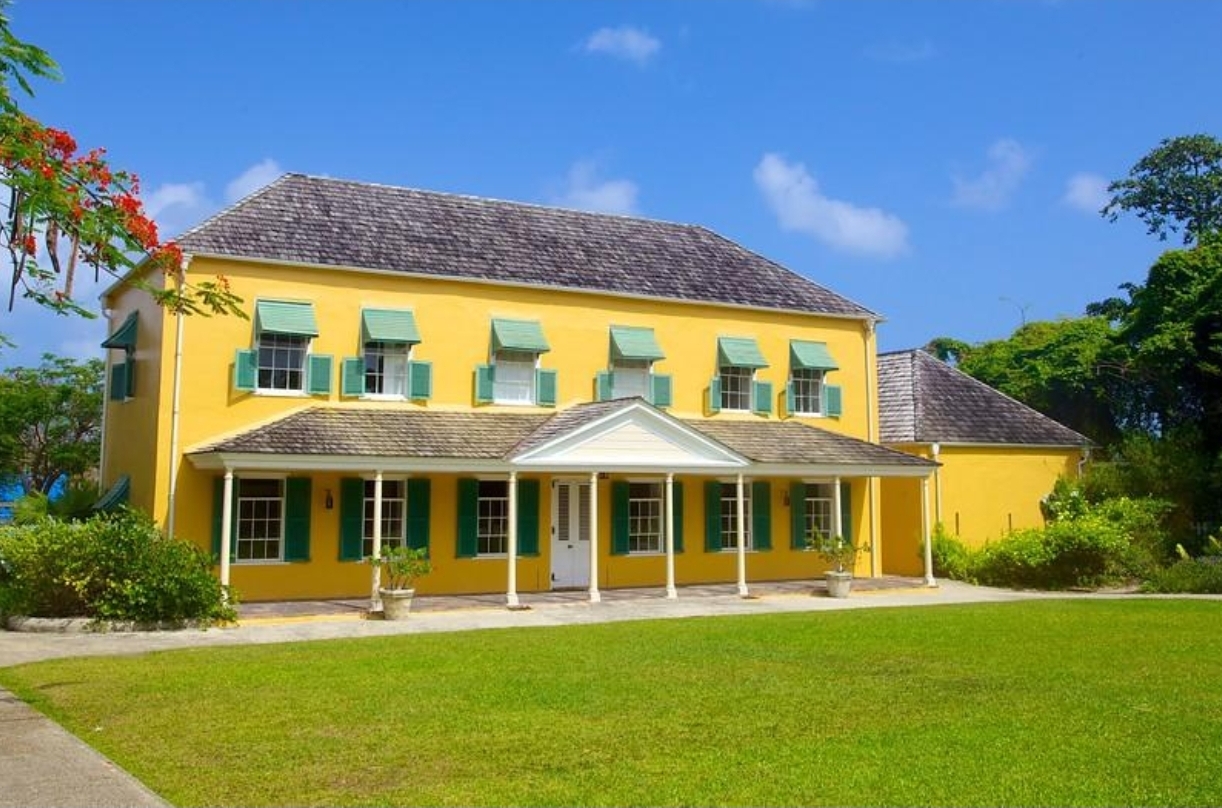
The brothers rented a house near Bridgetown known as Bush Hill House, today preserved as George Washington House. From its elevated position, Washington could look towards Carlisle Bay and watch ships moving in and out of the harbour. The restored property now forms part of the historic Garrison area, linking Washington’s personal story with Barbados’ wider colonial and military history.
The journey took a serious turn on November 17, 1751, when Washington recorded that he had been strongly attacked by smallpox. The disease was feared throughout the eighteenth-century Atlantic world and could be deadly. Washington survived, and the infection gave him immunity against future attacks of the disease.
That immunity later became significant during the American Revolution, when smallpox posed a major threat to the Continental Army. Washington, unlike many soldiers under his command, was already protected because of the illness he had survived in Barbados. As commander, he eventually supported widespread inoculation among his troops as he tried to limit the disease’s impact on the army.
Lawrence Washington did not receive the improvement he had hoped for from the Barbadian climate and later continued his search for relief elsewhere. George returned to Virginia near the end of December 1751. Lawrence died the following year.
Barbados therefore occupies an unusual place in Washington’s biography. It was his only journey beyond mainland North America, his first sustained encounter with a major Caribbean society and the place where he survived an illness that would later shape his understanding of one of the greatest medical threats facing his army.
Today, George Washington House at the Garrison preserves the Barbadian setting of that formative journey. The site offers visitors a reminder that an important chapter in the life of one of America’s most recognised historical figures unfolded not in Virginia, Philadelphia or New York, but on a small Caribbean island more than two decades before the American Revolution began.