
Full article
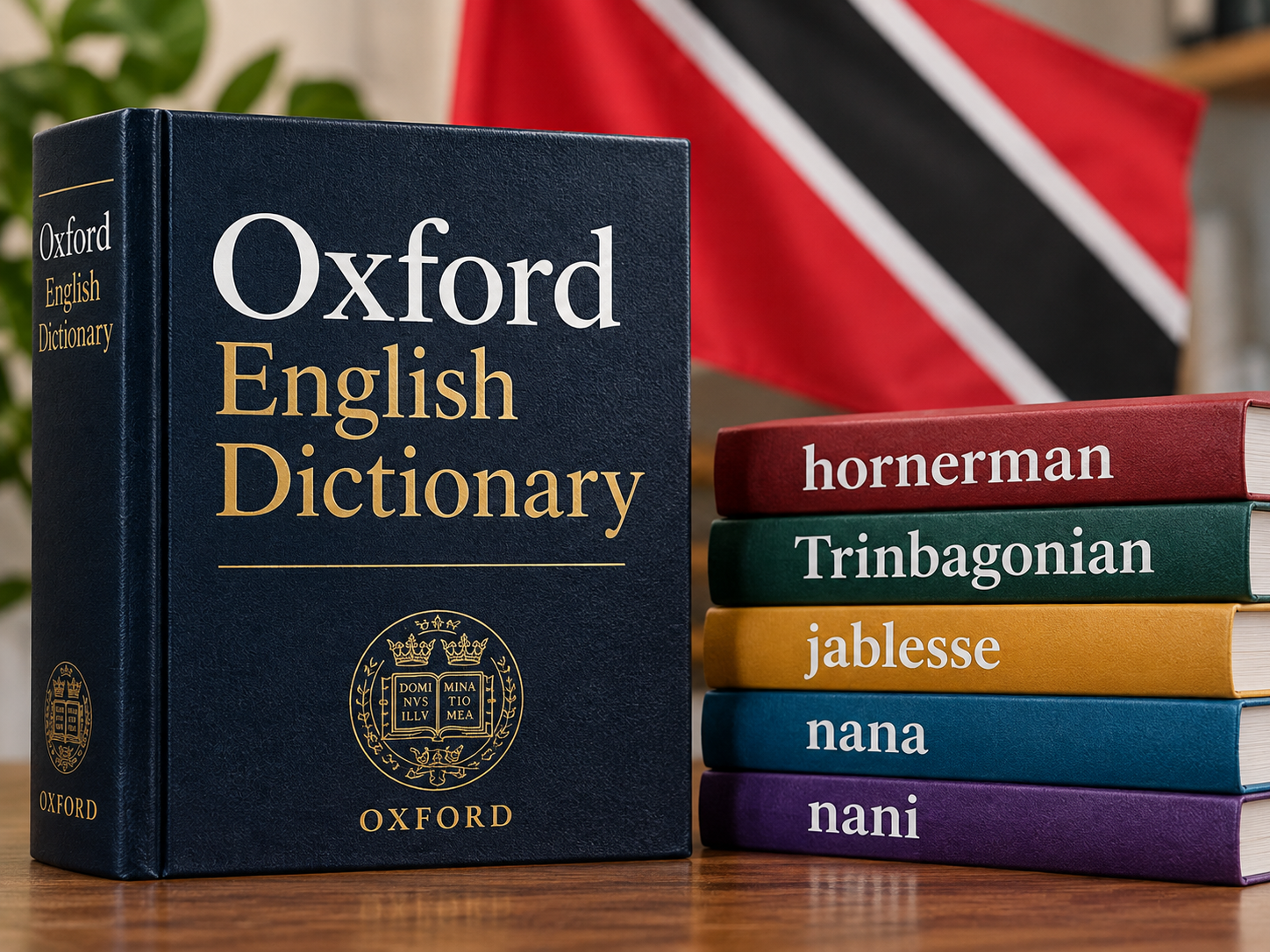
Words familiar to generations of Trinidadians and Tobagonians, including “hornerman”, “Trinbagonian” and “jablesse”, have officially entered the Oxford English Dictionary as part of a wider update recognising Caribbean English.
The latest additions highlight vocabulary shaped by Trinidad and Tobago’s history, folklore, multicultural population and everyday speech, placing several distinctly local expressions among words formally documented by one of the world’s leading English-language dictionaries.
Among the most recognisable is “hornerman”, a word used in Trinidad and Tobago to describe an unfaithful man or a man involved with someone else’s partner. The Oxford English Dictionary has traced recorded use of the term back to 1975.
“Trinbagonian”, the widely used term for someone from Trinidad and Tobago, has also been added. Records cited in connection with the update trace its use as an adjective to 1976 and as a noun to 1988.
Local folklore is represented by “jablesse”, the supernatural female figure traditionally described as a beautiful woman with one cloven hoof who lures unsuspecting men. The term has deep roots in Caribbean folklore and is associated particularly with the French Creole traditions of Trinidad and other parts of the region.
The update also includes “nana” and “nani”, words of Hindi origin widely used among Indo-Caribbean families for a maternal grandfather and maternal grandmother respectively.
Other Caribbean terms recognised in the update include “douen”, “Canboulay”, “peanut punch”, “sugar cake”, “vex money” and the expression “to get on”, meaning to have an emotional outburst or make a scene.
The inclusion of these words does not mean they are new. Many have been spoken across Trinidad and Tobago and the wider Caribbean for decades or even longer. Their addition reflects the Oxford English Dictionary’s documentation of how English is actually used across different countries and cultures.
For Trinidad and Tobago, the update places everyday language, folklore, food and cultural history into an international linguistic record, giving expressions long understood locally a new level of global visibility.