
The fiscal price of falling oil premiums, expanding LNG supply and political uncertainty.
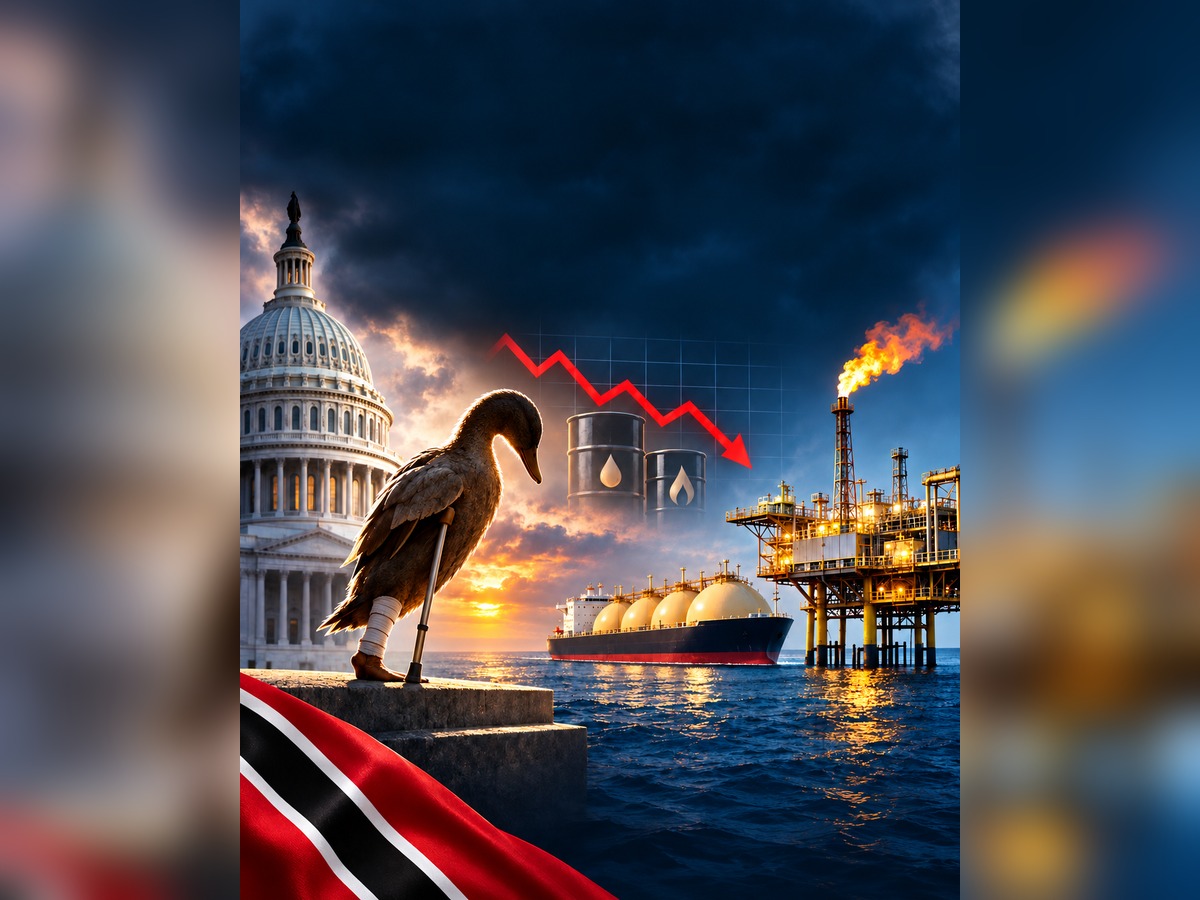
Did Finance Minister Dave Tancoo and Energy Minister Roodal Moonilal consider that TandT’s duck might just be cooked?
What lies around the corner for Trinidad and Tobago is not merely a rearrangement of seats in Washington. It is a potential repricing of our diplomatic relationships, Venezuelan energy ambitions and the revenue assumptions underpinning the national budget.
The danger lies in treating today’s elevated energy receipts as though they were guaranteed tomorrow.
The incoming Democratic-controlled Congress cannot instantly terminate every Trump initiative. The President retains executive powers and can veto legislation. Nevertheless, Congress controls spending legislation, confirms senior nominees through the Senate and exercises investigative oversight.
From January 2027, foreign programmes could face greater scrutiny from lawmakers responding to voters demanding relief from rising living costs and the Iran war.
Who will fund the Shield of the Americas? What oversight will confront Washington’s Venezuela arrangements? Will Trump’s Board of Peace retain its present form and funding?
Could congressional investigations examine sanctions waivers, private investors and cross-border energy transactions?
These are questions, not announcements of cancellation.
Political access alone cannot substitute for legal and regulatory durability.
The Dragon gas project illustrates this exposure. Commercial development of Venezuela’s offshore resources depends on investment decisions, technical agreements and an American sanctions environment that can change.
A congressional reassessment of Washington’s Venezuela policy could alter the conditions under which energy companies operate.
But the greater threat may not come from Washington’s politics alone. It may come from the global energy market.
THE ECONOMIST’S WARNING: TODAY’S SHORTAGE, TOMORROW’S GLUT
In its October 10, 2026 article, “Flow and disorder: The world is facing an almighty LNG crunch,” The Economist warned that today’s gas shortage could produce tomorrow’s massive gas surplus.
The war involving Iran has disrupted shipping through the Strait of Hormuz and constrained exports from Qatar, one of the world’s leading LNG suppliers.
Countries are responding by securing alternative supplies and investing in new energy infrastructure.
The United States is expanding LNG export capacity. Canada is developing additional liquefaction facilities. Projects in Argentina, Senegal and other emerging producers could bring previously stranded gas resources into international markets.
The International Energy Agency projects that more than 330 billion cubic metres of additional annual LNG export capacity could come online between 2025 and 2030 from projects already under construction at the start of 2025.
Meanwhile, some importing countries are reducing their dependence on gas. China has cancelled plans for some new import terminals, while governments are reconsidering coal, nuclear power and renewable energy alternatives.
More countries are preparing to sell gas, while some potential buyers are preparing to use less.
The Economist cited projections suggesting that global LNG supply could reach 630 million tonnes by 2030, against demand of approximately 574 million tonnes.
If Qatar returns to full production and planned projects materialise, the resulting surplus could reach 55–75 million tonnes annually.
Under that scenario, analysts suggest LNG prices could eventually fall below US$6 per MMBtu.
These are conditional projections, not guaranteed outcomes. War damage, construction delays and changing demand could alter the timeline.
The irony is striking: the longer today’s gas crisis encourages new investment, the greater the risk of tomorrow’s oversupply.
THE MIDTERMS: ANOTHER PRESSURE ON ENERGY PRICES
Now consider the political consequences of the US midterm elections.
Democrats have won control of both congressional chambers, with voter dissatisfaction over living costs and the Iran war contributing to Republican losses.
Markets have already responded.
On November 4, Reuters reported that Brent crude fell 8.7% to US$94.62 per barrel, as investors anticipated greater pressure for negotiations and an eventual end to the Iran conflict.
The political change does not automatically end the war or reopen the Strait of Hormuz. However, congressional pressure, funding scrutiny and renewed diplomacy could encourage de-escalation.
If shipping through Hormuz normalises, more oil and LNG could return to international markets. The geopolitical risk premium supporting elevated prices could decline.
This creates two pressures at different speeds:
First, an easing of the Iran conflict could cool oil and gas prices as disrupted supplies return.
Second, expanding LNG production and weaker demand could create a more sustained oversupply later in the decade.
The first depends heavily on diplomacy and regional security. The second depends on investment, production capacity and global consumption.
Neither outcome is guaranteed, but both warrant attention.
THE TT$3.639 BILLION QUESTION
Trinidad and Tobago’s 2027 Budget projects: Revenue: TT$59.729 billion Expenditure: TT$63.368 billion Fiscal deficit: TT$3.639 billion Oil price assumption: US$77 per barrel Natural gas assumption: US$5 per MMBtu Projected oil revenue: TT$14.355 billion, approximately 24% of total receipts.
These assumptions expose the national finances to changes in energy prices and production.
The Economist’s projected LNG spot prices are not directly equivalent to the gas-price benchmark used in Trinidad and Tobago’s Budget. Nevertheless, a prolonged fall in global LNG prices could affect export earnings, investment returns and fiscal revenue.
The critical question is whether Government has adequately stress-tested its revenue assumptions against both a near-term reduction in geopolitical energy premiums and a longer-term LNG surplus.
Lower energy prices could benefit consumers and manufacturers, but they could also weaken revenues in an energy-dependent economy.
For Trinidad and Tobago, the consequences extend beyond the price of a barrel of oil or a cargo of LNG. They affect the fiscal deficit, foreign exchange earnings, government spending and the commercial prospects of new gas projects.
THE DOUBLE WHAMMY IS CLEAR.
Washington’s political realignment could place pressure on the policies sustaining today’s elevated energy prices, while the international response to the war could produce tomorrow’s gas glut.
The war created the shortage. The shortage encouraged expansion. Peace could restore supply. Expansion could create the glut.
Has Trinidad and Tobago prepared for both?
Dr Mwale Henry Executive Leadership Advisor Mwale.henry@gmail.com