

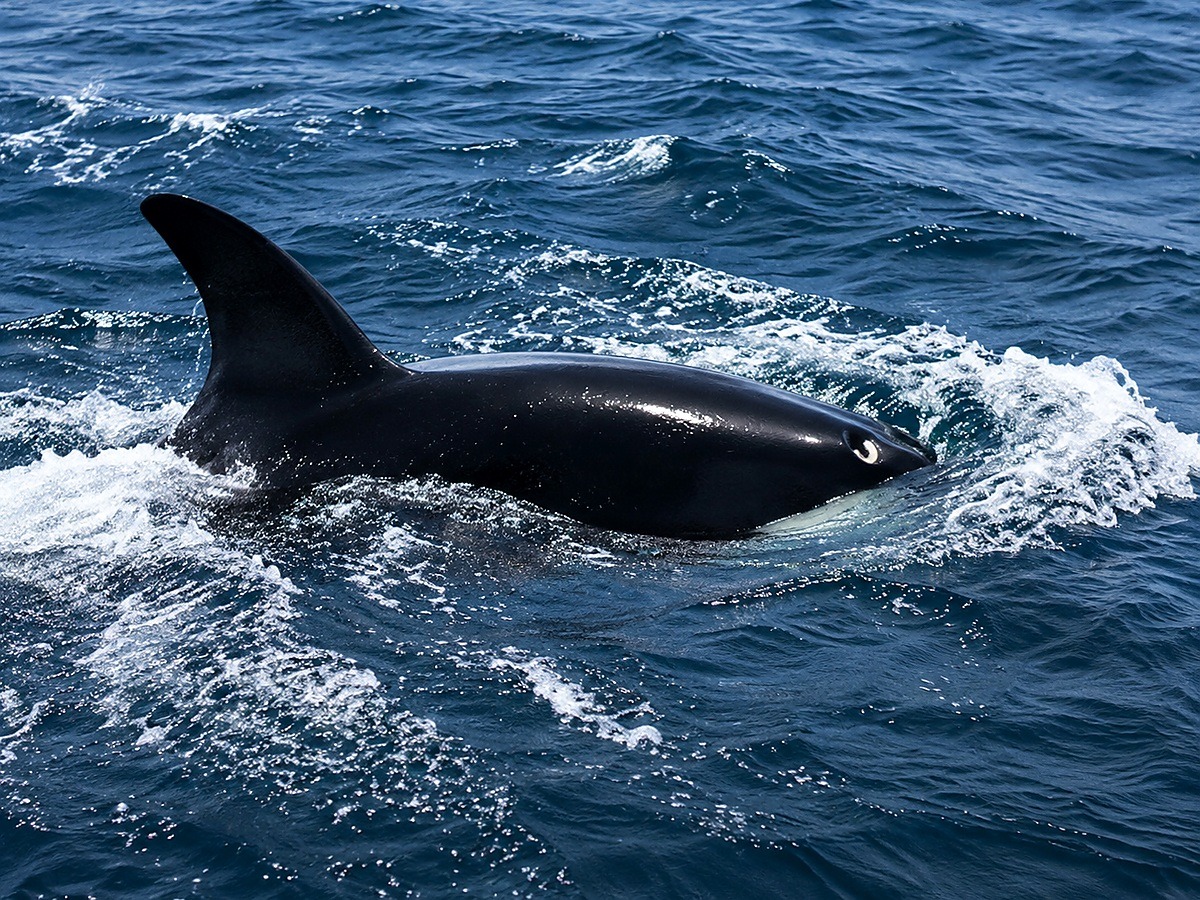
A remarkable encounter at sea has attracted attention on social media after footage surfaced reportedly showing two killer whales, also known as orcas, swimming close to a fishing boat in waters off Tobago.
The footage, uploaded to TikTok by a user identified as Fire, shows a large black marine animal surfacing alongside a vessel as waves break around it.
In one particularly striking moment, the animal's prominent dorsal fin and dark body can be seen clearly above the water, apparently just metres from the boat.
The video has generated interest online, with viewers reacting to the unexpected sighting of animals more commonly associated with wildlife documentaries and colder ocean environments.
Despite their name, killer whales are actually the largest members of the oceanic dolphin family. Orcas are highly intelligent marine mammals recognised by their distinctive black-and-white colouring and prominent dorsal fins.
Although frequently associated with colder regions, orcas inhabit oceans around the world, including tropical waters. Their presence in the Caribbean is possible, although encounters are generally considered uncommon compared with sightings in some other parts of the world.
Orcas are powerful predators that feed on a variety of marine animals, including fish, squid and, in some populations, other marine mammals. They are also known for their complex social structures and coordinated hunting behaviour.
For fishermen and other seafarers, encountering such large marine animals at close range can be both an extraordinary experience and a reminder of the diversity of wildlife inhabiting Caribbean waters.
The TikTok footage has been described as showing two orcas. However, TG News has not independently confirmed the number of animals, the precise location, the date of the recording or the species identification.
The footage nevertheless provides a fascinating glimpse of what may be an unusual marine wildlife encounter in Tobago's surrounding waters.
Marine wildlife experts generally advise boat operators to maintain a safe distance from large marine mammals, avoid pursuing or attempting to touch them, and allow the animals to move freely.
The reported sighting also highlights the importance of documenting marine wildlife encounters, which can provide useful information about species distribution and movement throughout the Caribbean.