
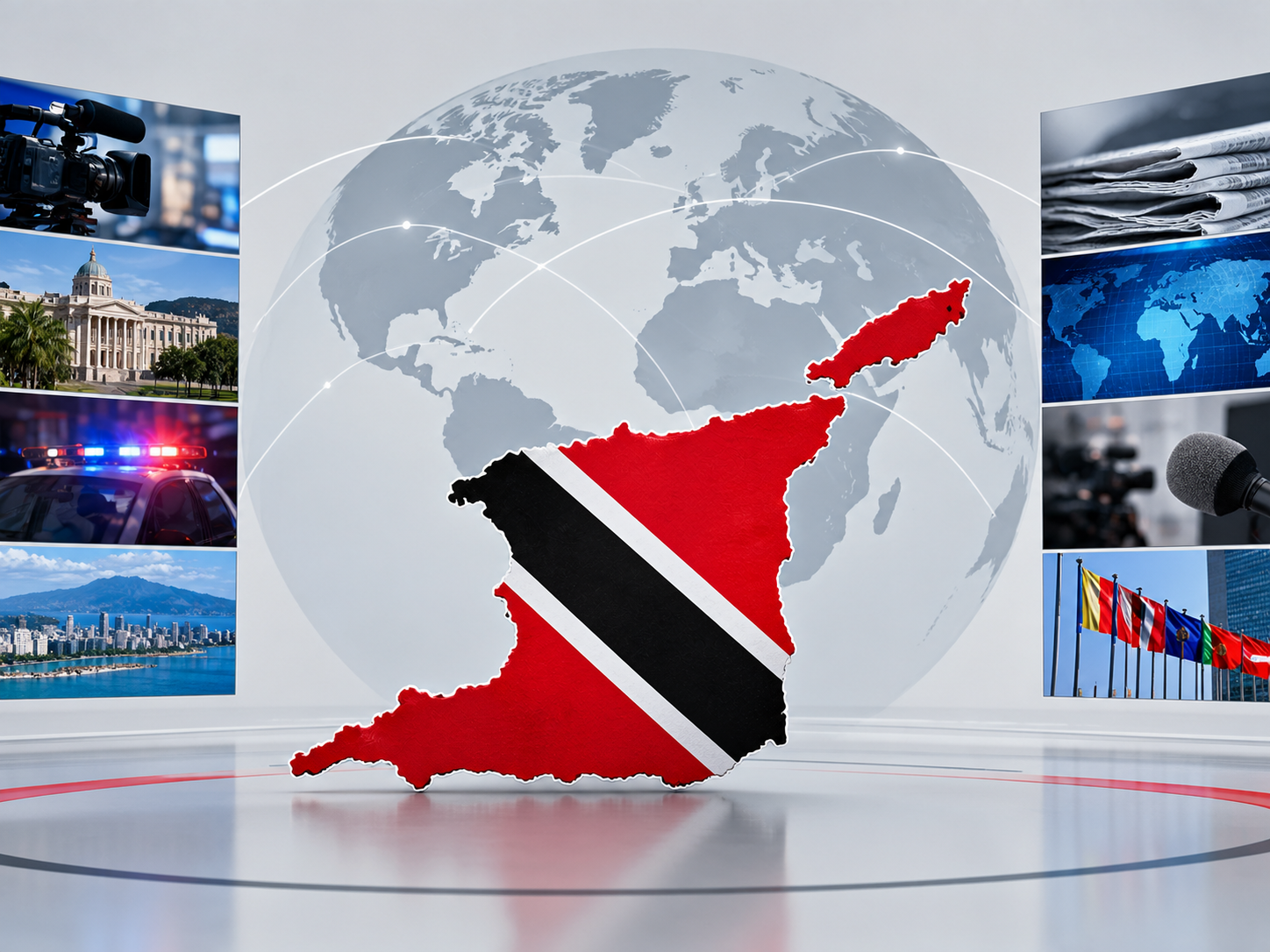
Trinidad and Tobago’s recently ended State of Emergency is attracting significant international attention, with some of the world’s best-known news organisations examining the country’s mass arrests, preventive detention powers, falling murder numbers and allegations of civil-liberties violations.
In the space of days, coverage has appeared through The New York Times, Associated Press, The Washington Post and Al Jazeera, moving a debate that has dominated Trinidad and Tobago into the international spotlight.
The New York Times placed particular attention on the controversial detention of Star Sabga and businessman Dominic Hadeed and his wife, Genevievre Hadeed.
Its September 14 report examined how an intercepted private telephone conversation became central to allegations of a possible assassination plot against Prime Minister Kamla Persad-Bissessar and other public officials.
The Hadeeds and Sabga denied the allegations. The Hadeeds were detained without criminal charges for nearly a month, while Sabga spent more than two months under detention and later house arrest before her detention order was revoked.
The Times framed the controversy within a wider discussion about surveillance, preventive detention and racial and political tensions involving Trinidad and Tobago’s Syrian-Lebanese community. It also reported allegations made in affidavits about prison conditions and strip searches, while noting that authorities considered intercepted statements evidence of potentially developing threats. Those allegations and interpretations remain contested.
The story reached an even wider audience when The New York Times published a Spanish-language edition of its report.
But international attention has extended well beyond that case.
The Associated Press reported on September 17 that Trinidad and Tobago had ended its prolonged State of Emergency with authorities preparing for the possibility of renewed violence while lawyers and activists criticised arrests made under the emergency powers.
AP highlighted government figures showing that more than 5,800 people had been arrested following the March extension, with approximately 2,250 not yet charged, according to Prime Minister Persad-Bissessar.
The report also presented the government’s argument for the emergency measures. Persad-Bissessar told Parliament that the credible threats which prompted the emergency had been “substantially reduced.” Police statistics cited internationally also show murders declining from a record 624 in 2024 to 369 in 2025, with 255 recorded so far in 2026 compared with 268 during the corresponding period of 2025.
However, AP also carried criticism from attorney Criston Williams, who alleged serious infringements of detainees’ rights and called for the Inter-American Commission on Human Rights to investigate. His claims about the treatment of detainees are allegations and have not been established as judicial findings.
The Washington Post subsequently carried the AP report, further exposing the Trinidad and Tobago debate to an international audience. Its coverage also included comments from Opposition Leader Pennelope Beckles-Robinson questioning whether the emergency had demonstrated that it was effective in detecting or fighting crime.
Al Jazeera also turned its attention to Trinidad and Tobago, reporting on the end of the emergency under the headline “Trinidad and Tobago ends state of emergency amid pushback over mass arrests.”
Its coverage focused heavily on the tension between the government’s crime-fighting justification and criticism surrounding detention without charge and other restrictions on civil liberties.
The international interest is not entirely new. Al Jazeera previously covered Trinidad and Tobago’s extension of the State of Emergency in March, noting at the time that the country had spent 10 of the previous 14 months under emergency measures.
Taken together, the coverage shows that international outlets are focusing on two competing parts of the Trinidad and Tobago story.
The government points to reduced murders and reduced security threats as evidence supporting its crime-fighting approach. International reporting is simultaneously examining whether the extraordinary powers used to achieve greater security were proportionate, particularly where people were detained without criminal charges.
The international coverage therefore does not present one single verdict on Trinidad and Tobago’s State of Emergency. Instead, the recurring questions are whether the emergency contributed to improved security, what happened to people detained without charge, whether safeguards were sufficient and what legal framework will replace those extraordinary powers.
With the State of Emergency now ended and Parliament considering legislation intended to provide a permanent framework for special operations against violent crime, international attention may now shift from what happened under the emergency to what powers Trinidad and Tobago gives law enforcement next .