

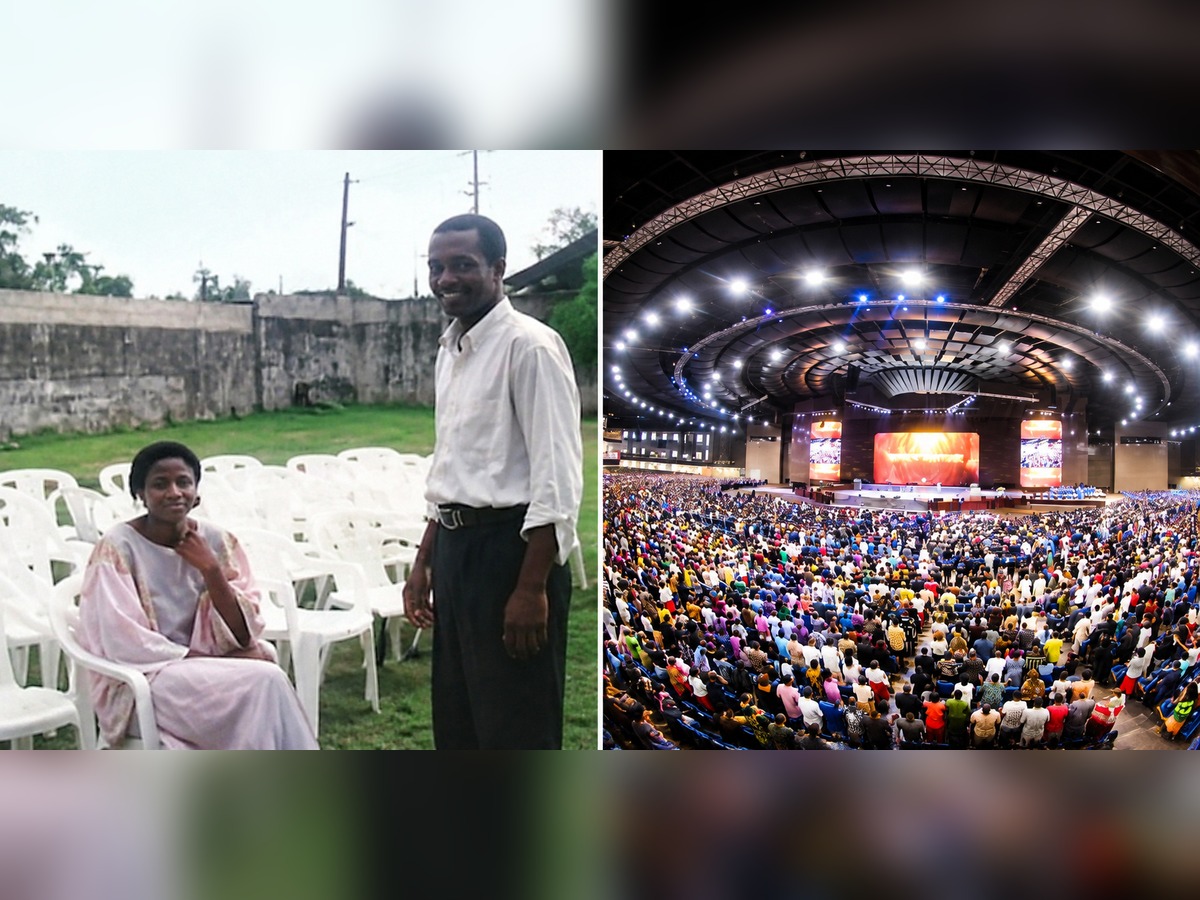
120,000 Seats for Souls, Yet Critics Want a Factory Instead
They were absent when the church had 34 people. Now they want to dictate what happens with 120,000 seats.
On Friday, November 6, 2026, Nigerian pastor David Ibiyeomie celebrated the dedication of Salvation Ministries’ magnificent Hand of God Cathedral, a structure reportedly capable of seating 120,000 worshippers in Port Harcourt, Nigeria.
Bishop David Oyedepo led the dedication of the cathedral, whose construction began in 2010.
But while thousands celebrated, others questioned the priorities.
Why build a 120,000-seat church when Nigerians need factories, jobs and food?
A reasonable question. But perhaps we should ask another.
Why can we fill stadiums with 100,000 spectators to watch a ball kicked around, yet consider 120,000 seats for souls an extravagance?
We applaud billion-dollar stadiums, extravagant entertainment venues and massive sporting events. People voluntarily pay admission, purchase expensive merchandise and spend at concession stands.
Nobody expects the stadium owner to convert the building into a factory because unemployment exists.
Yet when a church builds something extraordinary, suddenly everyone becomes an auditor of charity.
THEY WERE NOT THERE WHEN THE CHURCH STARTED.
Salvation Ministries began in 1997 with just over 30 worshippers. Nearly three decades later, its founder has overseen the construction of an extraordinary cathedral.
That is a story of vision, persistence and institutional growth.
And here is the irony.
When you are struggling with 10 chairs, few people volunteer to help. When you succeed with 120,000, everyone has an opinion about what you should have built instead.
Some insist the pastor should have built factories.
But must a church abandon its primary mission to compensate for a nation’s economic failures?
Churches can support economic development, certainly. But a factory produces goods, a stadium provides entertainment, and a church exists to nurture faith, community and spiritual transformation.
Why should only one of those institutions have to justify its existence through poverty reduction?
And before we conclude that Ibiyeomie has neglected the poor, perhaps we should investigate.
The David Ibiyeomie Foundation reports awarding more than 5,000 scholarships, sponsoring educational projects and supporting skills development. Ibiyeomie also rebuilt and handed over Banham Methodist Academy in Port Harcourt in 2022.
These claims deserve scrutiny, as do all major institutional achievements. But they also challenge the assumption that building a cathedral means doing nothing for society.
THE BIBLE DOES NOT CONDEMN EXCELLENCE.
In John 12:5–6, Judas questioned why Mary’s expensive perfume was not sold and its proceeds given to the poor. Scripture reveals that his concern was not sincere.
That does not mean everyone questioning church spending is Judas. Legitimate accountability matters.
But neither should every extraordinary act of worship be automatically condemned as wastefulness.
Solomon built a magnificent temple. The early Church cared for widows and the poor. Biblical stewardship makes room for both worship and compassion.
The challenge is not choosing between a beautiful church and helping people. It is ensuring the Church remains faithful to both responsibilities.
A BIG CHURCH IS NOT THE PROBLEM. A CHURCH WITHOUT IMPACT WOULD BE.
So before attacking 120,000 chairs, ask what those chairs represent.
How many people are reached? How many students are educated? How many families receive support? How many lives are transformed?
Those are legitimate questions, and the ministry should be prepared to answer them.
But we cannot condemn a vision simply because it exceeds our imagination.
The same society that celebrates stadiums filled with spectators should not automatically ridicule a cathedral built for worshippers.
After all, if 120,000 people can gather for 90 minutes of football, why should 120,000 people gathering in worship be considered too many?
Perhaps the question is not why the church is so big, but why our imagination of what the Church can accomplish is so small.