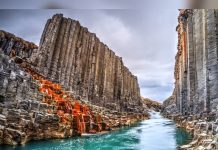

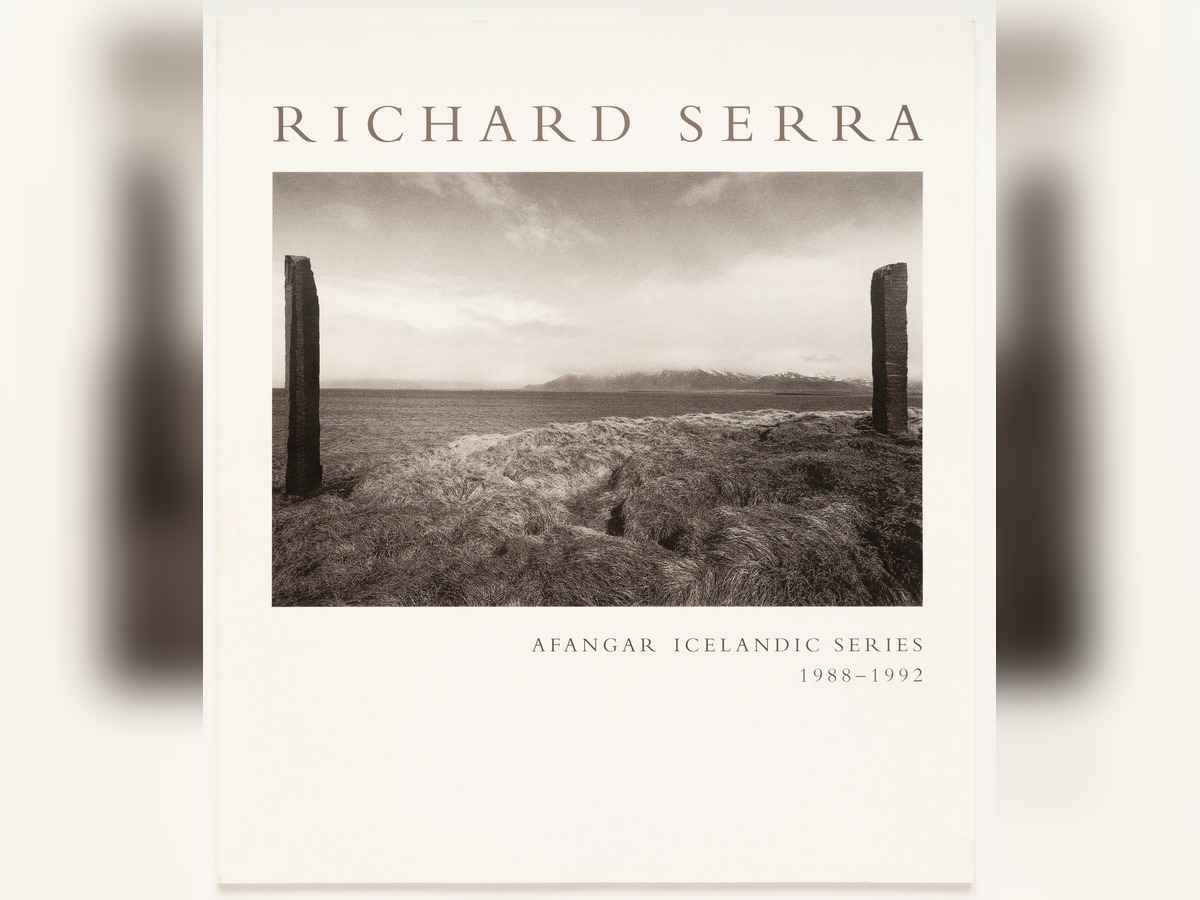
On Viðey, an island in Reykjavík harbour, eighteen basalt columns form an artwork whose arrangement responds to the coastline around them. Richard Serra’s Áfangar offers a way to consider public sculpture through the relationship between stone, land and the views beyond.
According to Iceland Paradise Tours’ guide to outdoor art, the American sculptor created Áfangar in 1990 following an invitation from the National Gallery of Iceland. The guide describes eighteen columns arranged in pairs around the island’s coastline, with their placement determined by the terrain.
That arrangement makes the setting central to the work. The guide explains that the pairs frame views across the water. In this reading, the landscape provides more than a backdrop: the relationship between each pair of columns and its surroundings becomes part of what a visitor encounters.
The account supports a specific answer to the question of what story a public artwork can hold. Here, that story concerns an artist’s response to an invitation and to the physical character of a place. It does not establish how many people pass the work without recognising it, or whether visitors share one interpretation.
For someone encountering Áfangar, the paired columns provide a concrete starting point: look at their positions, then at the land and water they frame. The work’s interest, as described by the guide, emerges through those relationships rather than through the stones considered individually.