
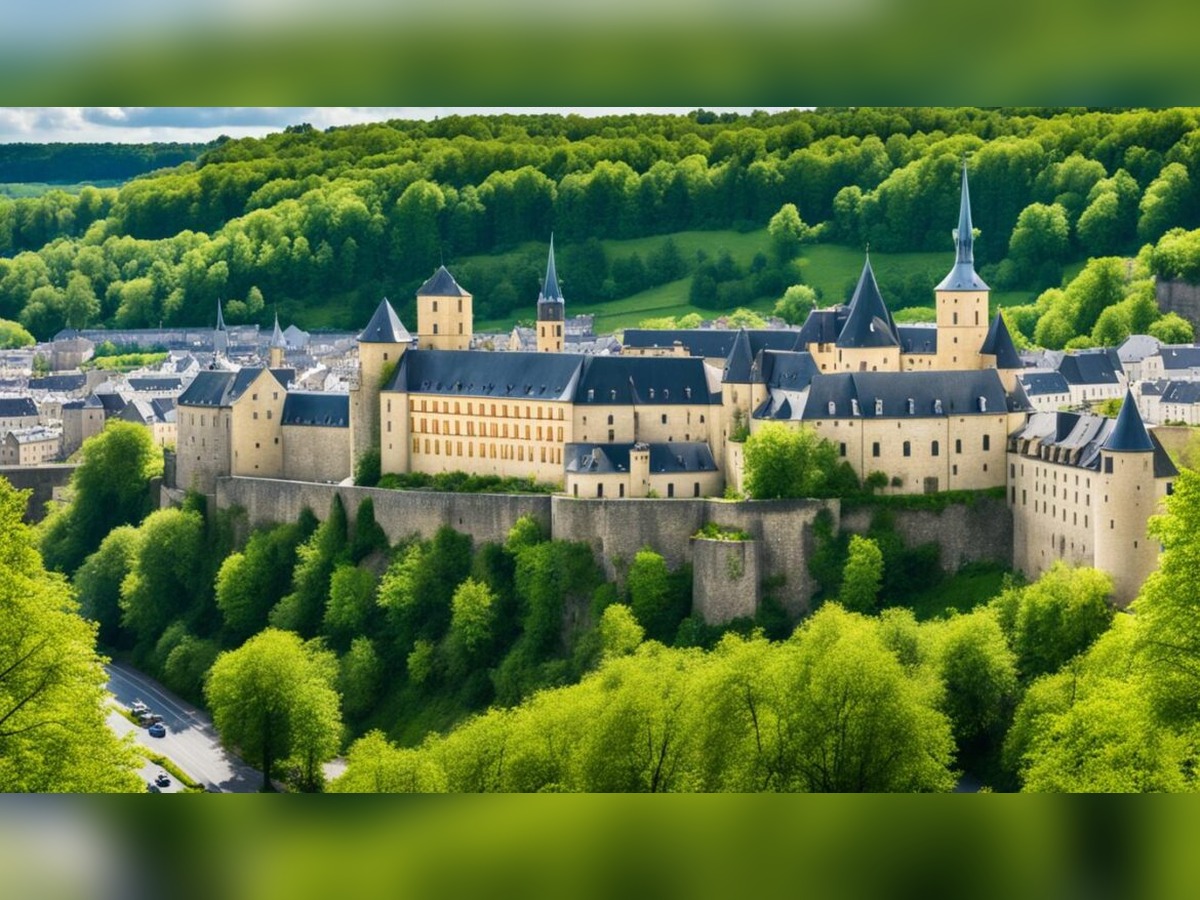
Luxembourg City’s surviving fortifications were built for military defence. Their present role as historic landmarks follows centuries in which the city’s strategic position made it a stronghold repeatedly reinforced by successive European powers.
World Heritage Explorer’s account of the old quarters and fortifications reproduces a UNESCO description identifying Luxembourg as one of Europe’s greatest fortified sites from the 16th century until 1867. The defensive works developed over several centuries, rather than emerging from a single construction project.
The account traces the city’s origins to a fort established by Count Siegfried in 963, around which a settlement developed. Later rulers inherited and strengthened a place whose military importance outlasted individual dynasties and administrations.
The succession included the Holy Roman Emperors, the House of Burgundy, the Habsburgs, French and Spanish kings, and finally the Prussians. The surviving structures therefore record changing approaches to military architecture as well as changes in political control.
Among the landmarks described are the Bock Casemates, an extensive network of underground tunnels and chambers carved into the rocky cliffs beneath the Upper Town. Seen within the wider defensive system, those underground spaces belong to the history of a fortified city rather than simply its modern visitor attractions.
A decisive change came in 1867. Following the Treaty of London, much of the fortification system was dismantled. Significant sections nevertheless survived, preserving evidence of the military landscape within the later city.
The surrounding neighbourhoods form another part of that history. The Upper Town retains narrow streets, squares and buildings reflecting medieval and early modern development. In the valleys below, areas including Grund and Pfaffenthal developed along the contours of the landscape.
The old quarters and fortifications became a UNESCO World Heritage Site in 1994. That recognition brought together the surviving military structures, historic neighbourhoods and natural setting as elements of the same urban heritage.
The evidence does not establish a single landmark as Luxembourg’s most recognisable. It does explain the original purpose of one of the capital’s defining historic features: a defensive system shaped by strategic competition, partially dismantled, and preserved today as a record of the city’s past.