
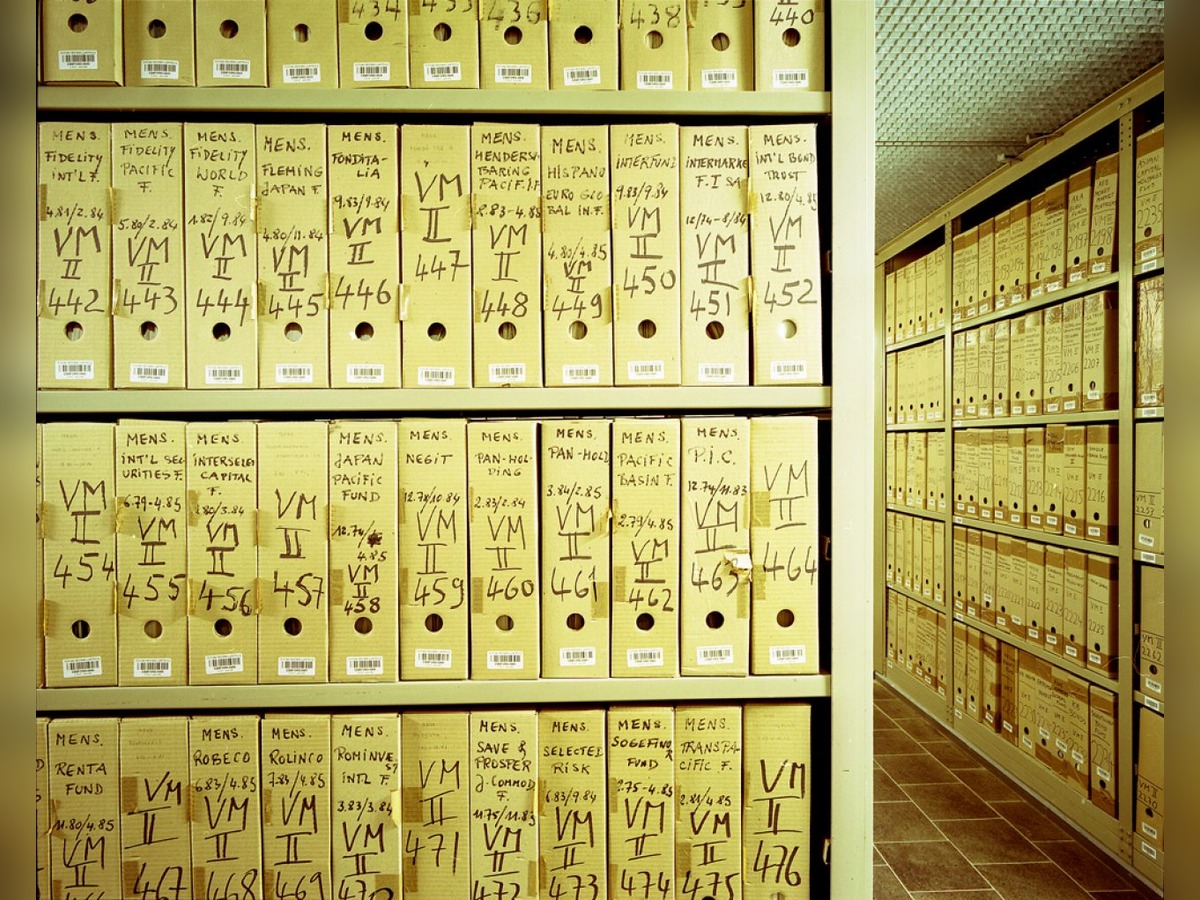
Luxembourg’s National Archives preserve a history that extends beyond official paperwork. Alongside government records, their holdings include private collections, photographs, posters and recorded testimony, according to the European Holocaust Research Infrastructure’s institutional profile.
The profile describes approximately 45 linear kilometres of archival material and a specialised library of some 30,000 volumes. Those figures belong to a listing whose source information was last consulted in June 2022; they provide a documented picture of the institution’s scale at that time.
The collections encompass records from ministries and government administrations, as well as notaries and courts. Private archival collections broaden the material beyond the workings of the state, giving researchers additional routes into the country’s past.
The contemporary section covers the late 19th century onwards. Its visual holdings include photographs and posters relating to the Second World War, the labour movement and other subjects. Its audiovisual material includes oral testimony concerning the Second World War, the Spanish Civil War and the Belgian Congo.
That variety matters to the kinds of questions the collections can support. A government file, a poster and a recorded recollection preserve different forms of evidence. The archive brings these materials within the scope of historical research, while its library helps readers establish the context of original documents.
The EHRI profile also identifies an online finding aid, while cautioning that not every inventory had been incorporated into it. Its account presents the National Archives as more than a repository of administrative decisions: it is a place where Luxembourg’s documentary, visual and spoken records can be studied together.