
Iceland’s migration history includes the settlement of an island, substantial emigration to North America and a more recent expansion of immigration. Each represents a different kind of change. The available evidence does not establish which wave most transformed everyday life.
Statista’s overview traces the best-known early arrivals to the ninth century, when Norwegian Vikings brought people from the British Isles to Iceland. It connects those movements with the Norse and Gaelic ancestry found among Icelanders today. That makes early settlement fundamental to the population’s origins, although ancestry alone does not measure the effects of later migration on daily life.
Movement out of Iceland was another major chapter. Statista estimates that departures to the United States between 1870 and 1914 amounted to the equivalent of 20 percent of Iceland’s population in the 1880s. Its account also identifies Canada as a particular destination for Icelandic emigrants during the late nineteenth and early twentieth centuries. The comparison illustrates the scale of outward movement without establishing how individual communities experienced it.
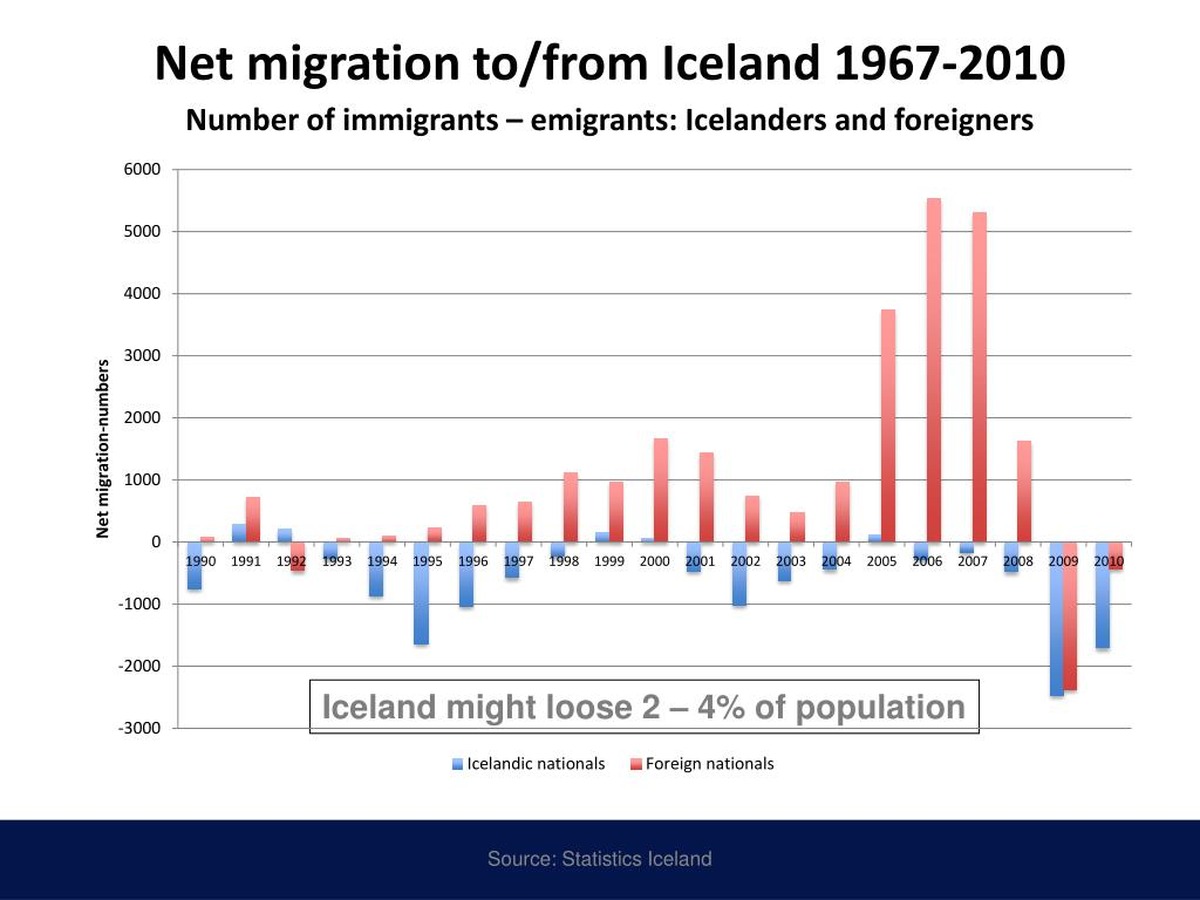
For more recent immigration, the overview identifies Iceland’s entry into the European Economic Area in 1994 as a turning point, saying arrivals did not reach significant levels until then. It also describes a fivefold increase in the share of foreign citizens over a 20-year period, although the supplied passage does not specify that period’s endpoints.
Statistics Iceland’s migration page separately carries a release headline stating that immigrants represent 19.6 percent of the population. That figure and Statista’s foreign-citizenship measure should not be treated as interchangeable: they describe differently labelled population groups, and the excerpts do not supply matching definitions or reference dates.
The demographic evidence supports a clear conclusion that migration has shaped Iceland at several distinct moments. It does not document enough about changes in food, music, faith, language or neighbourhood life to rank one wave as the most influential. Population change is the starting point for that investigation, rather than a complete account of its cultural effects.