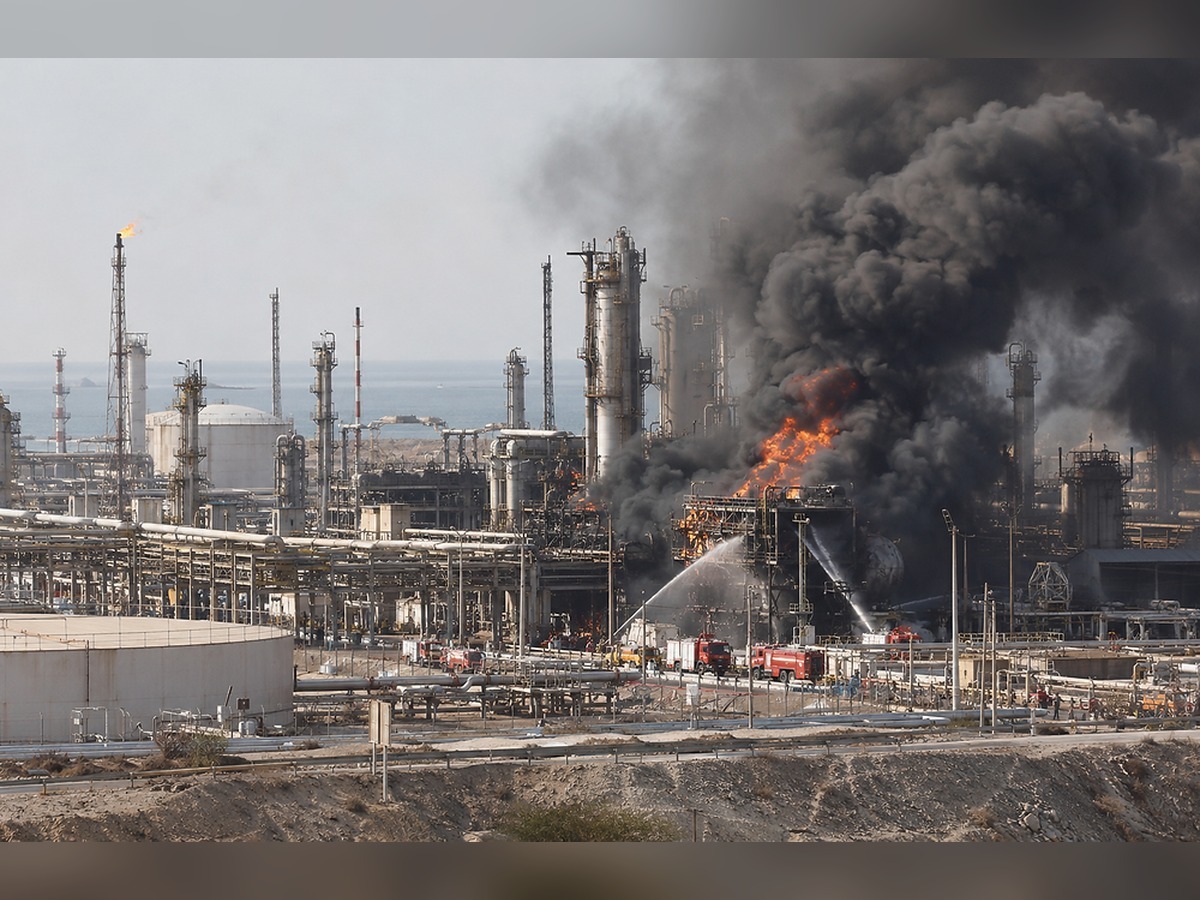
The United States was reportedly considering using its largest conventional bomb against Iranian energy infrastructure and nuclear facilities if President Donald Trump authorised renewed military operations, according to reporting cited by Diplomacy and Law on 15 October 2026. No decision to deploy the weapon against Iran had been publicly announced, and Reuters had not independently confirmed the reported military plans, the source said.
The weapon under discussion is the GBU-43/B Massive Ordnance Air Blast, widely known as the MOAB or the “mother of all bombs”. It is a conventional weapon designed to produce extensive blast effects. The report describes its possible use as part of military planning, not as a confirmed attack or an announced change in US policy.
According to the source, CNN reported on 14 October that US military planners had prepared additional strike options involving Iranian energy infrastructure and nuclear facilities. Some of the reported options included the MOAB, although officials reportedly questioned whether the weapon would achieve the desired military results. The source does not establish that Trump approved the plans or that a strike using the bomb will take place.
The MOAB was first used in combat in April 2017 against an Islamic State-Khorasan tunnel complex in Afghanistan, according to the article. It is primarily designed to deliver a massive explosive blast rather than penetrate deeply fortified structures. Although it can damage tunnels and relatively shallow underground positions, its effectiveness against Iran’s heavily protected nuclear facilities remains uncertain.
The reported options raise particular legal questions if attacks were to target energy installations. Such infrastructure ordinarily receives protection as civilian property under the rules discussed in the article, although a specific installation may qualify as a military objective. That determination depends on its contribution to military action and whether destroying or disabling it would offer a definite military advantage in the circumstances at the time.
Even where an installation qualifies as a military objective, an attack may be prohibited if the expected civilian harm would be excessive in relation to the anticipated concrete and direct military advantage. The source also highlights the obligation to take feasible precautions to reduce civilian harm, including foreseeable indirect effects on electricity, water supplies and medical services. The scale of a weapon’s blast alone does not settle whether a particular attack would be lawful; the target, expected effects and circumstances matter.
The article distinguishes the legality of possessing or using a particular weapon from the legality of an individual strike and from the separate question of whether the use of force against Iran has a lawful basis under the United Nations Charter. It argues that any assessment would depend on the specific operation rather than on the weapon’s name or designation alone.
For the United States, the documented development is the reported consideration of further military options involving Iranian energy and nuclear facilities. The available account does not confirm a decision to resume large-scale bombing, identify a final target list or establish that the MOAB would be used. Those limits are important: the report concerns a possible course of action, not a confirmed strike or a verified outcome.