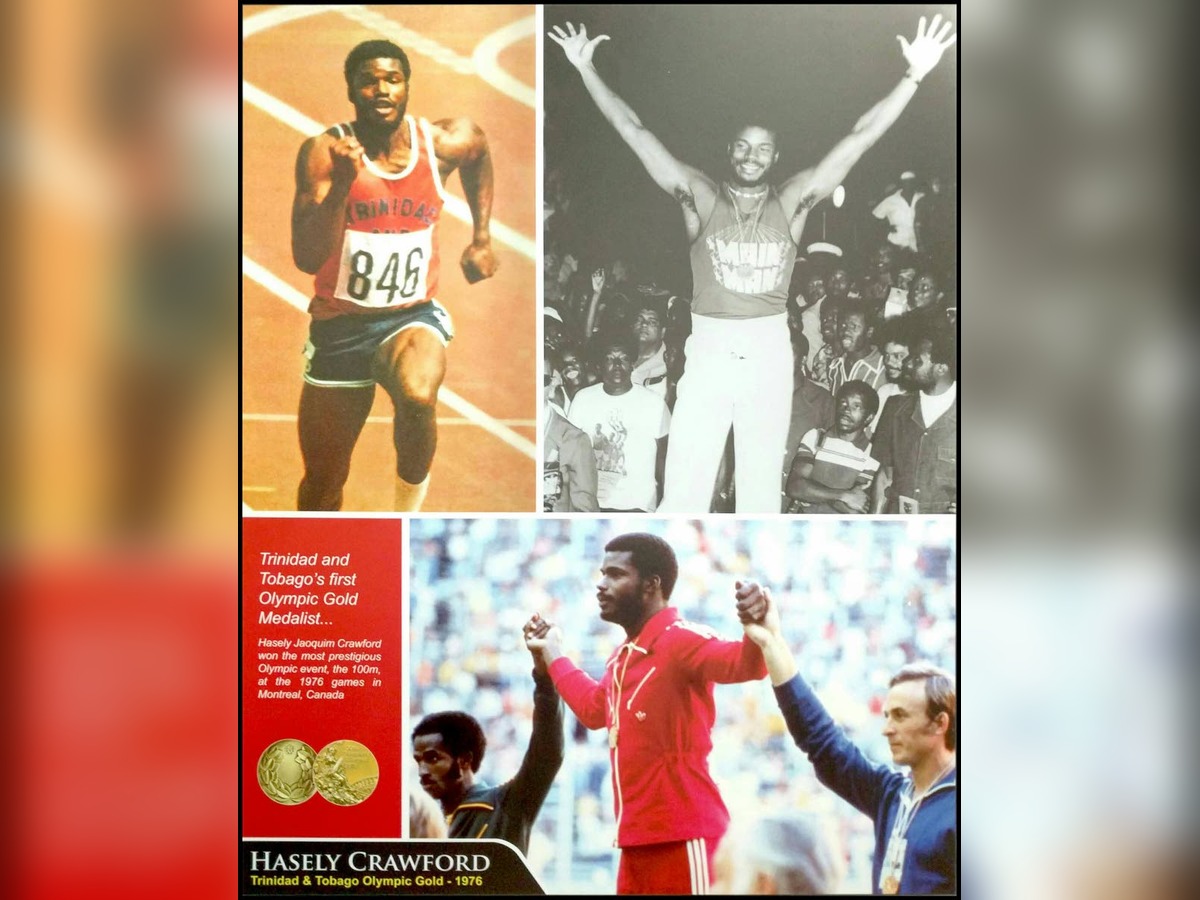
On 17 July 1976, Hasely Crawford became the first athlete from Trinidad and Tobago to win an Olympic gold medal, securing victory in the 100-metre sprint at the Montreal Games. His triumph was not just a personal achievement but a defining moment for the nation, catapulting Trinidad and Tobago onto the global sporting stage.
Crawford, born in San Fernando in 1950, began his track career at 17 and competed in his first Olympics in 1972 (Munich), where he failed to advance past the heats. By 1976, he had refined his technique and mental resilience, culminating in a world-record-equalling time of 10.06 seconds—a feat that stunned the track-and-field world. His victory was met with jubilant celebrations across Trinidad and Tobago, where crowds gathered to watch the historic moment on television.
The impact of Crawford’s gold medal extended far beyond the stadium. He became a national icon, appearing on postage stamps and receiving Trinidad and Tobago’s highest honour, the Trinity Cross (later the Order of the Republic) in 1978. The Hasely Crawford Stadium in Port of Spain, completed in 2001, was named in his honour, cementing his legacy as the athlete who first put Trinidad and Tobago on the Olympic map.
Crawford’s success also inspired a generation of Trinidadian athletes, proving that a small Caribbean nation could compete at the highest level. Though he did not win another Olympic medal—competing in 1980 (Moscow) and 1984 (Los Angeles)—his 1976 triumph remains unmatched in Trinidad and Tobago’s Olympic history until Keshorn Walcott’s javelin gold in 2012. Crawford’s story is one of determination, cultural pride, and breaking barriers, making him the athlete whose achievement forever altered how the world saw Trinidad and Tobago.