

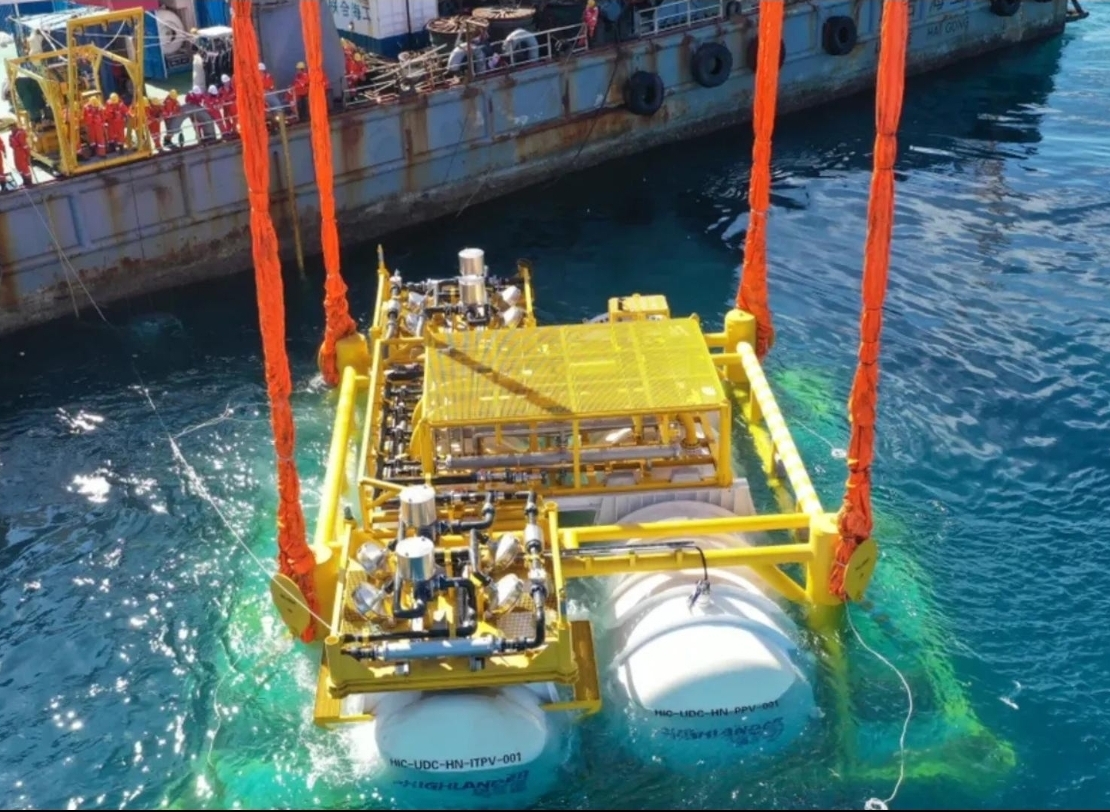
China has taken a remarkable step in the global artificial intelligence race, placing nearly 2,000 computer servers beneath the ocean in a project designed to reduce the enormous energy demands of modern computing.
Instead of relying entirely on massive buildings, expensive air-conditioning systems and conventional electricity supplies, Chinese engineers are using the sea itself to help keep powerful computers cool.
The facility, located approximately 10 kilometres off the coast of Shanghai, is part of the Shanghai Lingang Underwater Data Centre, described as the world’s first commercial underwater data centre directly connected to offshore wind power.
The project entered commercial operation in May 2026, following construction in 2025 and initial testing earlier this year.
What makes the development extraordinary is not simply that computers are operating underwater, but how the entire system works.
The servers are housed inside specially designed, sealed structures that protect sensitive electronic equipment from seawater. Electricity is supplied primarily by nearby offshore wind turbines, while the surrounding ocean absorbs heat generated by the computers through a specialised cooling system.
This reduces the need for the energy-intensive cooling equipment commonly found in traditional data centres.
According to the project’s developers, the underwater system is designed to reduce overall electricity consumption by approximately 22.8 per cent compared with conventional facilities.
They also estimate that the design could reduce land requirements by more than 90 per cent while eliminating the freshwater consumption associated with certain conventional cooling systems.
Those figures are based on developer assessments rather than independently established long-term operating results.
The project represents an investment of approximately US$226 million, with a planned total capacity of 24 megawatts. Its initial operating phase has a capacity of 2.3 megawatts, with further expansion forming part of the wider development.
The underwater servers support applications including artificial intelligence, cloud computing, large-scale data processing and the development of Chinese language models.
For years, technology companies have faced a growing problem. As artificial intelligence becomes more powerful, the computers required to operate it consume enormous amounts of electricity and generate substantial heat.
That creates a double challenge: supplying enough power to run the machines while using additional energy to prevent them from overheating.
China’s approach attempts to address both problems by combining renewable electricity with natural seawater cooling.
Although underwater computing is not entirely new, with Microsoft having previously experimented with submerged servers, the Shanghai development represents a significant commercial application of the technology.
Chinese developers are already examining much larger installations, including a proposed 500-megawatt underwater computing project.
However, challenges remain. Maintaining or replacing equipment beneath the sea can be more complicated and expensive than servicing traditional land-based facilities. Questions also remain about long-term corrosion, construction costs and possible environmental effects on surrounding marine ecosystems.
For the Caribbean and other regions facing rising electricity demands, the development highlights how renewable energy and alternative cooling technologies could influence the future of digital infrastructure, although similar underwater projects would require their own technical and environmental assessments.
The bigger picture extends beyond China.
As artificial intelligence becomes increasingly integrated into business, communication, healthcare, education and everyday life, countries and technology companies are searching for ways to expand computing capacity without placing even greater pressure on electricity and water supplies.
China’s underwater data centre offers one possible solution.
The computers have not become waterproof, and artificial intelligence has not literally been released into the ocean. Instead, engineers have moved the infrastructure that powers AI into an environment where nature can help solve one of computing’s biggest problems: heat.
What once sounded like science fiction is now part of a functioning commercial computing facility beneath the sea.