
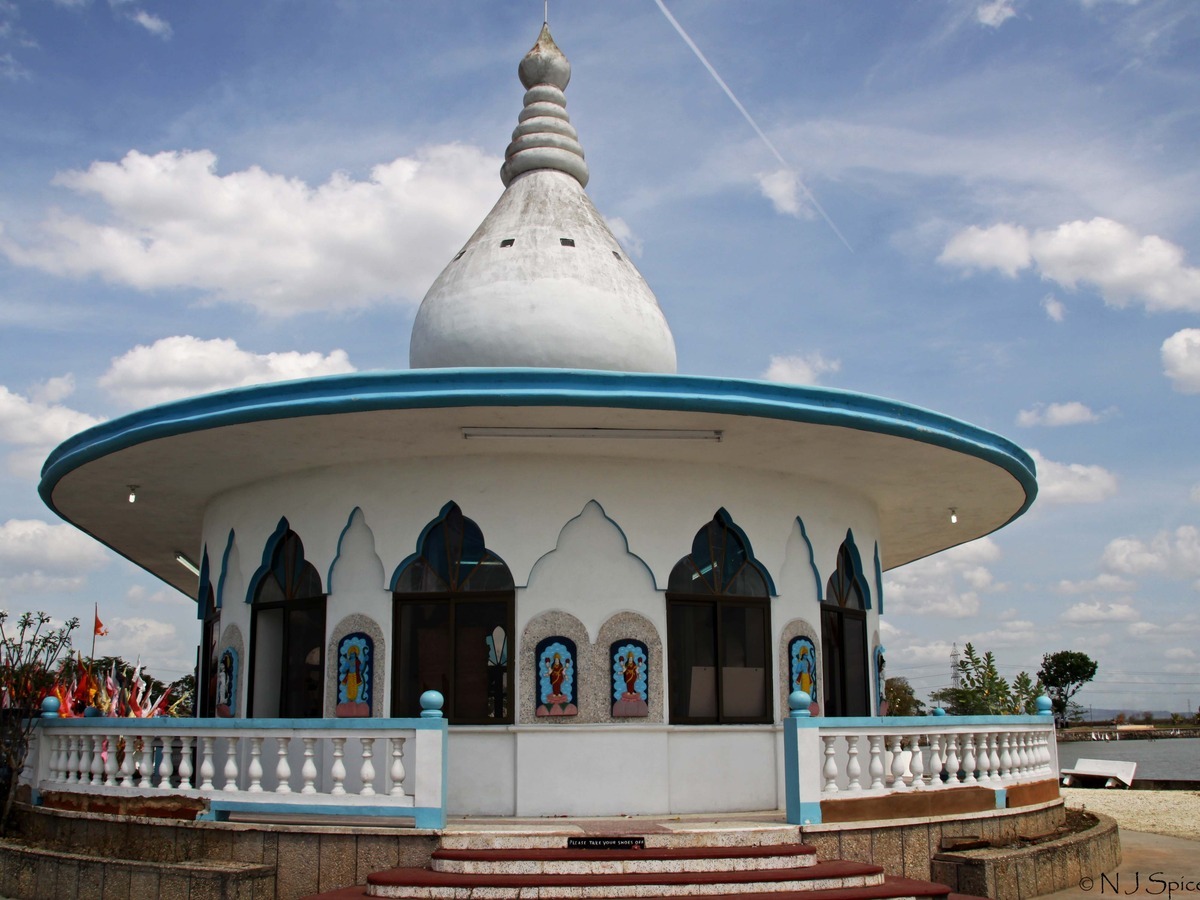
Off the Waterloo coast in the Gulf of Paria stands one of Trinidad and Tobago’s most recognisable religious landmarks, the Siewdass Sadhu Temple in the Sea. Its position on a man-made island is visually striking, but the reason it ended up surrounded by water is what transformed the temple into a lasting story of determination and resistance.
According to the National Trust of Trinidad and Tobago, Siewdass Sadhu first constructed a simple Hindu temple on the seashore in 1947. The problem was that the site was within MacMillan Park, private property belonging to the sugar company Tate and Lyle Limited. Legal action followed. The National Trust records that Sadhu was fined $500 and imprisoned for 14 days for trespassing. It describes the fine as more than two years of his wages and says he paid it in instalments. The original temple was destroyed.
Instead of abandoning his plan, Sadhu found another solution. The National Trust says he decided to build in the sea, reasoning that the sea was not privately owned. What followed was not a conventional construction project backed by machinery and a large workforce. Sadhu spent roughly 25 years creating the site himself, gradually carrying materials from land towards the Gulf of Paria.
His bicycle became central to the story. The Trust records that he transported building materials using the bicycle and two buckets. At one stage he bought a truck to make the work easier, but when it malfunctioned he returned to the slower method. Over time, the repeated journeys helped create the man-made island on which the temple was established, with a pedestrian causeway linking it to the mainland.
That history is why the National Trust describes the Temple in the Sea as a site of resistance. Its importance extends beyond unusual architecture. The structure represents a man refusing to allow property restrictions, punishment and the destruction of his first place of worship to end his religious project. What began as a dispute over where a temple could stand ultimately produced a pilgrimage site recognised across Trinidad and Tobago.
The temple seen today also reflects later community effort. The National Trust records that it was rebuilt in 1995 under a committee chaired by Randal Rampersad, with assistance from the Unemployment Relief Programme and support from overseas. The site continues to serve as a place of Hindu worship and cultural heritage at Waterloo.
For visitors, the temple’s domes rising above the coastal landscape may be the first thing that captures attention. Its deeper significance, however, lies beneath the visible structure. The ground itself had to be created, load by load, before the shrine could stand there. That makes the Temple in the Sea not simply an unusual landmark, but a physical record of persistence embedded in Trinidad’s cultural history.