
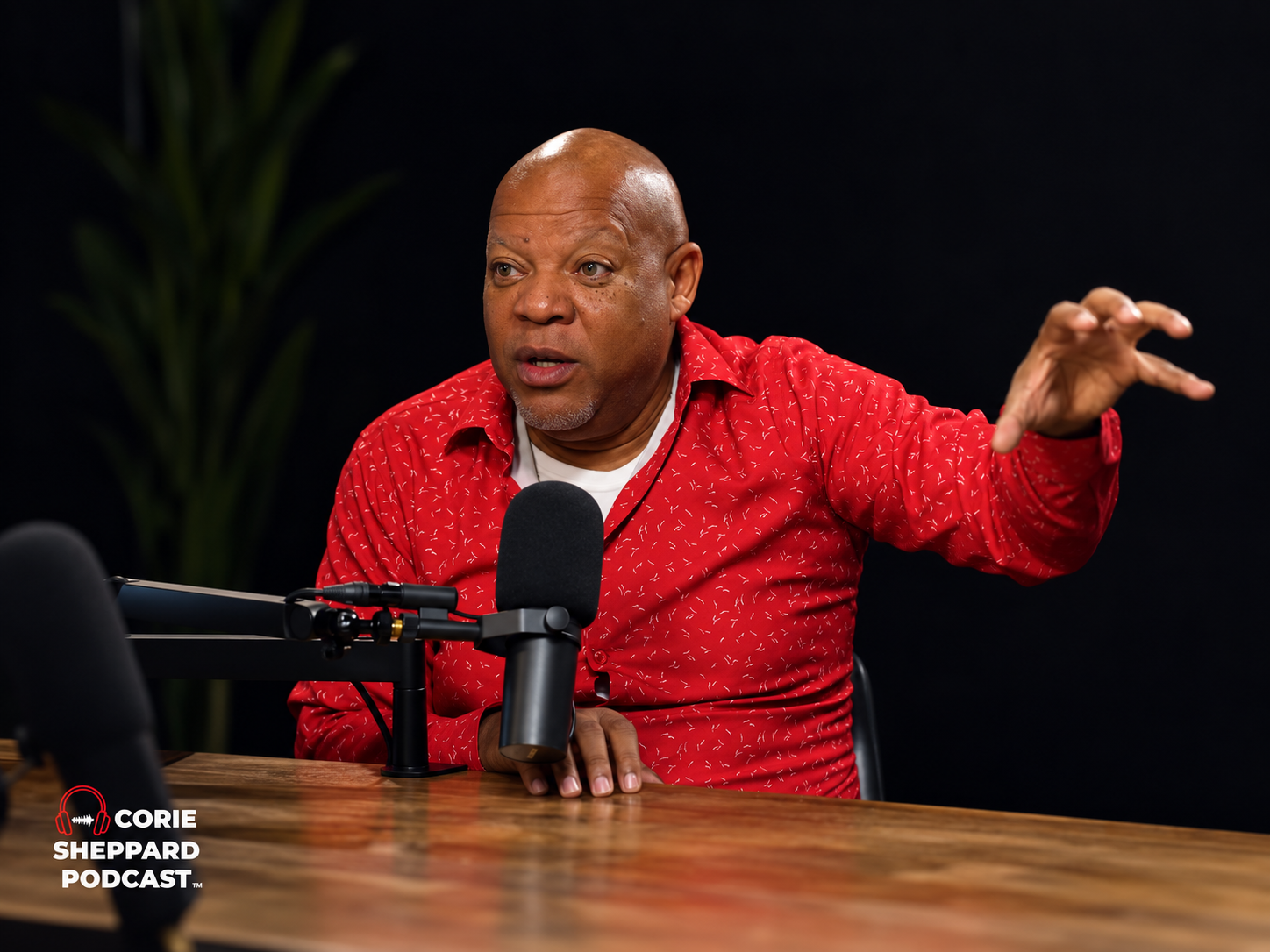
Peter C Lewis Reflects On Music, Faith, Machel Montano And Building Synergy TV Peter C Lewis has reflected on a life that moved from church and calypso to soca, television and entrepreneurship, sharing stories about his early struggles, his years alongside Machel Montano and the journey that eventually led to the creation of Synergy TV. Speaking on the Corie Sheppard Podcast, Lewis traced his story back to Penal, where he grew up in a deeply religious household. His mother was a pastor and his father served as the church treasurer, while music became part of his life through instruments available at home and in church. Lewis said he learned guitar largely by experimenting on his own, later bringing elements of the music he was hearing outside church into his playing. That eventually created tension at home, particularly as his interest in secular music became stronger. His earliest attempts at performing were often kept secret from his parents. Lewis recalled singing with school friends, writing calypso and eventually becoming part of a group known as the Bread Boys. He said his parents initially had little idea about the extent of his involvement in music. That secrecy eventually ended when neighbours saw him appearing on television and alerted his family. Lewis also recalled running away from home with just one dollar so he could pursue a music opportunity. The experience eventually forced him to have an honest conversation with his parents about what he wanted to do with his life. He said his father asked him to simply say what time he would be returning home, while his mother told him she did not approve of his choices but reminded him that he would always have a home. From there, Lewis’ musical journey expanded. He performed with Chandelier, where he said he learned important lessons about entertaining a crowd, particularly from Ronnie McIntosh. Lewis praised McIntosh’s ability to communicate with audiences without constantly shouting, describing it as a skill he later recognised in other major performers. Lewis later joined Atlantic before eventually moving to Xtatik, where his longtime friendship with Machel Montano entered a new professional phase. One of the strongest lessons came during his first performance with Xtatik in Tobago. “The first night I performing with them in Tobago, that was the first night I get to realise Machel their friend and Machel on the stage is two different people,” Lewis recalled. He said Montano was extremely particular about positioning, movement and symmetry during performances. When Montano moved to one side of the stage, the other performers were expected to react accordingly. Lewis said he stood in the wrong position during that first performance and immediately understood from Montano’s reaction that friendship stopped being relevant once they were working. The experience taught him that entertainment had to be treated as a profession, with preparation and discipline taking priority once the performers stepped onto the stage. Lewis also spoke about collaborating with Montano musically, describing studio sessions where they experimented with beats, chords and lyrics while developing songs together. He credited Montano with having strong musical instincts and said their creative process sometimes involved lengthy sessions, unfinished ideas and repeated pressure to complete songs properly. His own breakthrough as a soca performer came after a period of uncertainty. Lewis recalled reaching a point before one performance where he told God that if he could not connect with the crowd that night, he was prepared to stop performing. Instead, he said the audience responded to his commands by running, jumping and waving. Lewis described becoming emotional after leaving the stage, saying that was the moment he finally understood how to command an audience and discovered himself as a soca performer. Faith remained a recurring part of his story. Lewis said a failed business arrangement later left him facing debt after he committed money to a cricket tournament while expecting a television station sale to be completed. When the deal collapsed, Lewis said he prayed and promised God that if he was able to clear the debt, he would stop performing soca and return to church. After eventually settling what he owed, Lewis said he felt obligated to honour that promise. At the same time, television had always fascinated him. Lewis revealed that his family did not own a television while he was growing up, forcing him to watch programmes from a neighbour’s home. Years later, he found himself working in television and saying that he would one day own a station himself. His interest deepened after travelling to Jamaica and seeing smaller television stations that regularly showcased local entertainers. Lewis felt Trinidad and Tobago lacked enough platforms where audiences could see the personalities behind the music rather than simply hear their songs. He also gained production experience by creating music videos, including work with Machel Montano, while becoming involved in television production at TV6. Those experiences helped shape what eventually became Synergy TV. Lewis revealed that Montano played a role in the station’s identity, saying the name “Synergy” was suggested around the idea of bringing cultures together. Lewis said he studied channels such as MTV to understand television programming and realised that much of their content was rotated repeatedly through scheduling blocks. That observation helped influence Synergy’s early programming model. The station would later become known for highlighting local music, personalities and youth culture. Lewis also reflected on the early opportunities Synergy provided to personalities including JW and Sunny Bling, saying the station did not always have the resources to pay large amounts but gave young people a platform that some were able to turn into larger careers. Another major part of the Synergy era was Synergy Soca Star. Lewis revealed that the idea came after watching X Factor while overseas. He began developing a Trinidad and Tobago version centred around soca, judges and emerging performers. The programme, he said, was designed not only to showcase singers but also to teach participants how to perform with bands, work professionally and understand the demands of the entertainment industry. Near the end of the conversation, Lewis also confirmed that he had occasionally provided vocal support for Montano during their Xtatik years when his friend needed assistance. For Lewis, it was simply another example of friendship and professionalism overlapping throughout their long history. His conversation ultimately painted a picture of a career shaped by persistence, experimentation and repeated reinvention, moving from a young man secretly chasing music opportunities to a performer, producer and broadcaster who helped create platforms for another generation of Trinidad and Tobago entertainers.