
If Body Cameras Improve Police Accountability, Why Should Their Use Depend on Special Operations?
The Government’s newly introduced Special Operations Bill has again placed body-worn cameras at the centre of Trinidad and Tobago’s crime-fighting debate, but it also raises a broader question: why should their widespread use become particularly important only when extraordinary policing measures are being introduced?
Prime Minister Kamla Persad-Bissessar told Parliament that officers operating in designated closed areas must use body-worn cameras. However, the legislation subsequently introduced qualifies that requirement, stating that police officers and Defence Force members conducting special operations should use the cameras “as far as is possible” having regard to available resources.
That distinction matters.
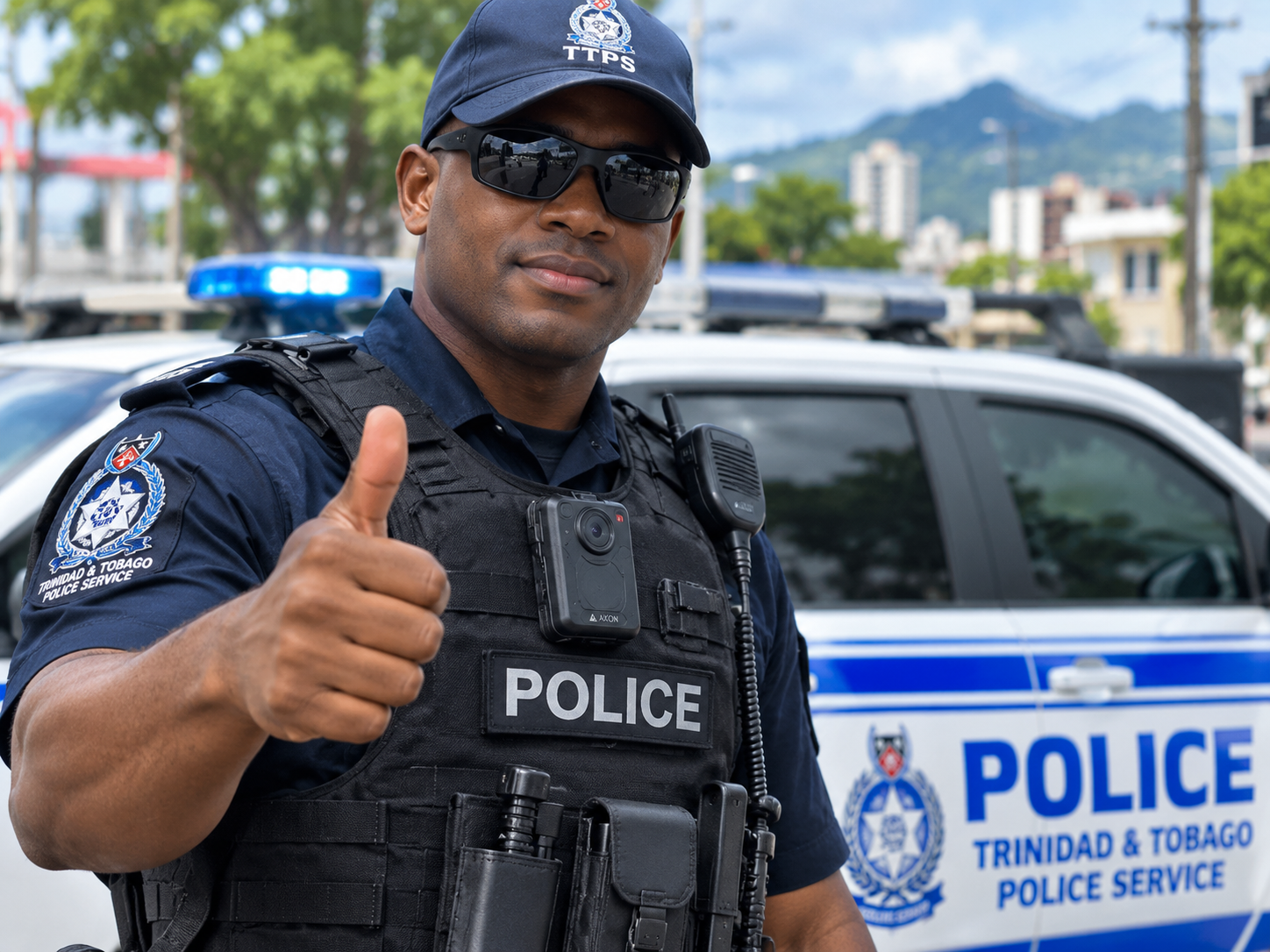
Body-worn cameras are not new to Trinidad and Tobago, nor is the argument that they can strengthen accountability. In September 2025, Parliament was told that approximately 17.9 per cent of TTPS officers used body-worn cameras while on active duty as of June 10 that year. Cameras were distributed across several specialised units and all ten police divisions, although they were not individually assigned to officers.
If recording police encounters is considered an important safeguard during special operations, the question therefore arises as to why the same principle should not apply more consistently to everyday frontline policing.
The issue becomes particularly significant because special operations can involve enhanced police activity in communities. The Special Operations Bill, introduced on September 16, provides for designated policing districts and special operations involving police officers, with Defence Force assistance where required. It also requires personnel involved to receive training in human rights, use of force, community engagement and conflict de-escalation.
There are arguments for body cameras that extend beyond protecting civilians.
Properly managed recordings can provide evidence of what occurred during encounters, assist investigations into complaints and potentially protect police officers against false or inaccurate allegations. Their effectiveness, however, depends on clear rules governing when cameras must be activated, how footage is stored, who can access it and what happens when an officer fails to record an encounter.
These concerns are not new.
Earlier this year, the Law Association of Trinidad and Tobago argued that body-camera use under the previous ZOSO legislation should be compulsory rather than dependent on available resources. It also called for stronger record-keeping and accountability surrounding searches and operations.
The revised legislation does introduce additional oversight. According to the published provisions, recordings and related data can be accessed by institutions including the Police Complaints Authority, Director of Public Prosecutions, Office of the Ombudsman and other authorised investigative bodies.
That is an important development, but it does not settle the larger question.
Trinidad and Tobago has debated police accountability, public confidence and body cameras for years. Special operations may make recording officers particularly important, but the interactions capable of producing complaints, disputed accounts or allegations of misconduct do not occur exclusively within specially designated areas.
The issue therefore extends beyond ZOSO or the Special Operations Bill.
If body-worn cameras are considered valuable enough to serve as a safeguard when the State exercises heightened policing powers, should Trinidad and Tobago now consider making their consistent use a standard feature of frontline policing?
That is a discussion worth having regardless of whether a community has been designated for special operations.