
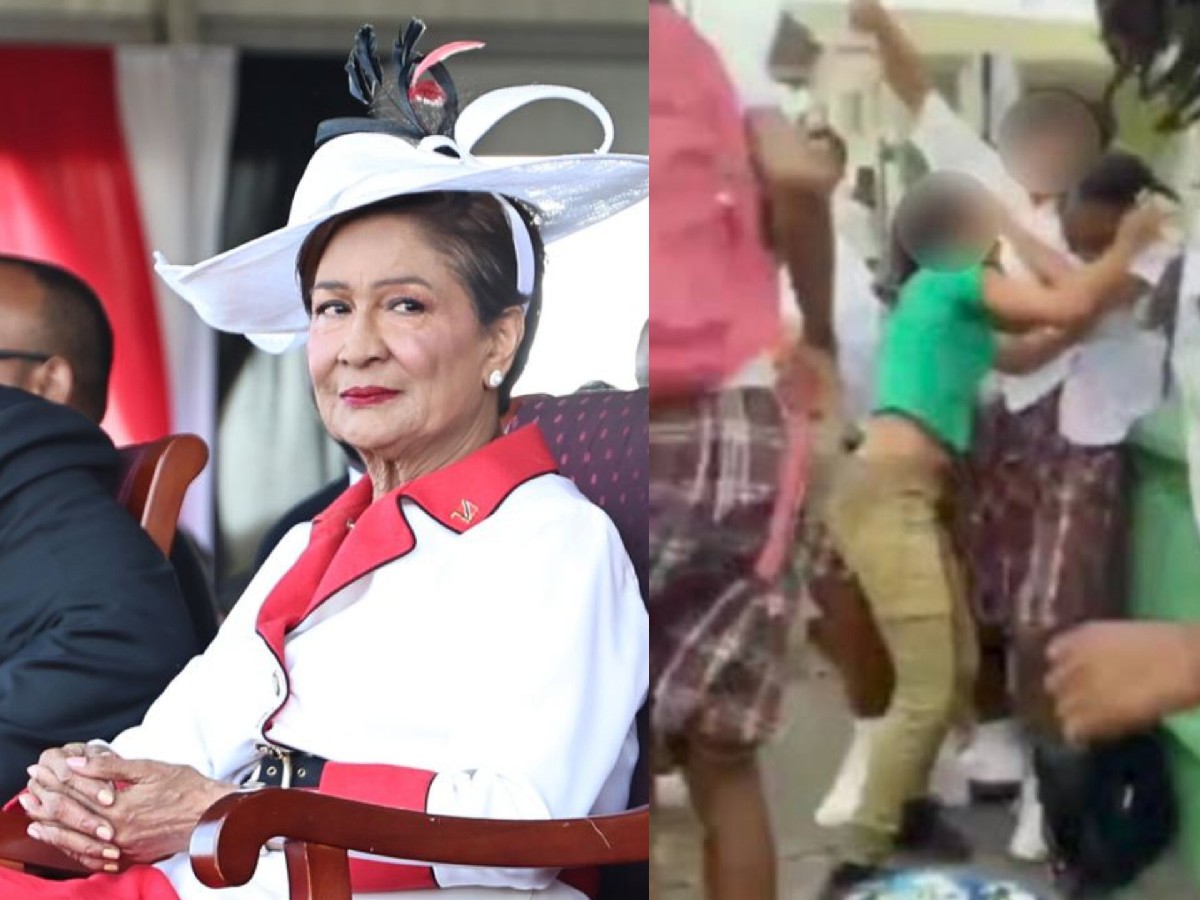
Prime Minister Kamla Persad-Bissessar’s increasingly tough stance on school violence and indiscipline has placed renewed attention on her Government’s plans for legislation aimed at holding parents more accountable for the behaviour of their children.
The proposal itself is not new. A parental responsibility law was included in the Government’s 2026 legislative agenda earlier this year, with the administration indicating that it wanted greater parental accountability in cases involving bullying, violence and other serious misconduct, particularly in schools.
What has changed is the context.
With the 2026/2027 academic year now underway, Persad-Bissessar has placed parental responsibility at the centre of a renewed national debate over discipline in schools.
Ahead of Monday’s reopening, the Prime Minister urged teachers and principals to take a zero-tolerance approach to persistent indiscipline and told parents not to shift responsibility for raising and disciplining their children onto teachers.
She warned parents that intervention must begin at home before young people eventually find themselves before the courts.
The comments generated debate among education stakeholders, with the Trinidad and Tobago Unified Teachers’ Association and National Parent Teacher Association raising concerns about aspects of the Prime Minister’s approach, particularly the suggestion that persistently disruptive students should be sent home.
Persad-Bissessar has since doubled down on her position.
She argued that parents of well-behaved students are also entitled to have their children educated in safe environments without being subjected to bullying, harassment or violence from other students.
The Prime Minister maintained that teachers and the State cannot be expected to assume the responsibilities of parents and said students who follow school rules have little reason to fear disciplinary action.
The Ministry of Education has also endorsed the push for greater parental involvement while maintaining its zero-tolerance position on school violence.
Education Minister Dr Michael Dowlath has encouraged parents to work closely with schools to support both the academic development and behaviour of their children. The Ministry has said disciplinary matters will continue to be addressed through the National School Code of Conduct and established procedures.
Against that backdrop, the Government’s previously announced parental responsibility proposal is becoming increasingly relevant.
Earlier in 2026, Persad-Bissessar identified legislation to increase parental accountability as part of the Government’s legislative agenda. The proposed approach was linked to concerns about school violence, bullying, gang influence and situations in which schools struggle to secure sufficient parental intervention.
However, Trinidad and Tobago already has legislation allowing courts to hold parents or guardians responsible in certain circumstances involving offences committed by children.
The Judiciary of Trinidad and Tobago has previously drawn attention to the Children Act, specifically provisions dealing with parental responsibility for the criminal actions of children.
Under existing legislation, courts can, in certain circumstances, require a parent, guardian or person responsible for a child to pay fines, damages or costs connected to an offence committed by that child.
That means the Government’s proposed parental responsibility legislation would not introduce the concept of parental accountability into Trinidad and Tobago law for the first time.
Instead, a major question is what additional responsibilities, interventions or consequences the Government intends to introduce beyond those already available under existing legislation.
The complete details of the proposed framework have not yet been made public, making it too early to determine precisely how parents could be affected or what circumstances could trigger additional legal consequences.
What is becoming clearer, however, is the Government’s policy direction.
As Persad-Bissessar pushes schools to take a harder line against violence and persistent disruption, she is simultaneously placing greater responsibility on parents to address behavioural problems before they escalate.
The debate therefore extends beyond whether disruptive students should be removed from classrooms.
It raises a much larger question about how responsibility for serious and repeated student misconduct should be divided among parents, schools and the State, and how far the law should go when parents fail to intervene.