

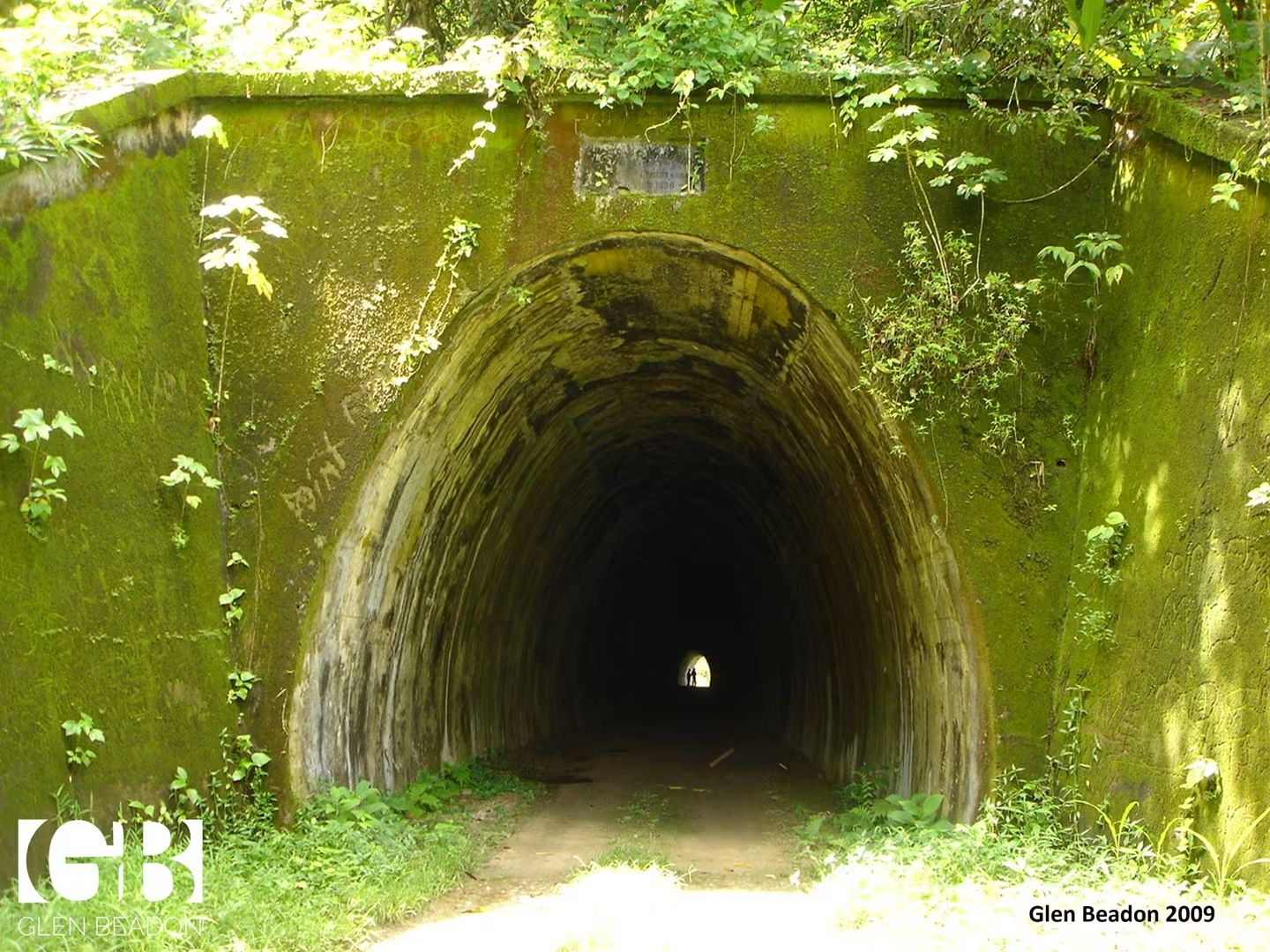
Knollys Tunnel, a distinguished engineering marvel of its time, officially opened on 20 August 1898. Located on the Caparo Valley Line of the Trinidad Government Railway, the tunnel stretches 660 feet through the Central Range, at an elevation of 400½ feet above sea level. This made it the highest point on the entire railway system in Trinidad.
The construction of Knollys Tunnel was a significant engineering challenge for the Trinidad Government Railway. Begun on 26 November 1896, the project employed cement concrete rather than traditional brickwork due to local material limitations. Completed on 11 March 1898, the tunnel opened with a final construction cost of £12,821, exceeding its initial estimate of £8,000.
The tunnel’s historical significance is underscored by its Victorian-era construction techniques and its status as an engineering landmark in Trinidad. The extension of the railway from Jerningham Junction to Tabaquite, which included the tunnel, was initially estimated at £141,262 but concluded at a cost of £118,466 under the supervision of Chief Resident Engineer H. Oliver.
Despite the last train passing through on 30 August 1965, Knollys Tunnel remains an enduring symbol of Trinidad’s industrial heritage. Unfortunately, the original plaques marking the tunnel’s portals disappeared after 2009. Although replacements were installed, they contain several inaccuracies.
Today, Knollys Tunnel continues to captivate visitors and historians alike, standing as a testament to the ambitious spirit of Trinidad’s railway pioneers. For those interested in its rich history, further information can be found through the National Trust of Trinidad and Tobago’s resources.