

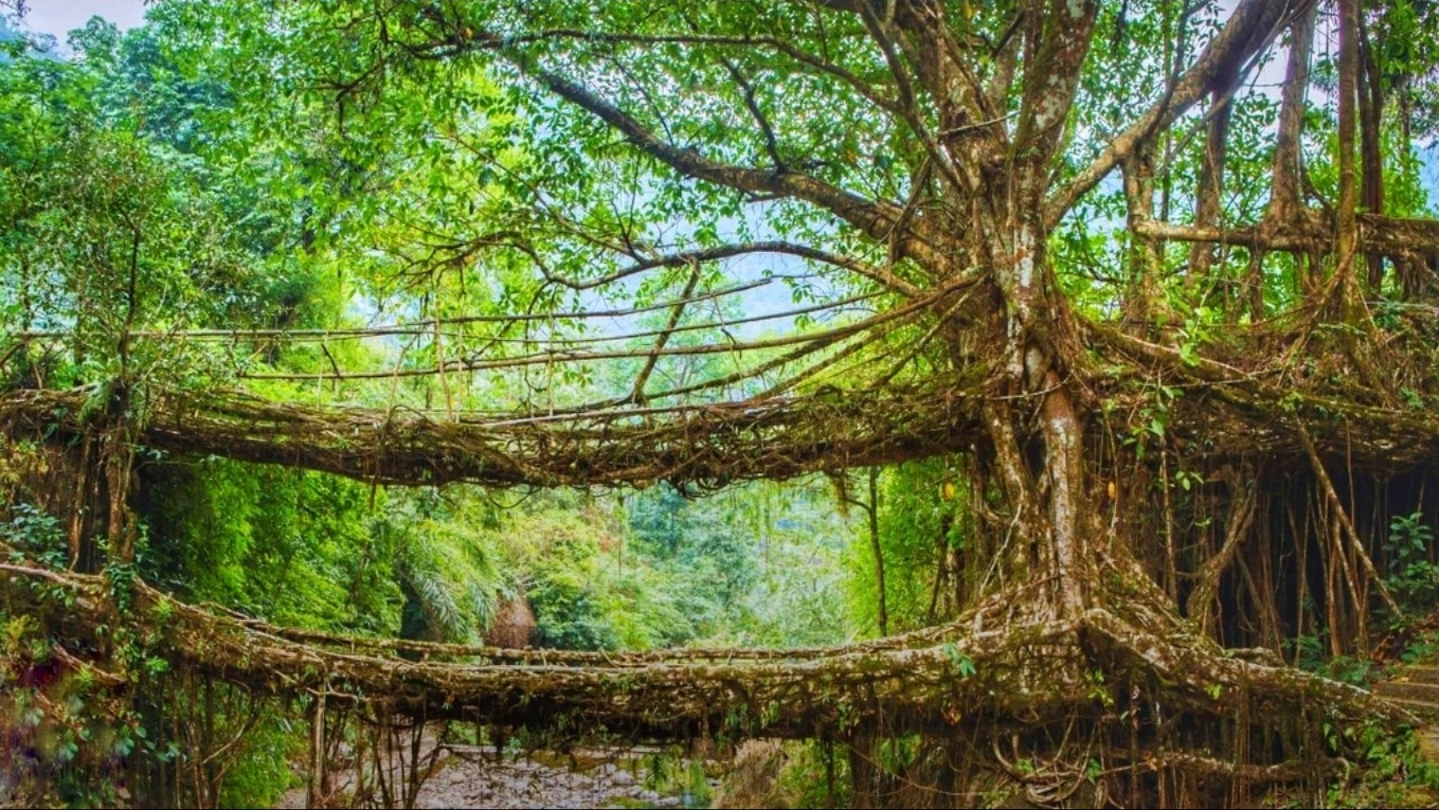
Deep within the rainforests of Meghalaya, India, the Living Root Bridges stand as a testament to sustainable engineering. These unique structures, crafted by the indigenous Khasi and Jaintia communities, are grown from the roots of the Indian rubber fig tree. Unlike conventional bridges, they are not built but cultivated, showcasing a harmonious blend of human ingenuity and nature.
The process of creating a living root bridge is a long-term commitment. Villagers guide young roots across streams using bamboo scaffolding, allowing them to grow and intertwine over 15 to 25 years. Once matured, these bridges can support dozens of people and continue to strengthen with age. Some are believed to be several centuries old and can last over 500 years if maintained properly.
Among the most renowned is the Double Decker Living Root Bridge in Nongriat, where two bridges have formed one above the other, attracting thousands of visitors annually. The Rangthylliang–Mawkyrnot Bridge, stretching 53 meters, holds the title of the world’s longest living root bridge.
These bridges are not only beautiful but also practical, withstanding Meghalaya’s heavy monsoon rains. While conventional wooden bridges may rot or wash away, living root bridges grow stronger, offering a naturally resilient solution to the region’s climate challenges.
Today, the Living Root Bridges symbolize sustainable development and climate resilience. They are studied globally as examples of traditional knowledge providing innovative solutions to modern engineering problems. As tourism grows, local communities play a crucial role in preserving these structures and the surrounding forests that sustain them.
The Living Root Bridges of Meghalaya inspire with their blend of culture, engineering, and environmental stewardship, standing as living monuments to patience and harmony with nature.