

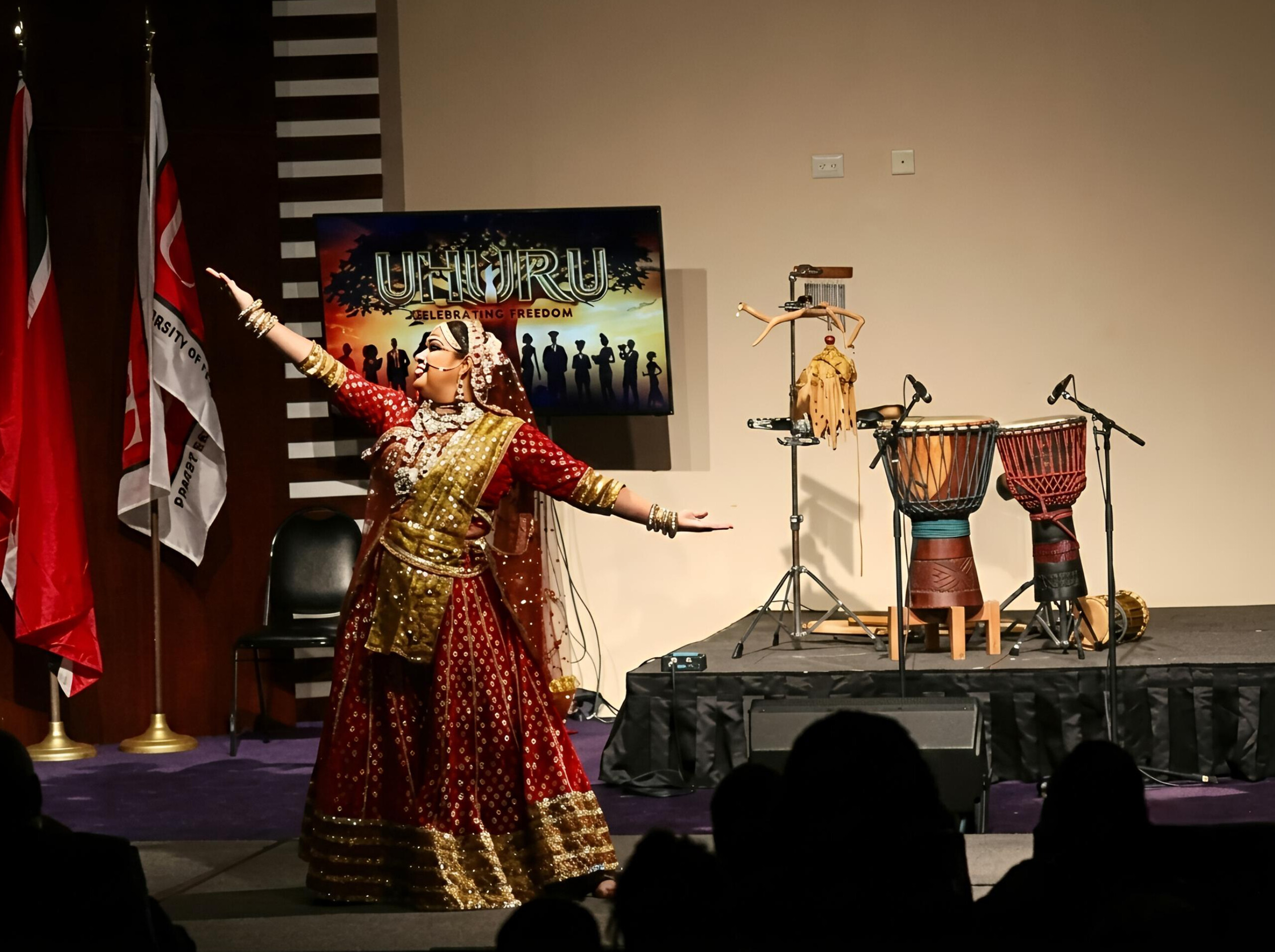
The University of Trinidad and Tobago’s (UTT) cultural production, Uhuru, has ignited public debate after blending the stories of African emancipation and Indian indentureship during an Emancipation-themed event.
The production was designed to explore Trinidad and Tobago’s shared history by highlighting the struggles, resilience and contributions of both communities. Organisers said the programme sought to encourage reflection on the nation’s complex past while promoting dialogue, understanding and national unity.
However, the inclusion of East Indian cultural performances during the event drew criticism from some attendees, who argued that the programme should have focused exclusively on African emancipation. Others defended the production, saying it reflected the country’s multicultural identity and encouraged a broader understanding of history.
Those involved in the production, including Professor Selwyn Kujo, have stressed the importance of moving beyond historical divisions and embracing opportunities for education, reconciliation and mutual respect. They maintain that acknowledging different historical experiences does not diminish the significance of Emancipation but instead strengthens national conversations about identity and inclusion.
The discussion surrounding Uhuru has sparked wider conversations about how national commemorations should balance historical accuracy, cultural sensitivity and inclusivity, with many calling for continued dialogue as Trinidad and Tobago navigates its diverse heritage.
Article and image source: facebook.com