

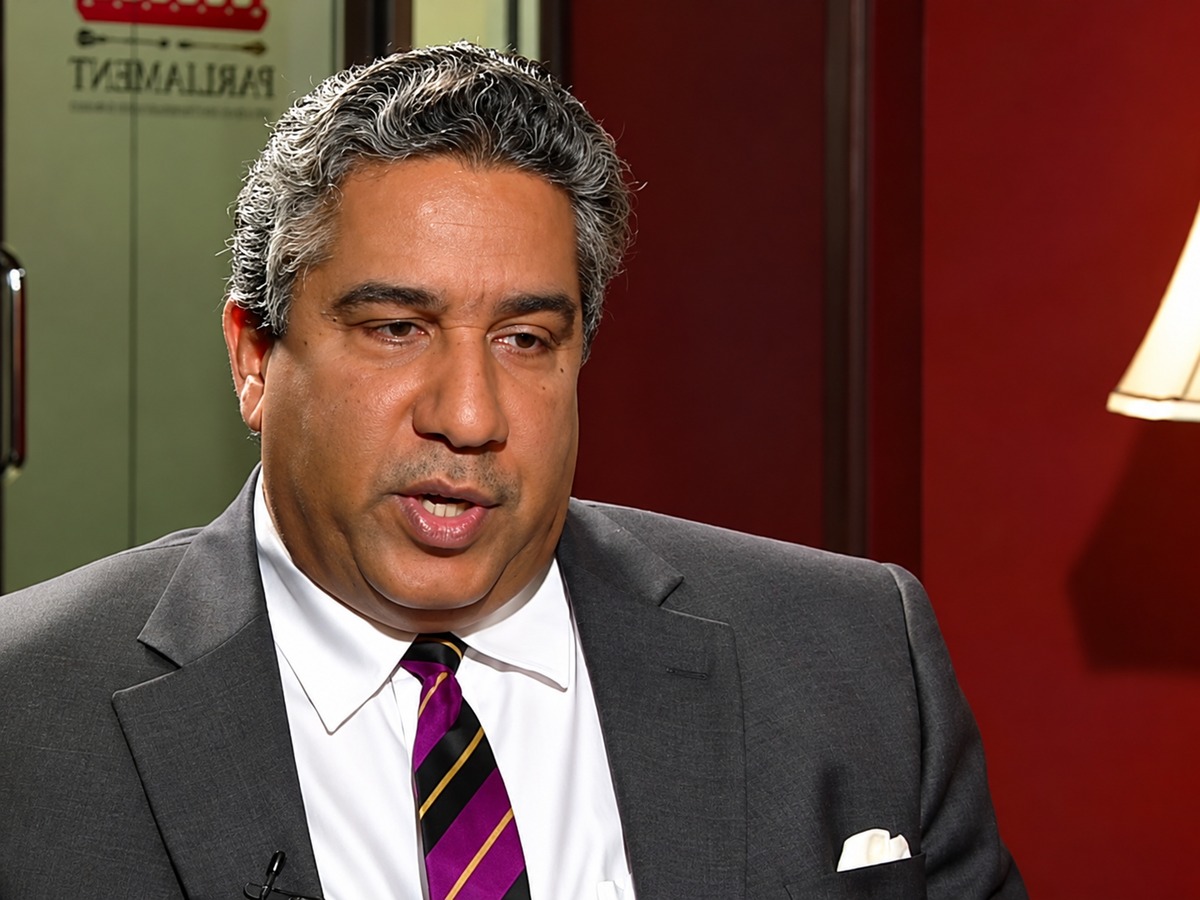
Ghany Defends Trinidad and Tobago’s Decision to Change Its Position on Cuba
Political scientist Professor Hamid Ghany has defended Trinidad and Tobago’s decision to vote against a United Nations resolution calling for an end to the United States' economic embargo on Cuba, arguing that every government has the sovereign right to determine and change its foreign policy.
Speaking in comments reported by TTT on Tuesday, November 3, Ghany said governments should not be permanently bound by decisions made by previous administrations or even their own earlier positions.
His comments follow Trinidad and Tobago’s October 28 vote against the resolution, joining the United States and 15 other countries in opposition.
Trinidad and Tobago was the only CARICOM member state to vote against the resolution, while other Caribbean Community nations either supported it, abstained or did not record a vote.
The decision represented a significant departure from the country's previous position. Trinidad and Tobago abstained when the resolution was first introduced in 1992 but subsequently supported calls for the embargo to be lifted, including in 2025.
Ghany argued that international relations evolve and governments must be free to respond to changing circumstances.
He said there was no single approach that every administration was required to follow and that a government could legitimately adopt a different position from its predecessors.
The political scientist also defended the right of an administration to pursue a foreign policy based on its stated commitment to democratic governance.
However, Ghany went further, offering strong criticism of Cuba’s socialist political and economic system.
He argued that socialism, rather than the longstanding United States embargo, was responsible for Cuba's economic difficulties.
His assessment remains a contested interpretation. The United Nations has repeatedly raised concerns about the economic effects of the embargo, while the Cuban government's domestic economic policies have also attracted criticism.
Despite opposition from Trinidad and Tobago and 16 other nations, the UN General Assembly adopted the resolution on October 28, with 130 countries voting in favour, 17 against and 25 abstaining.
The resolution is non-binding and does not require the United States to remove its sanctions.
Ghany's intervention adds another perspective to the national discussion surrounding Trinidad and Tobago’s changing diplomatic position, particularly as the country finds itself taking a different stance from its CARICOM partners.
For Ghany, the central issue is a government's right to determine its own foreign policy, regardless of how previous administrations voted or whether regional neighbours agree with its decision.