

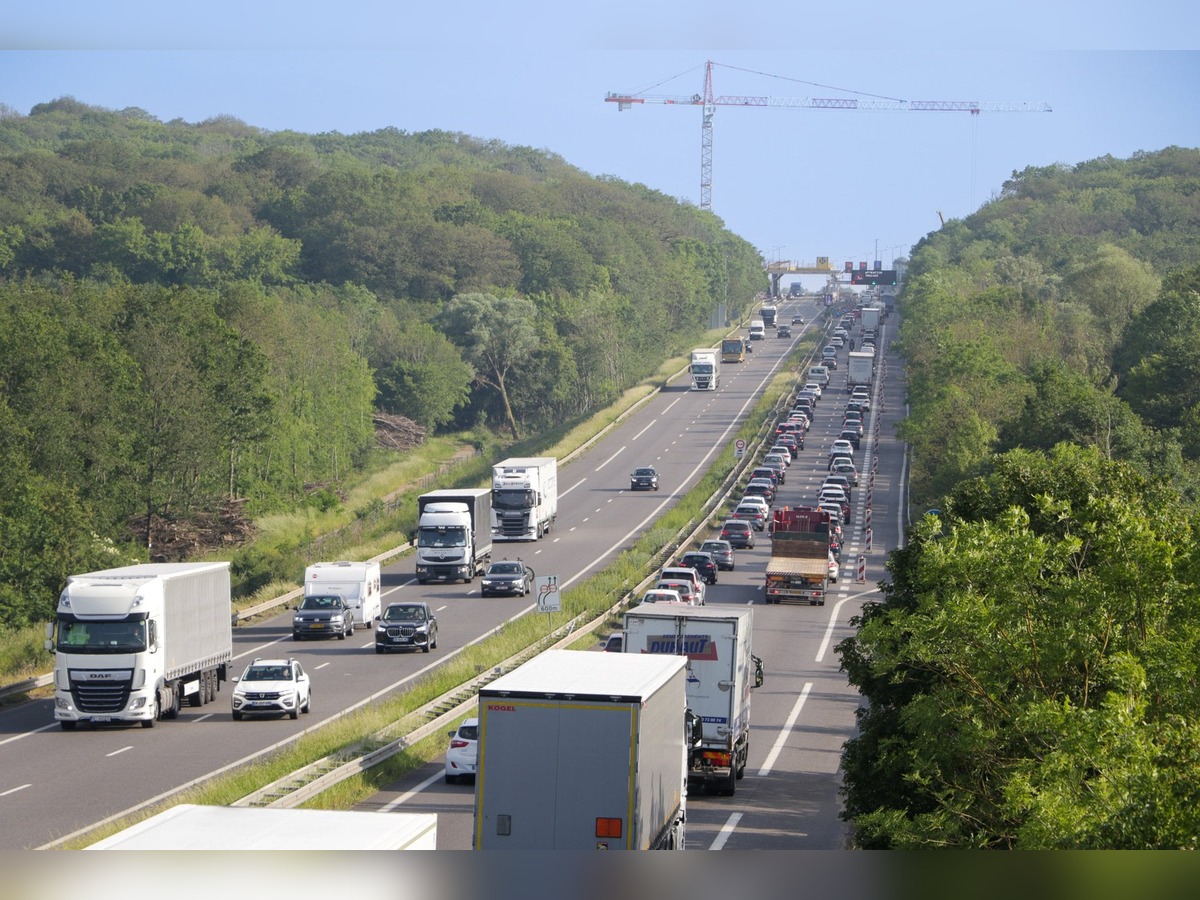
Employees in Luxembourg travel an average of 30.6 kilometres between home and work, according to a study by the Luxembourg Institute of Socio-Economic Research and the Department of Spatial Planning reported by RTL Today. Its findings suggest that long commutes should be examined through the location of jobs, homes and services, rather than treated simply as individual travel choices. Nearly half of Luxembourg’s jobs are held by cross-border workers, the reporting states. Around 51,000 workers from Belgium travel an average of 53.9 kilometres, while approximately 51,000 from Germany commute 48 kilometres. Some 114,000 workers from France cover an average of 44.7 kilometres. Those figures describe distances, not journey times. They cannot establish how many hours workers lose in traffic or on public transport. Nor does the study, as reported, establish that people accept those journeys willingly. It does show the geographical scale of a labour market extending well beyond Luxembourg’s borders. LISER researcher Valérie Feltgen said commuting zones had expanded since the previous study in 2014. Most cross-border commuters still lived near the frontier, but the study’s map showed that almost every municipality in neighbouring regions had at least one resident working in Luxembourg. Feltgen warned that the expansion would eventually encounter limits in the time people were prepared to spend travelling. The concentration of employment helps explain the challenge. LISER researcher Antoine Decoville put the national ratio at 76 jobs for every 100 residents. In Luxembourg City, the reported ratio reached 122 jobs per 100 residents. These ratios compare jobs with all residents, rather than only people in employment. Yet bringing homes and workplaces into the same municipality is not a complete answer for every household. RTL reported that 30% of employed capital residents worked outside the city. Researchers pointed to household arrangements in which partners work in different places, complicating decisions about where to live. The study also found that only one in four residents worked in their home municipality. That pattern makes the organisation of neighbourhoods and connections between them central to the discussion. Recommendations included better walking and cycling infrastructure, stronger connections between transport modes, teleworking where possible, and neighbourhoods combining housing, jobs and services. Researchers also proposed bringing certain services and workplaces closer to residents and strengthening cross-border transport cooperation. Housing near employment centres was not among the study’s primary recommendations. Asked about that omission, spatial planning representatives said the state and municipalities were already pursuing it. A LISER researcher added that denser construction would probably be necessary as pressure to reduce land consumption increased. The evidence does not identify a single remedy or explain public attitudes towards commuting. It does support a practical shift in the debate: shorter journeys depend partly on how places are planned and connected, alongside how people travel between them.