

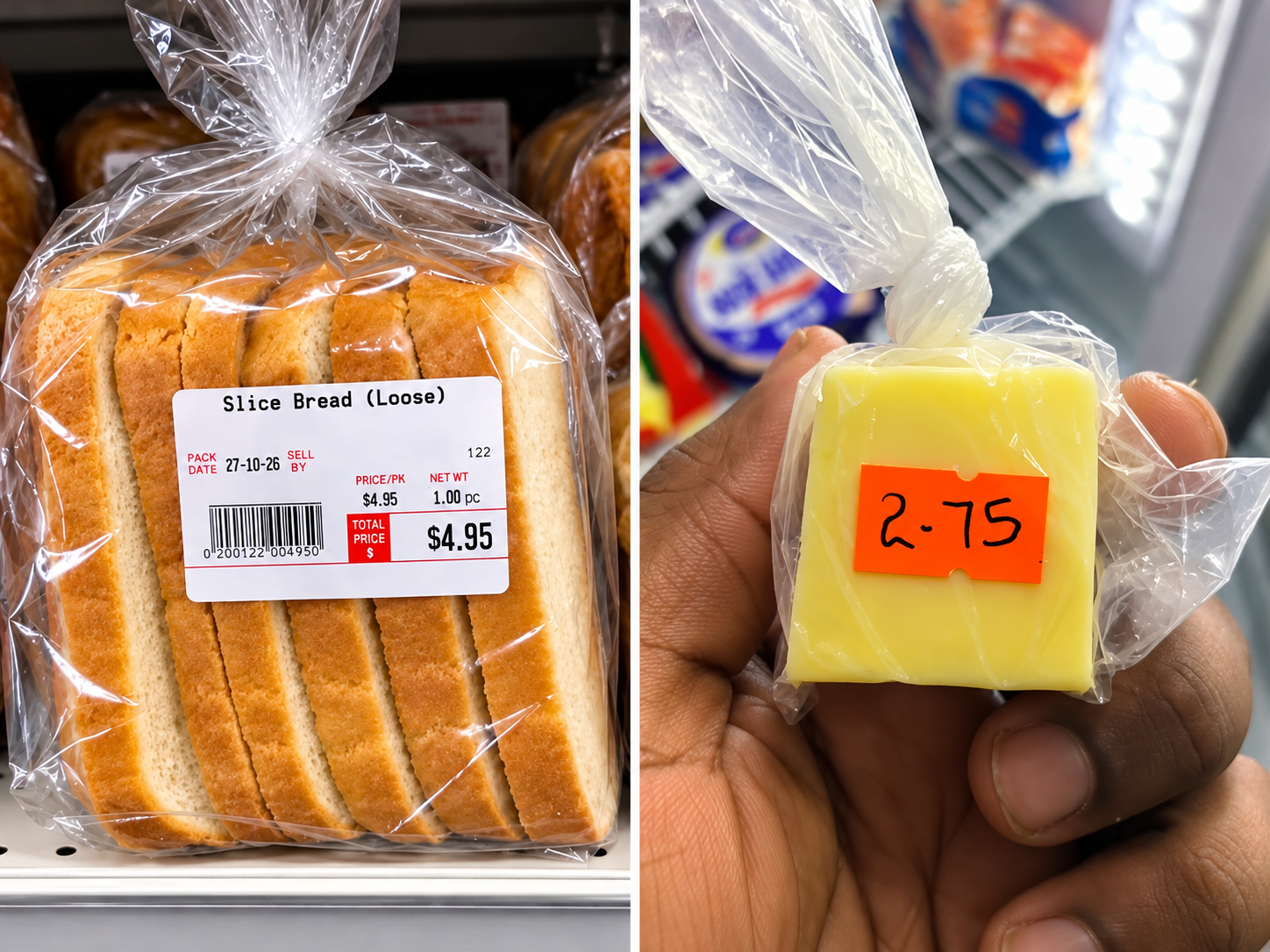
Are small portions of bread, cheese, peanut butter, jam and butter signs that Trinidad and Tobago is experiencing hard economic times, or are they simply part of a shopping tradition that has existed for generations?
That question has sparked considerable discussion on social media following photographs showing supermarkets offering smaller quantities of everyday food items.
While some have interpreted the images as evidence that consumers can no longer afford full-sized products, the response from several Trinidadians suggests a different perspective.
In a recent TrinGlobe Media Facebook post featuring individually packaged portions of peanut butter, strawberry jam, butter and chocolate spread, numerous commenters recalled similar practices dating back decades.
One commenter, Allister Samuel, recalled purchasing just two dollars’ worth of peanut butter from neighbourhood groceries approximately 30 years ago.
Camilla Levin similarly pointed out that shops in Trinidad have sold loose products and goods by the pound for decades.
Others remembered purchasing small amounts of butter and peanut butter, sometimes wrapped in wax paper, long before today’s packaging became available.
Their recollections highlight an important point: purchasing food in small quantities is not necessarily a new response to economic hardship.
For generations, neighbourhood groceries have accommodated customers who wanted only enough ingredients for a particular meal or who preferred to purchase according to their immediate needs.
Several people responding to the post also welcomed the convenience.
One commenter explained that purchasing an entire jar of peanut butter occasionally resulted in waste because the product was not consumed frequently enough.
Another said smaller portions were ideal when preparing something that required only a little of a particular ingredient.
However, the discussion also reflected genuine concerns about affordability.
One mother explained that she could not afford an entire jar of chocolate spread but would consider purchasing the smaller quantity for her children.
Her comment illustrates why these options can be particularly valuable to households managing limited disposable income.
Both perspectives deserve recognition.
Economic hardship is real for some families, and offering smaller portions can help consumers access products they might otherwise struggle to purchase.
But convenience, portion control, reduced food waste and personal shopping preferences are equally legitimate reasons for choosing smaller quantities.
There are also questions about food safety, appropriate packaging and whether customers receive better value when purchasing larger quantities.
Consumers should be able to identify what they are buying, understand the price relative to the quantity and have confidence that products are handled hygienically.
Ultimately, photographs of small grocery packages cannot, by themselves, establish the economic condition of an entire country.
That requires a broader examination of household incomes, employment, food prices and purchasing power.
What the conversation does demonstrate is that Trinidadians have different reasons for making the same purchasing decisions.
For some, a small portion represents financial necessity. For others, it represents convenience, tradition or simply common sense.
And perhaps that is the point being overlooked: not every smaller purchase tells a story of hardship. Sometimes, people simply want a little bit of something without having to buy the whole thing.