
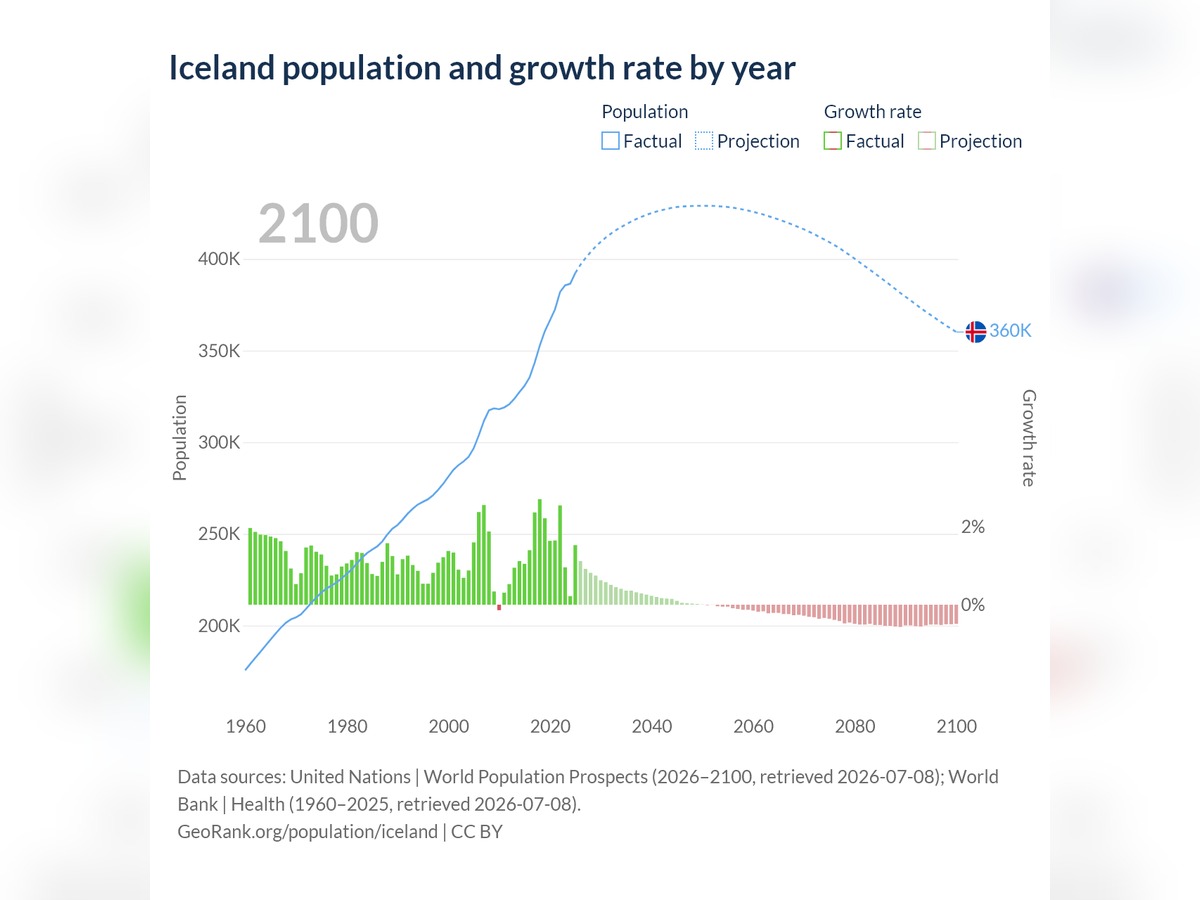
Changes in Iceland’s population were already prompting calls to rethink skills, education and government revenue in a 2019 report looking ahead to 2035–2040. The government’s account of the report presents demographic change as a policy challenge, but does not establish that Iceland would grow old before becoming rich.
The Committee for the Future, appointed by the prime minister, examined economic, environmental, regional and demographic developments. Its recommendations connected changes in the population’s age distribution and cross-border migration with wider questions about how society and work might develop.
One recommendation was to analyse human-resource and skills needs regularly. Another was to investigate a more flexible education system, including whether core education and continuing education could be merged into a single flexible system. These were proposals for examination, rather than descriptions of reforms already implemented.
The committee also called for continuous review of government revenue generation as tax bases, globalisation and the labour market changed. It recommended keeping legislation abreast of developments in employment and the gig economy, with the aim of protecting individual rights while allowing innovation.
These recommendations offer a framework for considering demographic pressures, rather than a numerical forecast of their cost. The published account supplies no age-group projections, care-demand estimates or fiscal calculations that would support a quantified ageing scenario. It also provides no basis for deciding whether national wealth would be sufficient to meet future needs.
The report’s broader scenarios anticipated increased immigration and more small businesses, self-employed workers and teleworkers. Those expectations belong to the report’s 2019 outlook; they should not be read as verified descriptions of subsequent developments.
The committee’s central argument was that outcomes would depend partly on society’s response, and that modest changes in the present could prevent larger changes becoming necessary later. For the ageing debate, its contribution is therefore a set of connected policy questions: how to assess workforce needs, keep education adaptable and review public revenue as the population changes. The evidence supports those questions, without resolving the scale or affordability of future care needs.