

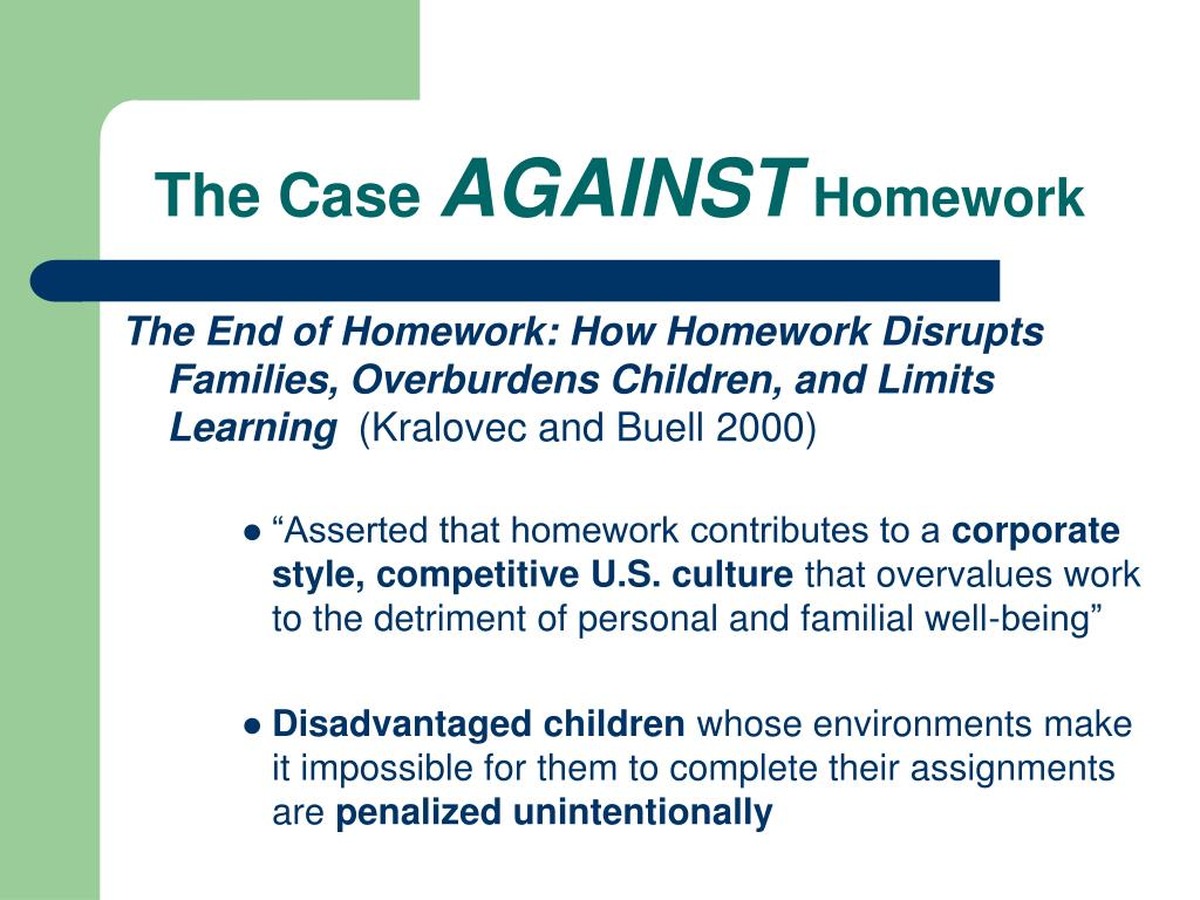
What would happen if American schools abolished homework for a year? The evidence described in Political.org’s account of the homework debate supports competing concerns, rather than a confident prediction that students would either flourish or fall behind. The article reports that educators are debating reductions or elimination, particularly in elementary and middle schools. Advocates argue that assignments can create stress and place unequal demands on households. Parents’ working hours, their ability to help and the availability of a quiet place to study all feature in that argument. Age is an important distinction. The account cites education researcher Harris Cooper’s synthesis of homework studies as finding a positive relationship between homework and achievement in high school, with little measurable relationship among elementary pupils. A correlation, however, does not by itself establish what would happen if schools removed assignments for an entire year. The counterargument centers on practice, especially in mathematics. The article describes educators’ concerns that students need repeated opportunities to reinforce procedures and develop fluency. Removing homework would raise a practical question: where would that practice happen instead? Equity also appears on both sides. Supporters of elimination argue that homework makes achievement depend too heavily on resources at home. Critics worry that removing structured reinforcement could disadvantage students who already receive limited academic support. These are competing claims about consequences, not demonstrated outcomes of a nationwide experiment. The source also describes a middle course: replacing routine busywork with shorter, targeted assignments connected to classroom learning. That option complicates any simple choice between keeping all homework and assigning none. The proportionate conclusion is that a year without homework would require careful evaluation, with results examined separately by age and subject. Family burden and access to practice would both matter. The debate identifies what schools would need to investigate; it does not establish in advance whether abolition would improve education.