

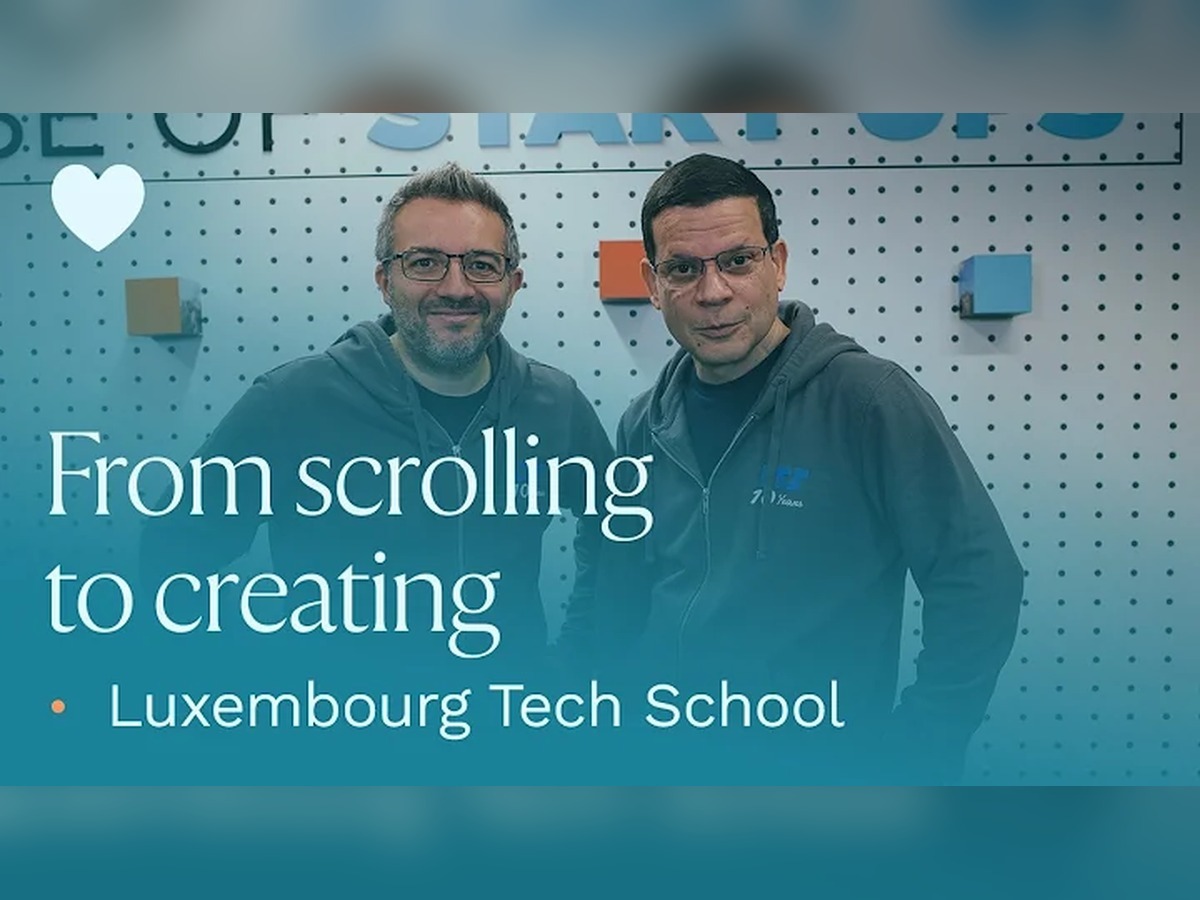
Luxembourg Tech School wants young people to move from consuming technology to creating with it, its founder and lead coach explain in an interview published by Oeuvre Nationale. Their approach combines practical projects, teamwork and exposure to emerging technologies, with curiosity taking priority over previous coding experience.
The school began with a pilot programme in 2016, according to the interview. Its founder describes the purpose as broader than teaching programming: helping young people understand technology and apply it to problems facing businesses or society. Coding forms part of that work, but the intended outcome is to develop future digital leaders.
In the classroom, that means asking students to propose and build projects within a particular subject area. Rather than concentrating on lessons followed by an examination, the founder describes an approach in which students demonstrate what they have made. He contrasts this with the passive consumption he associates with scrolling through social media and other digital entertainment.
Lead coach George explains that beginners start with logical thinking and basic programming through creative exercises. These can include making animations, building scenes and adding interactive features, rather than immediately developing mobile applications or websites. Students do not need substantial technical knowledge before arriving, he says; curiosity and a willingness to try are central.
The founder says the programme deliberately leaves room for discovery. Exposure to different subjects is intended to help students identify interests and abilities they may not previously have recognised. Teamwork is another core element, alongside the technical skills needed to bring an idea to life.
The programme also gives coaches an opportunity to explore developing technologies. The founder says the school works with young people aged 12 to 19, prompting the team to consider which technologies could matter as students progress towards further study and their future careers. He presents those choices as informed judgments by technically experienced coaches, rather than predictions made with certainty.
Artificial intelligence is part of that discussion. The speakers describe their aim as teaching students how to think with AI, including recognising when to avoid using it. The founder also says a module previously called Big Data has been renamed AI Everywhere, and that quantum computing has entered the programme.
Another development discussed in the interview is a planned programme connecting technology with finance and law. The founder says the school is preparing to introduce it because he sees technical understanding as increasingly relevant to those fields. The interview does not provide a launch date or enrolment details.
For the coaches, the continuing challenge is to make complex subjects accessible to young learners. George says the coaching team draws on industry experience, including IT, cybersecurity, software architecture and business. Their account presents technology education as a practical opportunity to explore, collaborate and make something of one’s own.