
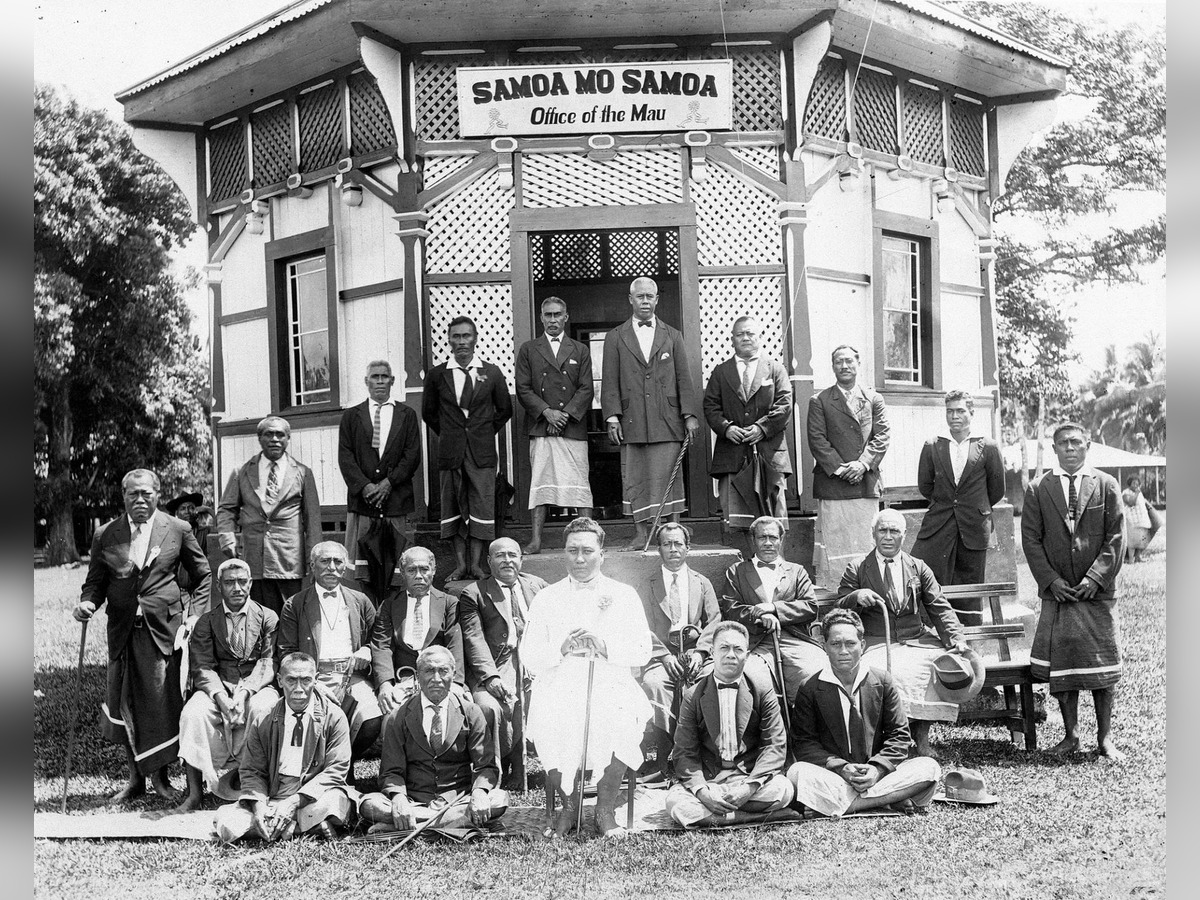
Peaceful resistance forms a central part of Samoa’s struggle against colonial control. A historical overview published by the U.S. National Park Service also draws attention to another strand of that history: chiefs using diplomacy and negotiation to protect Samoan autonomy. The overview describes early twentieth-century peaceful resistance as an effort to reclaim sovereignty from colonial powers. It places that struggle within a longer history, noting nineteenth-century opposition to foreign taxation and externally imposed regulations. In the National Park Service’s account, Samoans retained agency in their dealings with foreign rulers. Chiefs negotiated while balancing outside pressures with their own systems of governance. That perspective broadens the story beyond the decisions of colonial administrations to include the choices made by Samoan leaders. The overview also records the changing political circumstances surrounding the First World War. New Zealand forces occupied Samoa, and the country subsequently came under a League of Nations mandate administered by New Zealand. Samoa gained independence in 1962. The National Park Service describes the following decades as a period of modernising infrastructure while preserving fa‘a Samoa, the Samoan way of life. Read together, these elements present sovereignty as a history of resistance, negotiation and continued attention to Samoan institutions. The account’s emphasis on chiefly diplomacy is a reminder that protecting autonomy involved decisions made within Samoan society as well as opposition to external control.