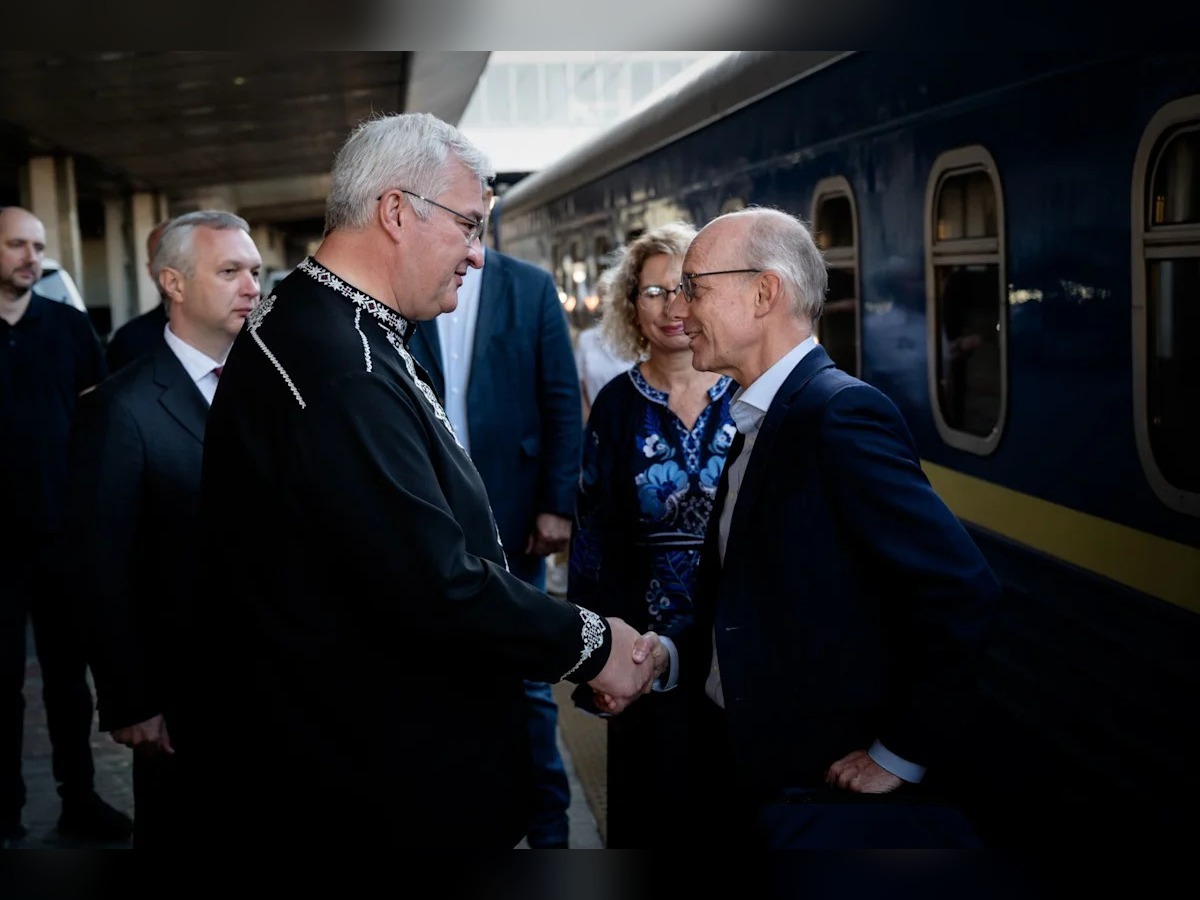
Luxembourg’s decision to push for the removal of Russian oligarch Mikhail Fridman from European Union sanctions has come under renewed scrutiny, with opposition lawmakers questioning whether the move will protect the country from a potentially substantial arbitration claim. Prime Minister Luc Frieden defended the government’s position in parliament on 12 October, according to a report published by the Kyiv Independent on 13 October.
The dispute centres on arbitration proceedings initiated by Fridman, who is seeking $16 billion. According to lawmakers Franz Fayot, a Social Democrat, and Sam Tanson, a Green Party politician, Frieden explained that the government considered the size of the claim in relation to Luxembourg’s national budget when assessing its national interest. The prime minister reportedly hoped that securing Fridman’s removal from the sanctions list might encourage him to abandon the arbitration case.
The controversy developed during negotiations over the renewal of EU sanctions against Russia. In September, the bloc removed Fridman and fellow Russian oligarch Alisher Usmanov from its sanctions list after France, Luxembourg and Slovakia threatened to allow the wider package of approximately 3,000 Russia-related sanctions to expire. Renewal required unanimous approval, giving the three countries leverage in the negotiations. France’s position focused particularly on Usmanov, while Slovakia also pressed for the removal of both men, the report said.
Fayot and Tanson questioned whether Luxembourg had secured any assurance that the change would resolve its legal exposure. They said the government had not contacted Fridman or his legal team and that the arbitration proceedings had not been withdrawn at the time of the report. Fayot also warned that Luxembourg’s intervention might complicate its position in any eventual arbitration, although the report did not establish that the decision had already produced such an effect.
A central disagreement concerns the extent to which Luxembourg could be required to pay compensation if a legal ruling favoured Fridman. According to the Kyiv Independent, a European Commission spokesperson said EU sanctions regulations contain a ‘no-claims clause’ intended to prevent sanctioned individuals or companies from obtaining compensation when sanctions are the reason a deal or contract could not be carried out. The spokesperson also referred to additional safeguards in recent sanctions packages intended to help those complying with sanctions recover damages incurred in doing so.
Tanson said she had specifically asked Frieden about these protections and that he replied he was unaware of such a rule. Fayot and Tanson also challenged the government’s apparent concern that Luxembourg would have to bear any compensation burden alone. The report noted that Luxembourg’s bilateral investment treaty with Russia had also been cited in discussions about the arbitration, while Foreign Minister Xavier Bettel was reported to oppose terminating that treaty.
The immediate issue for Luxembourg is whether its role in the EU sanctions negotiations will achieve the intended legal benefit. The available reporting confirms that the arbitration had not been withdrawn and that opposition lawmakers disputed the government’s reasoning. It does not establish the eventual outcome of the proceedings or demonstrate that removing Fridman from the sanctions list eliminated Luxembourg’s potential financial exposure. The Luxembourg government’s response to the Kyiv Independent’s request for comment had not been received by the time of publication.