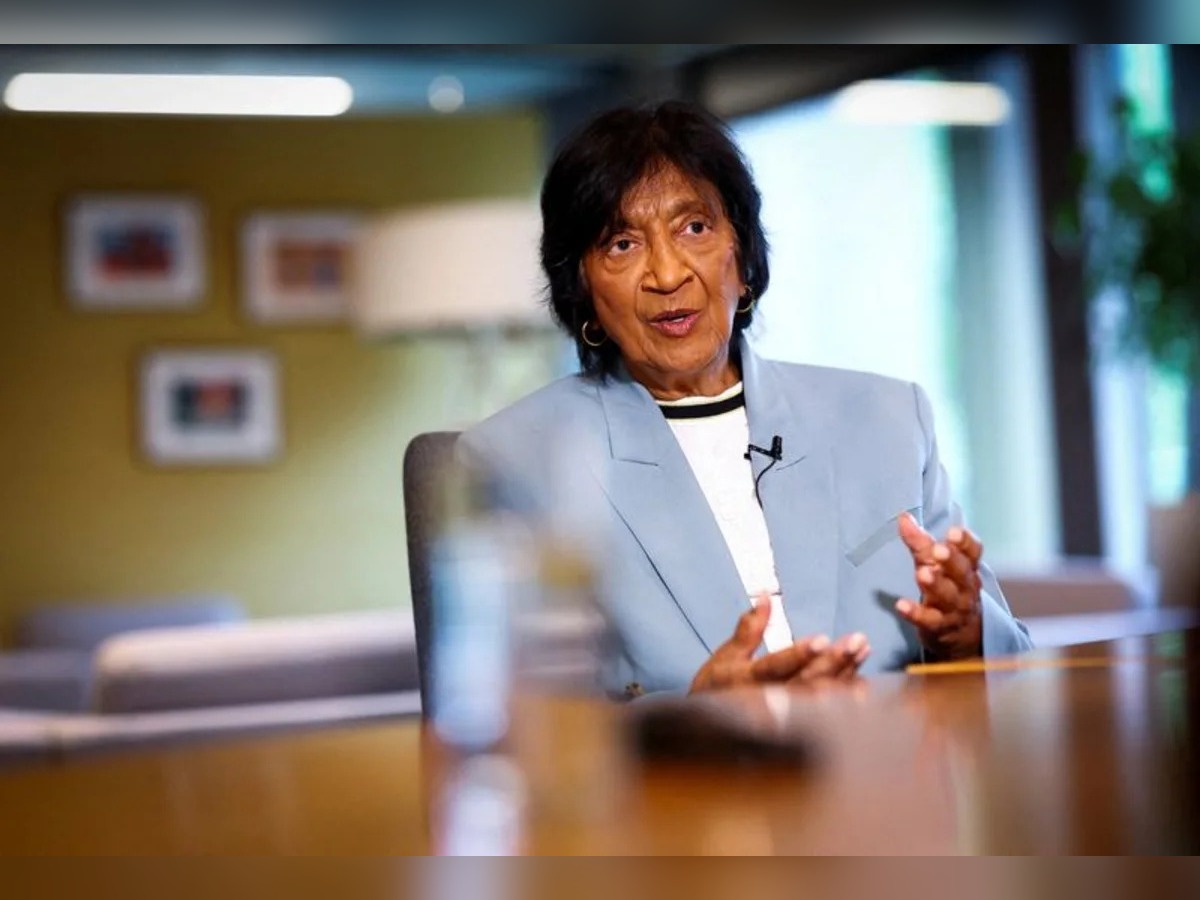
Nobel Peace Prize winner Navi Pillay has urged the United States to abandon its campaign against the International Criminal Court (ICC) and resume its historic role as a global defender of human rights. Speaking in The Hague, where she serves as a judge at the International Court of Justice, Pillay criticised Washington’s recent sanctions against the ICC—announced just days after her Nobel win—as a deliberate undermining of international justice.
The sanctions, imposed by the US under Secretary of State Marco Rubio, target the ICC’s operations, including financial transactions, while exempting humanitarian and detainee-related payments. Rubio previously dismissed the court as a “rogue institution” that would never prosecute Americans, a stance Pillay called “very unfortunate.” She noted that the timing of the sanctions—coinciding with her Nobel announcement—could not be coincidental, particularly given the US’s long-standing hostility toward the ICC’s jurisdiction over non-member nationals.
Pillay’s warnings come amid escalating tensions over the ICC’s 2024 arrest warrants for Israeli Prime Minister Benjamin Netanyahu and former Defence Minister Yoav Gallant, which the US has vehemently opposed. Her own 2023 UN report accusing Israel of genocide in Gaza—dismissed by Israel as “scandalous”—has further fuelled the backlash. Pillay rejected claims of “false propaganda” against the report, framing the pushback as part of a broader effort to discredit international justice mechanisms.
As the 21st woman to win the Nobel Peace Prize, Pillay also highlighted systemic gender inequality in global leadership, noting that her achievement reflects how deeply entrenched such disparities remain. Beyond her Nobel recognition, she plans to focus on ensuring sexual violence is treated as a war crime—an issue she championed during her tenure at the International Criminal Tribunal for Rwanda in the 1990s.
The US’s actions risk isolating it further on the world stage, with Pillay’s call to “play a liberatory role” resonating as a counterpoint to its aggressive stance against the ICC. The sanctions, she argued, threaten not just the court’s independence but the broader principle of accountability for atrocity crimes.