

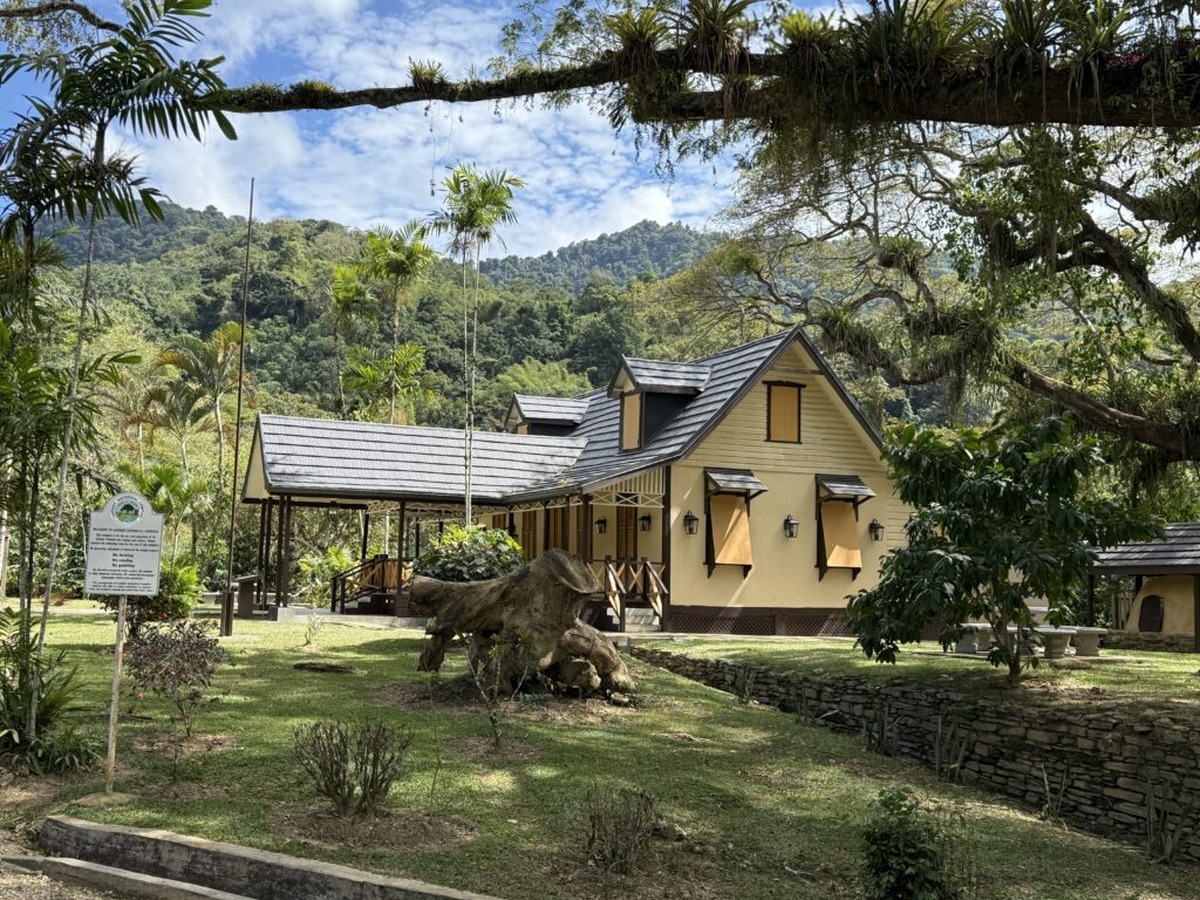
Lopinot is now known for its green Northern Range scenery, historic buildings, cocoa traditions and quiet village atmosphere, but the origins of the community are closely tied to Trinidad’s colonial plantation system and the movement of several different groups of people into the valley. The village takes its name from Charles Joseph Count de Lopinot, a Frenchman who arrived in Trinidad in 1800. According to the National Trust of Trinidad and Tobago, he established the La Reconnaissance Estate in 1804. Lopinot House, one of the few surviving structures associated with the original estate, was built in 1806. Lopinot arrived during a complicated political period. Trinidad had only recently passed from Spanish to British control, while a substantial French planter population was already established on the island. His military experience was recognised by the colonial administration and in 1805 Governor Thomas Hislop appointed him Brigadier-General of the Trinidad Militia, the highest position in the force at the time. But the attractive estate landscape has a much harder history beneath it. The National Trust records that enslaved Africans worked in the cultivation of cocoa at La Reconnaissance. The estate therefore formed part of the plantation economy built on forced labour. Remembering Lopinot only as a picturesque cocoa settlement risks overlooking the people whose labour created the estate and helped establish the community that followed. The estate became the nucleus around which a permanent village developed. A road was constructed to improve access, and settlements expanded around La Reconnaissance. The name Lopinot gradually became attached not only to the estate owner but to the entire valley community. After slavery, new groups became part of the area’s agricultural history. The National Trust records that Indian indentured labourers also worked in cocoa cultivation at La Reconnaissance and settled around the estate. During the nineteenth century, Venezuelan peons migrated into the Lopinot Valley as well, adding another layer to the community’s population and agricultural knowledge. These overlapping histories help explain why Lopinot developed a distinctive cultural identity. French colonial influence, African experience, Indian indentureship and Venezuelan migration all became parts of the valley’s story. Archaeological finds around the complex have provided additional evidence of these different periods, while the museum at the historical site preserves aspects of the village’s cultural and agricultural past. Count de Lopinot died in 1819 and was buried on the estate beside his wife, Marie Cécile Favre, who had died several years earlier. More than two centuries later, the house and surrounding complex remain physical reminders of the plantation from which the modern village emerged. The surviving Lopinot House is recognised by the National Trust as a heritage property of interest. Its significance goes beyond architecture. The building stands inside a landscape shaped by cocoa, colonial power, enslaved labour, indentured labour and migration from neighbouring Venezuela. That layered history makes Lopinot more than a scenic destination. It is a compact example of how several major forces in Trinidad and Tobago’s history converged in one Northern Range valley, leaving behind a community whose culture cannot be explained by any single group or period.