

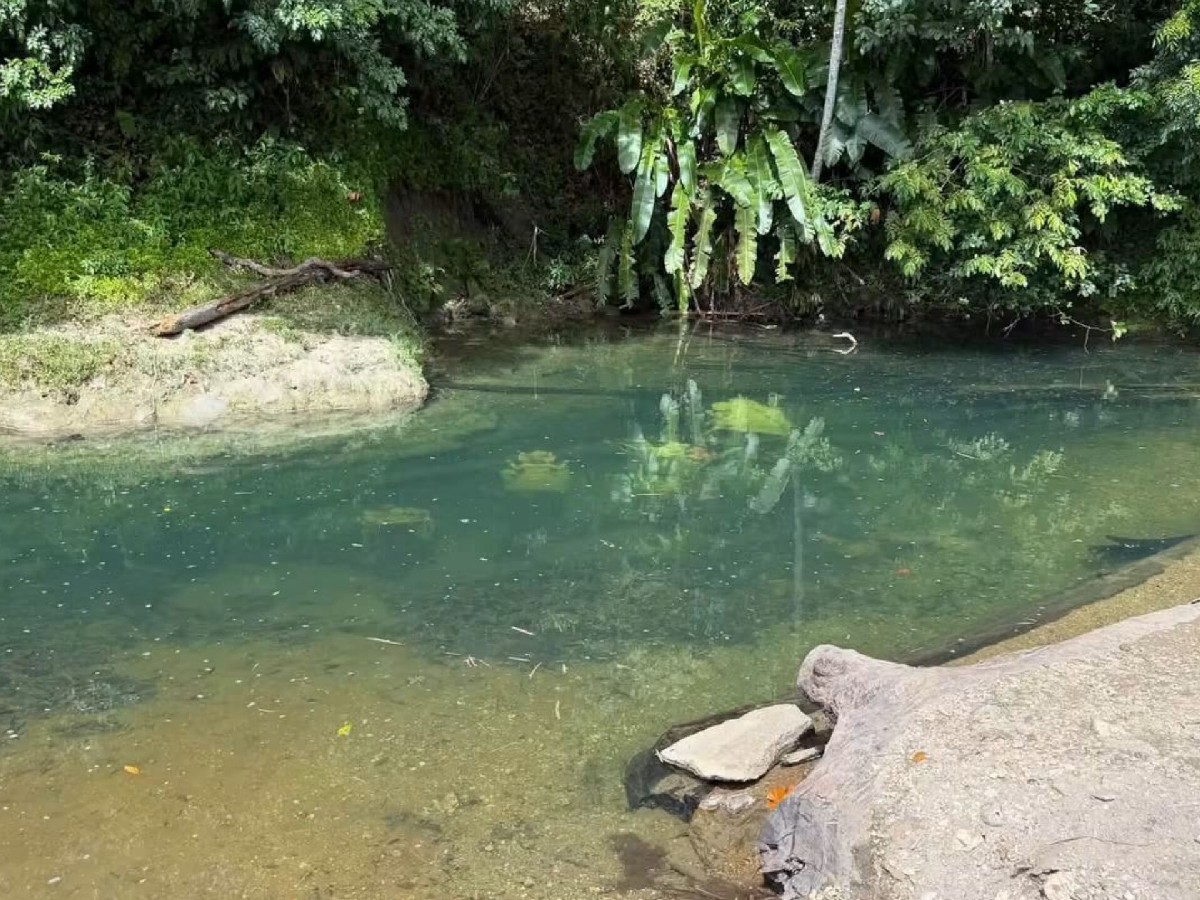
A video questioning the presence of murtis in the Valencia River has prompted a response from Pundit Doodnath Rampersad, who says the religious items are made from biodegradable clay and are expected to dissolve within days.
The video began circulating after a woman visiting the river said she encountered murtis in the water while attempting to take her usual bath.
She questioned why the items were placed in an area used by members of the public for recreation and called on members of the Hindu community to consider other locations.
Rampersad subsequently issued a statement on behalf of the organisations involved in the 37th Ganesh Utsav, which was held at the Valencia River on Sunday, September 20.
According to the statement, permission was obtained to use the site for the religious observance and a cleaning crew was deployed following the event.
The organisation said garbage and temporary structures were removed and the area was prepared for public use by Monday, September 21.
Addressing the murtis still visible in the river, Rampersad said they were made from clay and biodegradable materials and had already begun dissolving.
He explained that the process could take several days because the river’s flow is slower at this time of year.
The organisation also maintained that all religious items used during the ceremony were biodegradable and non-toxic and said it monitors the dissolution of the murtis each year.
According to Rampersad, only a small section of the Valencia River was used for the ceremony.
He also said members of the public were not prohibited from accessing the river on the day of the event. However, people engaged in recreational activities that were not in keeping with the religious observance were asked to use another section of the river while the ceremony was taking place.
Rampersad said the Visarjan ceremony has been held at the Valencia River for 37 years and noted that rivers and other waterways across Trinidad and Tobago are shared for religious, recreational and other activities.
He pointed to the use of rivers for Hindu Shraad ceremonies, Orisha religious practices and Christian baptisms as examples of different communities sharing public waterways.
The organisation said it welcomed the public discussion surrounding environmental responsibility and religious devotion and maintained that it remains mindful of its responsibility to both the public and the environment.