

Artificial intelligence can write an email, generate an image, analyse information, produce computer code and complete in seconds tasks that once took people hours.
But can it weld?
Can it repair an air-conditioning system, service a vehicle, install electrical equipment or maintain the machinery that keeps an industrial plant operating?
As artificial intelligence rapidly changes the workplace, those questions are becoming increasingly relevant for young people deciding what skills they should learn and what careers they should pursue.
The rise of AI does not mean technical careers will remain untouched by technology. In fact, many trades are becoming increasingly technological. But it highlights something that can sometimes be overlooked in conversations about the future of employment: the physical world still needs skilled people.
Skills Training Still Matters
Every functioning society depends on people who can build, install, operate, diagnose, maintain and repair.
Trinidad and Tobago is no different.
Homes and businesses require electrical systems. Vehicles require servicing. Refrigeration and air-conditioning systems require maintenance. Industrial facilities depend on machinery, instrumentation, fabrication and specialised technical expertise.
Technology can make many of these jobs more efficient, but it does not automatically remove the need for the knowledge behind them.
This is where technical and vocational education continues to have an important role.
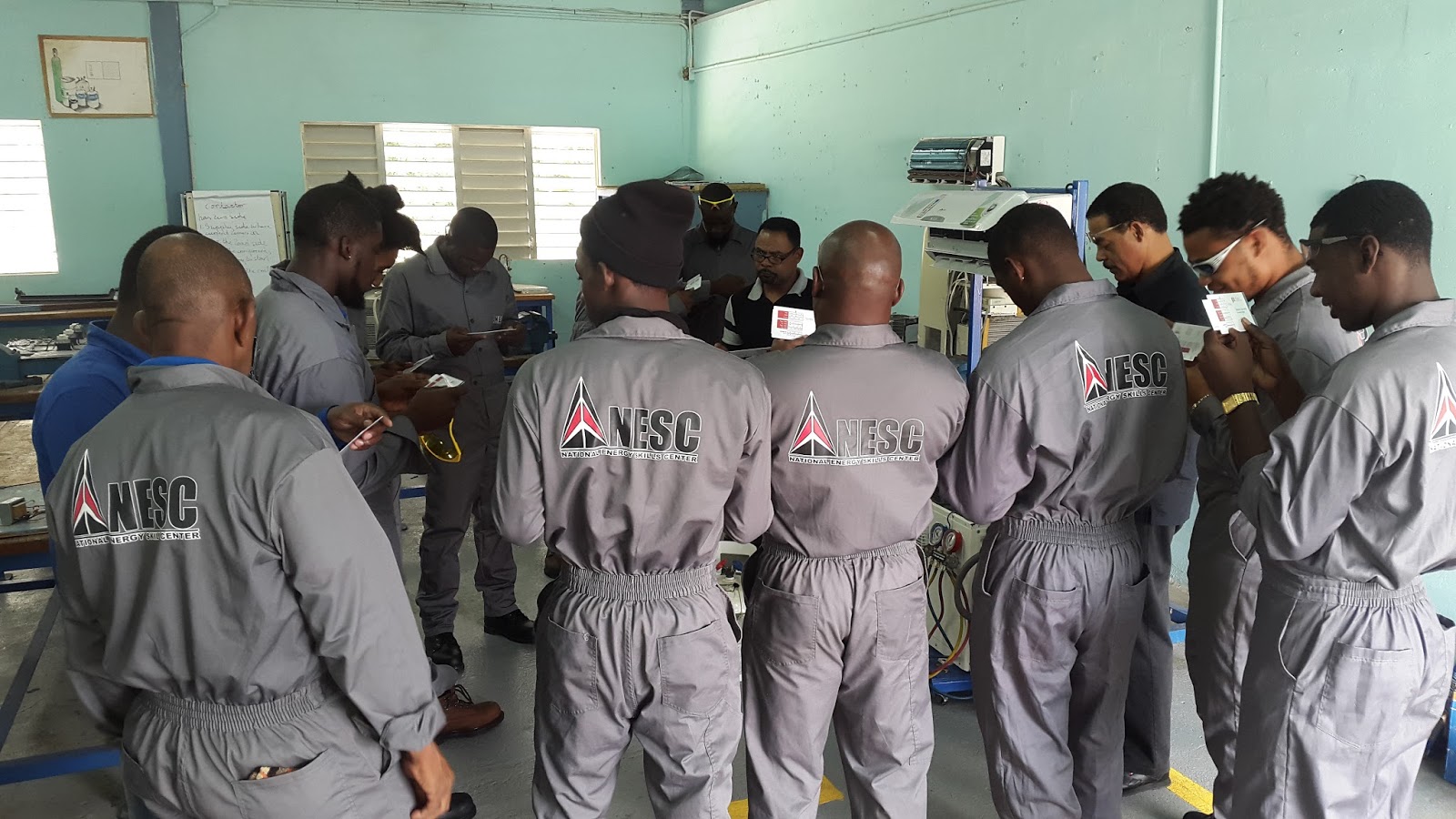
In Trinidad and Tobago, the NESC Technical Institute has been developing skilled workers since 1997, particularly for the country’s energy and industrial sectors. NESC says its graduates have gone on to work not only locally but throughout the Caribbean and further abroad.
The Skilled Worker Is Changing
The trades of tomorrow will not necessarily look exactly like the trades of yesterday.
Modern vehicles, for example, increasingly combine mechanical systems with electronics, computers and sophisticated diagnostic technology.
Factories and industrial plants are incorporating automation, sensors and computer-controlled equipment.
The technician of the future may therefore need to understand both the physical system and the technology controlling it.
That makes continuous learning increasingly important.
NESC’s existing programmes reflect some of that range. Its Point Lisas campus lists training in electrical and instrumentation, millwright, fabrication and boilermaking, refrigeration and air conditioning, welding, IT networking, electrical, heavy equipment, automotive services and autotronics.
These are skills connected to systems and services that remain necessary regardless of how advanced artificial intelligence becomes.
AI Could Become Another Tool
The conversation does not have to be about AI versus skilled workers.
It could increasingly become about skilled workers using AI.
A technician may use advanced diagnostic technology to identify a problem faster. An entrepreneur could use AI to prepare quotations, organise appointments, communicate with customers or market a business.
An industrial worker may increasingly interact with automated equipment and intelligent monitoring systems.
The advantage could therefore belong to people who combine practical competence with the ability to adapt to new technology.
A welder who understands modern equipment remains a welder.
An electrician using intelligent diagnostic tools still needs to understand electricity.
Technology changes the tools. It does not eliminate the importance of knowing what to do with them.
A Skill Can Become a Career
For young people leaving secondary school, university is one pathway, but it is not the only pathway towards a meaningful career.
Some people learn best by doing.
Some are naturally interested in vehicles, machinery, electrical systems, fabrication, computers or understanding how things work.
Technical education provides an opportunity to turn those interests into recognised competencies.
NESC describes its training model as combining theory with practical, industry-relevant instruction. It also offers job-placement assistance and entrepreneurship support for those interested in eventually developing businesses of their own.
That entrepreneurial potential is particularly important.
A technical skill can potentially provide more than employment. With the necessary qualifications, experience and business knowledge, it can form the foundation of an independent service or company.
Skills Can Travel
Technical competence can also create opportunities beyond Trinidad and Tobago.
In 2025, NESC-TI signed an agreement with Caribbean Well Service Company aimed at strengthening specialised energy-sector training.
The partnership includes programme development using advanced simulators and hybrid learning, apprenticeship and on-the-job opportunities, and ambitions to extend training expertise into markets including Guyana, Suriname, Barbados, Jamaica, Ghana and Nigeria.
It demonstrates how skills developed locally can potentially have relevance in a much wider marketplace.
Preparing for a Future Nobody Can Fully Predict
No one can say exactly what artificial intelligence will be capable of 10 or 20 years from now.
Some occupations will change. Certain tasks will become automated. New jobs will emerge while existing careers evolve.
That uncertainty itself makes adaptability valuable.
Young people entering the workforce should learn how to use emerging technologies, but they should also consider developing abilities that allow them to solve real problems.
NESC’s longstanding focus on technical and vocational education represents one pathway towards doing that.
AI can write.
AI can calculate.
AI can analyse.
But Trinidad and Tobago will still need people who understand how to build, install, operate, diagnose, maintain and repair the physical world around us.
The tools may change dramatically.
The workplace may change with them.
But skills training will always matter.