
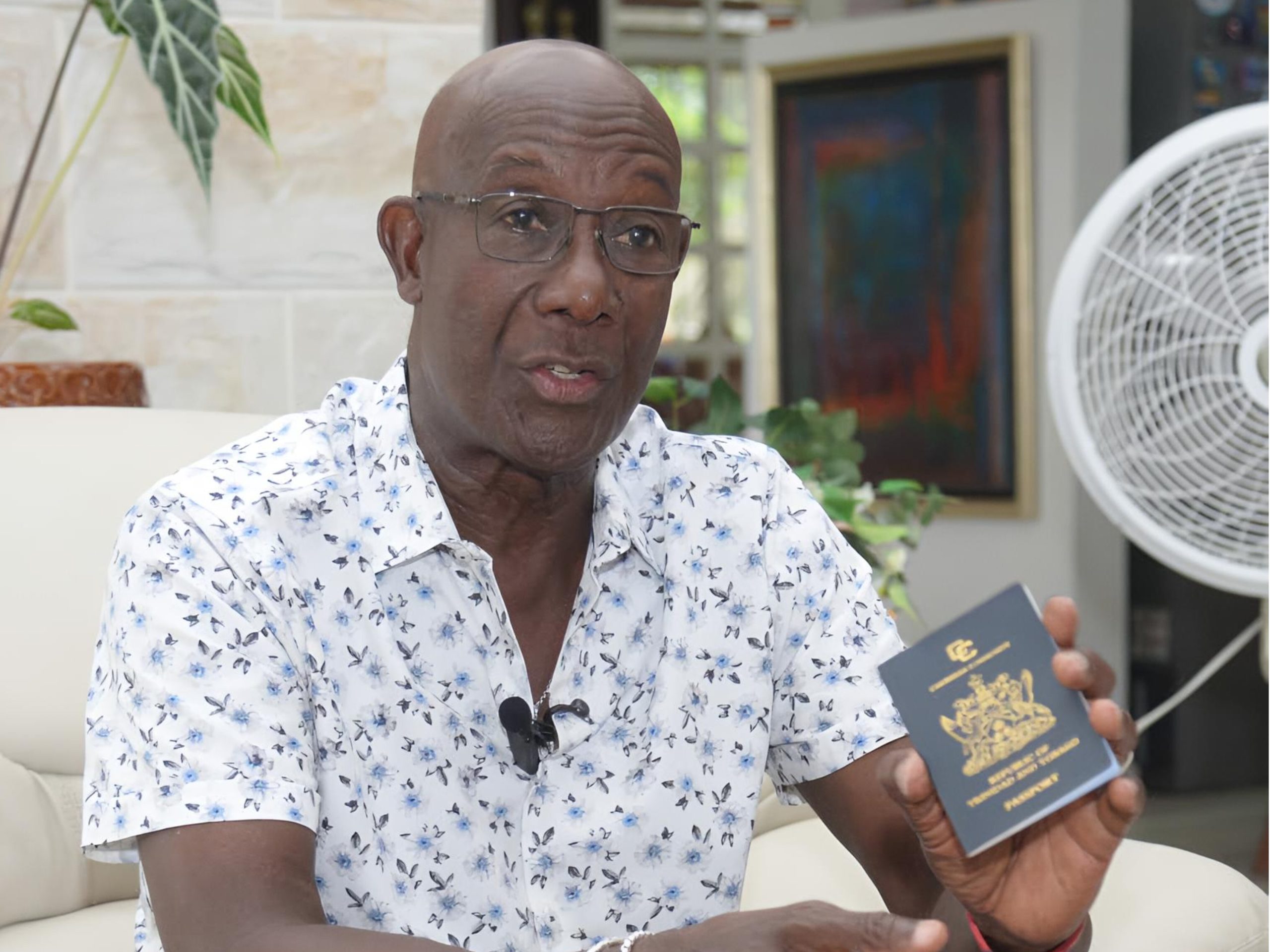
Former Prime Minister Keith Rowley has stirred political waves by demanding that current Prime Minister Kamla Persad-Bissessar clarify the government’s role in reporting U.S. visa revocations. His call for transparency has ignited debates over the extent of the Trinidad and Tobago government’s involvement and its influence, if any, on U.S. visa policies.
Rowley directly questioned Persad-Bissessar on the number of U.S. visas allegedly reported by Trinidad and Tobago authorities for revocation, a claim that has garnered both support and ridicule. “It is a known fact that the government of Trinidad and Tobago cannot revoke U.S. visas,” noted Christine Durgla, an outspoken critic, emphasizing the agency of the U.S. Embassy in such matters.
Durgla’s critique goes further, describing Rowley’s comments as absurd and misinformed, highlighting a common misunderstanding about the role of foreign governments in U.S. visa decisions. According to Durgla, the U.S. Embassy operates independently of other states’ administrations regarding visa revocations.
Rowley’s insistence on transparency comes amid broader discussions about governmental accountability, especially concerning international diplomatic processes. This development underscores ongoing scrutiny of political narratives and their alignment with actual power dynamics in foreign affairs.
Article and image source: facebook.com