
Why does Trinidad have a significant Syrian Lebanese community?
And why do people still call them “Syrian,” even though most have Lebanese roots?
Here’s the real story.
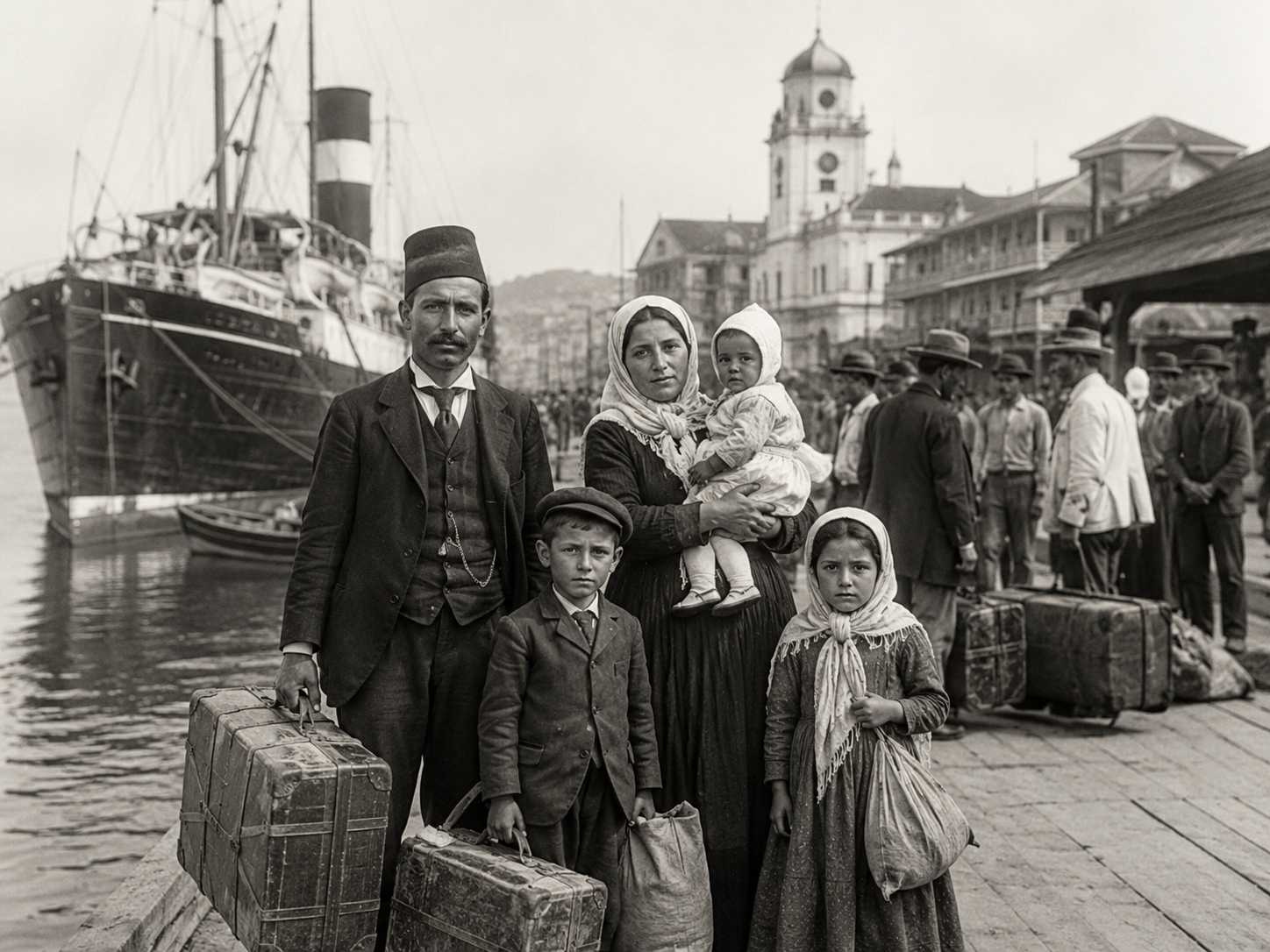
In the late 1800s and early 1900s, thousands of people from the Levant, modern day Lebanon and Syria, began migrating to Trinidad. They weren’t simply chasing opportunity. Many were escaping life under the Ottoman Empire, where economic hardship, military conscription, political instability and, for some communities, religious persecution made life increasingly difficult.
Seeking a better future, many boarded ships bound for the Caribbean, including Trinidad.
But here’s what most people don’t know.
When they arrived, the British colonial authorities classified them as “Syrians.” At the time, modern Lebanon did not yet exist as an independent country. Much of the region was part of what was known as Ottoman Syria, so immigrants from both present day Lebanon and Syria were recorded under the same label.
That name stuck.
Today, many descendants identify as Lebanese, while others embrace both Syrian and Lebanese heritage. Yet across Trinidad and Tobago, they’re still commonly referred to as “Syrians.”
Their success story is remarkable.
Many of the early immigrants began as travelling merchants, selling goods from village to village before opening small shops. Over time, families built successful businesses and became prominent in retail, textiles, wholesale trade, manufacturing and importing. Through hard work, family networks and entrepreneurship, many achieved significant economic success within a few generations.
They also maintained a strong sense of community. Many preserved their language, religion, traditions and close family ties, with marriages often taking place within the community. At the same time, Syrian Lebanese Trinidadians became active contributors to the country’s business sector, charitable organisations and national development.
Their success has long sparked different opinions. Some admire the community’s entrepreneurial spirit, discipline and commitment to preserving its heritage. Others have questioned the concentration of wealth among some families or viewed their close knit nature with suspicion.
Today, the Syrian Lebanese community remains an important part of Trinidad and Tobago’s multicultural society. Their story is one of migration, resilience, entrepreneurship and adaptation, a reminder that many of the country’s most influential communities were built by people who arrived seeking a better life.
If you learned something new, share this with someone who didn’t know the story behind the name “Syrian” in Trinidad and Tobago.
Article and image source: facebook.com