

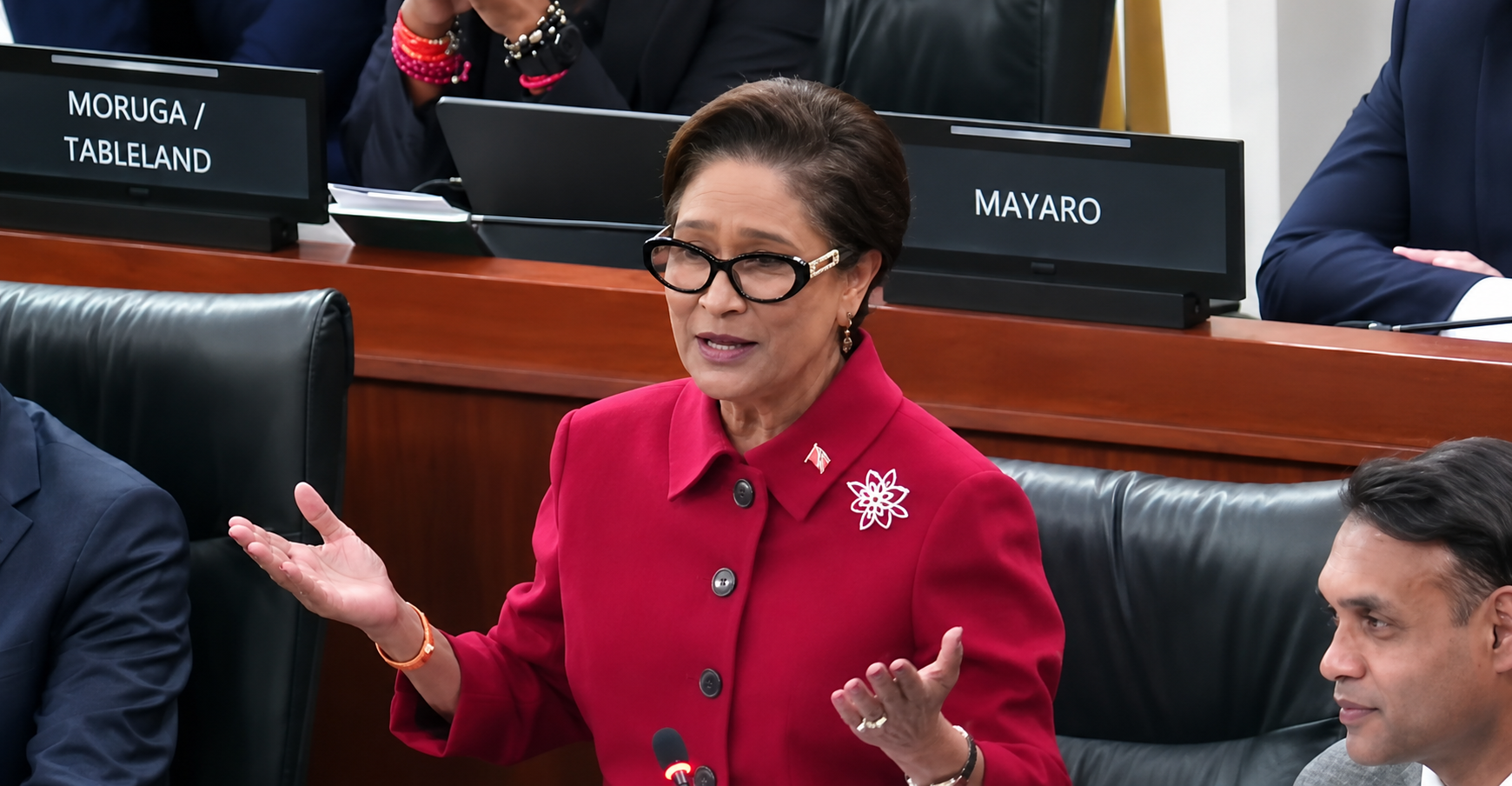
Kamla: No Constitutional Right Is Absolute
Prime Minister Kamla Persad-Bissessar has defended the Government’s decision to extend the State of Emergency (SoE), arguing that constitutional rights are not absolute and can be regulated within the framework of the law.
Speaking during debate on the extension of the SoE in Parliament, Persad-Bissessar rejected claims that the measure infringes on citizens’ fundamental freedoms, insisting that the Constitution itself provides mechanisms for rights to be limited under specific circumstances.
“Any law student doing Law 101 knows that no rights are absolute,” the Prime Minister said.
She pointed to freedoms such as assembly and speech, noting that both require regulation in a functioning society.
“When it comes to freedom of assembly, it could never be that everybody will assemble in the same place at the same time. There are regulations. These rights are regulated. There is no absolute freedom,” she stated.
Persad-Bissessar also used the example of freedom of speech, arguing that rights must operate within reasonable limits and order.
The Prime Minister referenced Sections 4, 8, 9 and 10 of the Constitution, which outline fundamental rights as well as circumstances under which those rights may be restricted or regulated. She maintained that the Government’s actions remain fully within the bounds of the Constitution.
Responding to criticism from Opposition members and suggestions that the matter could be challenged in court, Persad-Bissessar said citizens remain free to seek legal redress if they believe their rights have been violated.
“If you want to take it to court, we’ll go,” she said, adding that the Government is confident any legal challenge to the State of Emergency extension would fail.
The comments came amid heated debate over the continuation of emergency powers, with supporters arguing the measures are necessary for national security and opponents raising concerns about civil liberties and government overreach.
The extension of the State of Emergency remains one of the most contentious issues currently before Parliament, with both sides continuing to clash over the balance between public safety and constitutional freedoms.